Throwing a heavy cricket ball, tying a pair of wet shoelaces, or simply turning your head to look out of the kitchen window, these completely normal daily actions rely on a hidden mechanical marvel. Our bones themselves are solid, hard, and completely stiff. If our skeletons were just solid, unbroken sticks of calcium, we would be completely trapped in one rigid position, unable to even sit down for our dinner.
The only reason we can dance on a stage, jump over a puddle, and run across a playing field is because of the brilliant junctions where these hard bones actually meet. Exploring the joints in the body is exactly like lifting the bonnet of a very clever machine to see precisely how the moving parts work together so smoothly. Let us look closely at how our physical framework actually operates, keeping things clear and highly descriptive for young learners.
Counting the Connections
It is a very common debate in the school playground. Kids frequently ask their science teachers exactly how many joints are there in human body. The answer is actually a bit of a moving target depending entirely on your age. As a rough, general guide, healthy adults typically have around 360 of these specific connections keeping their skeletons together.
However, if you want to know exactly how many joints in human body a newborn infant has, that number is surprisingly much higher. Babies are born with lots of soft cartilage and separate bones that allow them to grow rapidly during their early years. As they grow taller and their bodies become much stronger, many of these separate pieces slowly fuse together to form solid, adult bones. Because the separate pieces merge, the overall number of connecting junctions naturally drops as we leave childhood behind.
Read More – Body Organs for Kids
The Heavy Lifter
When we start mapping out the human anatomy, one specific area immediately demands our attention because of its sheer size. When investigating the different joints in human body, you only need to look down at your legs to find the king of them all. The knee easily takes the crown as the absolute largest joint in human body. You can also safely call it the biggest joint in human body without any scientific argument.
It is a massive, complex piece of biological engineering. Think about what it has to do every single day of your life. It carries almost the entire weight of your body while you walk to the shops, run for a bus, and jump up and down on a trampoline. It connects the heavy thigh bone to the lower leg bone, using a small, protective shield called the kneecap resting right on top.
Thick, tough elastic bands called ligaments wrap around the whole area to keep everything highly stable. Because it does so much heavy lifting and absorbs so much shock, it is also the area most prone to painful sports injuries when we accidentally twist our legs the wrong way on a muddy pitch.
The Still Connections
We usually assume that a junction between two bones must bend, fold, or twist. That is not always the case. Let us look at the specific types of bone joints that do absolutely nothing at all. We call these completely solid connections fixed joints in human body. You can also accurately refer to them as immovable joints in human body.
The absolute best example sits right at the top of your neck. Your skull is not just one giant, hollow bowling ball carved out of a single piece of bone. It is actually made up of several large, flat plates of bone. When you are a tiny infant, these plates have slight gaps between them to allow your brain to grow rapidly.
Eventually, as you get older, these edges lock together permanently, forming incredibly rigid, jagged seams. They do not bend or move even a tiny fraction of a millimetre. Their only job is to form a solid, tough natural helmet to protect your soft brain from dangerous knocks, trips, and falls.
Read More – Teaching Human Body Systems to Students
The Movers and Shakers
Now we can look at the fun ones, the connections that actually let us move around freely. Before we dive in, we must understand how these moving parts avoid grinding themselves to dust. To stop our bones from rubbing painfully against each other, the ends are heavily coated in a tough, rubbery material called cartilage. Furthermore, these moving capsules are filled with a thick, slippery liquid. It acts exactly like the machine oil you would squeeze into a squeaky bicycle chain, ensuring the bones glide past each other silently.
While trying to write down the name of all joints in human body would completely fill up a massive medical dictionary, we can definitely look at the primary categories. Learning these common human joints names helps kids understand exactly how their own arms and legs operate.
Here is a clear, descriptive list explaining the main types of joints in human body with examples:
- Hinge: Think of a heavy wooden door swinging open and shut on its metal hinges. This junction only lets you move in one single direction—backwards and forwards. Your elbows and knees are classic, perfect examples. You can bend your elbow to bring a sandwich to your mouth, and straighten it back down, but you absolutely cannot bend your elbow completely backwards without breaking it.
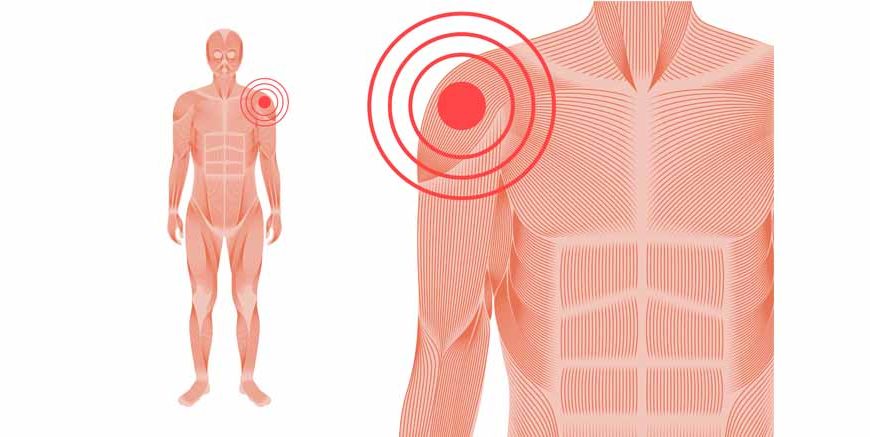
- Ball and Socket: This is the absolute most flexible connection we possess. Imagine a smooth, round ball fitting perfectly into a deep, cup-shaped hole. This brilliant design allows you to swing your limbs in giant, wide circles. Your shoulders and hips use this exact mechanism, which is precisely why a fast bowler can swing their arm in a complete circle over their head on a cricket pitch.
- Pivot: This clever type allows for smooth, rotating movement. When you shake your head from side to side to say “no”, you are using a pivot mechanism located right at the very top of your spine, allowing your skull to twist smoothly on top of your neck.
- Gliding: These are made of flat bone surfaces that slide quietly over one another in multiple directions. They give us the fine, delicate movements we need in our flexible wrists and ankles, allowing us to type quickly on a keyboard or balance perfectly on a narrow wooden beam.
Read More – GK Questions On Human Parts Of The Body For Kids
Conclusion
Looking at a plastic skeleton standing in the corner of a school science classroom rarely does justice to the brilliant engineering happening inside us right now. Our bodies are not just random, messy piles of bone and muscle; they are beautifully designed mechanical systems.
The way a hard, solid leg bone fits perfectly into a curved hip socket to let us sprint across a football pitch is nothing short of incredible. Understanding the physical mechanics of our own limbs teaches us to respect and protect our bodies as we grow older.
Eating healthy foods rich in calcium and wearing proper protective gear during sports ensures these internal hinges keep swinging smoothly for decades to come. When kids learn how their framework actually operates, they gain a massive appreciation for the quiet biology keeping them on their feet every day.
To uncover more fascinating insights about human biology and find highly engaging learning materials, read the latest articles on the EuroKids Blog and secure a bright start for your little learner through EuroKids Preschool Admission.
FAQs
Why do our knees sometimes make a loud popping noise?
That loud popping sound is usually just tiny bubbles of natural gas bursting inside the slippery fluid that surrounds the bone. It is completely normal and usually nothing to worry about unless it actually hurts when it pops.
What is the difference between a ligament and a tendon?
A ligament is a tough band that strictly connects one bone to another bone to keep the area stable. A tendon is a different type of thick cord that connects your soft muscles to your hard bones, allowing the muscle to pull the bone and create movement.
Can eating certain foods help keep our skeleton moving smoothly?
Absolutely. Drinking milk and eating leafy green vegetables provides the heavy calcium needed to keep the actual bones incredibly hard, while drinking plenty of plain water helps keep the slippery fluid inside the moving capsules nice and thick.