The glass screen you are staring at right now relies on some incredibly tiny, hidden materials to actually light up, load web pages, and process complex information. We hear a massive amount of talk about silicon in the daily news, but there is a totally different, highly fascinating material that actually helped kickstart the entire modern computer age. If you are sitting there wondering what is germanium, the easiest way to picture it is as a brilliant bridge between the rough world of metals and the soft world of non-metals.
The pure germanium element is a shiny, hard, greyish-white substance known as a metalloid. It was discovered deep underground way back in the late nineteenth century and was proudly named after the country of Germany. But what makes it so incredibly special to scientists and engineers is not just how it looks sitting on a laboratory desk; its true power is completely hidden down on a microscopic level. Let us shrink down and take a closer look at how this amazing natural building block is actually put together.
The Identification Numbers
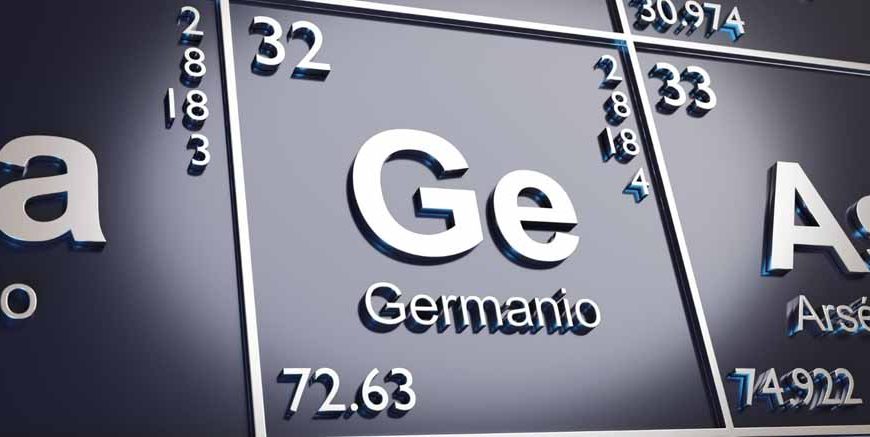
In the strict scientific world, you cannot just describe a natural material by its colour or shape. You need to know its exact chemical address to understand how it behaves. This brings us straight to the germanium atomic number, which is exactly 32. Whether you are reading a dusty old science textbook from a library or looking at a brand new, colourful periodic table on a classroom wall, the atomic no of germanium absolutely never changes.
But what does that specific number actually mean for a primary school student trying to wrap their head around chemistry? It simply means that deep inside the absolute core of this atom, there are 32 tiny, heavy particles called protons packed very tightly together. This specific number acts as the ultimate fingerprint of the material. If you somehow managed to add an extra proton to the pile, it would immediately become a completely different element altogether.
Read More – Unveiling the Periodic Table and Its Secrets
Looking Inside the Atom
To truly grasp how this raw material works inside a modern computer chip, we have to look very closely at the overall atomic structure of germanium. Imagine a tiny, bustling, miniature solar system. Right in the very centre, you have a heavy, dense core made of those protons and some extra neutral particles. This busy core acts just like our sun.
Zooming around this central sun at absolutely terrifying speeds are 32 tiny electrons. However, these electrons do not just fly around randomly and crash into each other like a swarm of angry, trapped bees. They travel on very strict, invisible tracks. Scientists call these tracks electron shells, and they are layered exactly like the thick, curved rings of an onion. The electrons fill up the rings closest to the centre first, and once a ring is completely full, the remaining electrons have to move to the next ring further out.
The Outermost Layer
The electrons living close to the heavy centre are trapped tightly there and do not do much interacting with the outside world. The real chemical magic happens right on the very outside edge of the atom. The electrons flying around in the final, outermost ring are known as valence electrons. You can think of them as the chemical hands of the atom, constantly reaching out to grab onto, push away, or link up with other materials nearby.
To make this concept much clearer, let us look at some quick valence electrons examples from other common elements you might already know:
- Hydrogen is the simplest, lightest element in the universe and only has 1 electron spinning on its outer edge.
- Carbon, the fundamental building block of all living plants and animals, has exactly 4.
- Oxygen, the invisible gas we breathe into our lungs every single second, has 6 electrons waiting to react on its outside ring.
When we put our shiny grey metalloid under a powerful imaginary microscope and count the outer ring, we find that the germanium valence electrons count is exactly 4. It has four tiny hands ready and waiting to interact with its neighbours.
Read More – Science Quiz Questions and Answers for Kids
The Mathematical Map
Chemists use a highly special mathematical code to write down exactly where every single one of those 32 zooming electrons is parked. This specific written code is known as the Ge electron configuration. It looks a bit like a complicated algebra puzzle at first glance, but it is actually just a very neat, highly organised map.
The full, official scientific map is written out as 1s^2 2s^2 2p^6 3s^2 3p^6 3d^{10} 4s^2 4p^2.
If you look right at the very end of that long mathematical string, you will spot the 4s^2 and 4p^2. The large number 4 tells us we are looking at the fourth and final ring of the onion. If you add those two small top numbers together, you get 4. That is the exact mathematical proof on paper showing us those four vital outer electrons.
The Power of Sharing
Because it has exactly four hands on its outside edge, the chemical valency of germanium is 4. In the messy world of chemistry, having a valency of four is a highly brilliant, incredibly unique position to be in. Atoms generally want to have a full, neat set of eight electrons in their outer ring to feel totally happy, secure, and stable.
Because this specific atom has exactly half of what it needs, it does not desperately throw its electrons away to get rid of them, and it does not aggressively try to steal them from other atoms. Instead, it becomes the ultimate, peaceful sharer. It links up its four outer hands with four neighbouring atoms, creating a massive, incredibly strong crystal grid where everyone is happily sharing their outer electrons together.
Because of this beautifully balanced sharing routine, it acts as a semiconductor. This means it can completely block raw electricity from flowing, or it can let the electricity flow freely, depending entirely on how warm the environment is or if other chemicals are added to the mix. This brilliant, microscopic switching ability is the exact reason it is so incredibly useful for building the tiny, thinking brains inside our modern electronics.
Read More – Amazing Argon Facts for Students
Conclusion
Peering into the invisible, microscopic world of chemistry completely changes how we view the everyday gadgets we use in our homes. It is genuinely thought-provoking to realise that the ability to watch a funny video on a tablet, or play a massive video game on a television, relies entirely on a tiny grey atom choosing to share four microscopic electrons with its direct neighbours.
The entire modern universe of technology is built entirely on these tiny, silent partnerships happening in the background. When growing children learn how these hidden building blocks actually operate, the cold, hard glass screen of a computer suddenly transforms into a brilliant, wild playground of natural physics. To discover more fascinating scientific concepts and provide your child with a stellar foundation for early learning, explore the latest educational articles on the EuroKids Blog and secure their bright, academic future today through EuroKids Preschool Admission.
FAQs
Why do we use silicon more than germanium today?
Silicon is much cheaper to find because it makes up a huge portion of ordinary beach sand, and it also handles getting incredibly hot inside a busy computer much better without melting or breaking down.
Can you find this element naturally in the human body?
There are incredibly tiny, trace amounts of it in the food we eat and the water we drink, but our bodies do not actually use it for any biological functions to keep us alive.
What did the first ever transistor do?
The very first working transistor was built in the 1940s using this exact material, and it acted as a tiny, electronic switch that successfully controlled the flow of electrical currents without needing any moving physical parts.