Standing by the living room window on a quiet morning, a toddler’s eyes suddenly widen with absolute sheer wonder. A tiny, brown sparrow lands on the outside windowsill, tilting its head inquisitively before darting rapidly away into the vast sky. In that brief, fleeting second, a whole new world of curiosity opens up for the child. They point their little fingers, they babble excitedly, and they desperately want the mysterious flying creature to come back.
Capturing this exact, spontaneous moment of natural wonder is what makes the classic “once i saw a little bird” rhyme so incredibly special for early learners. It is not just a simple collection of rhyming words on a page; it is a direct mirror reflecting a child’s very first, tentative interaction with the wild, unpredictable natural world around them. Let us delve deeply into the lyrics, the physical actions, and the brilliant developmental benefits hiding quietly inside this beloved childhood song.
The Complete Lyrics to the Rhyme
Before we start breaking down the educational mechanics and the physical movements, you need the actual words. The little bird little bird poem is wonderfully short, making it absolutely perfect for toddlers who are just beginning to string full sentences together. Here are the traditional lyrics:
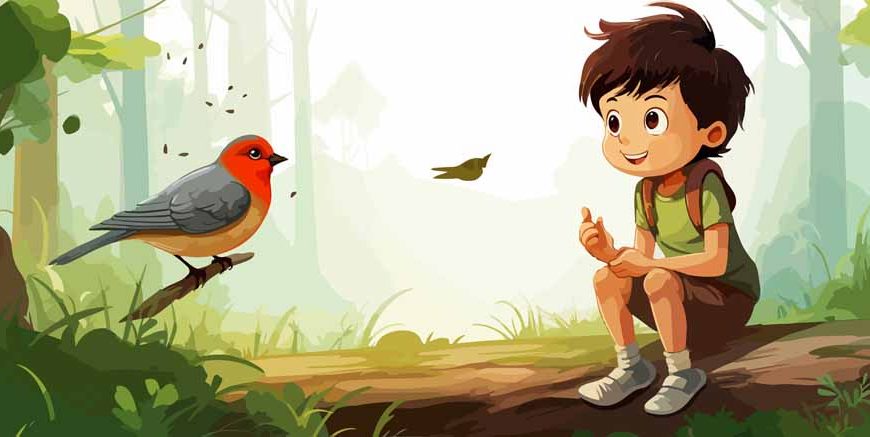
Once I saw a little bird
Come hop, hop, hop;
So I cried, “Little bird,
Will you stop, stop, stop?”
I was going to the window
To say, “How do you do?”
But he shook his little tail,
And far away he flew.
Read More – Nursery Rhymes For Kids with Lyrics
Decoding the Meaning Behind the Rhyme
At first glance, the “once i saw a little bird poem” is simply a sweet story about a child trying to say hello to an animal. However, if you look a bit closer at the narrative, it perfectly captures the reality of how children interact with wildlife.
Toddlers are naturally highly enthusiastic and entirely fearless. When they see a fascinating creature, their immediate, logical instinct is to run straight towards it, grab it, or loudly ask it to stay and play. The poem brilliantly illustrates this eager innocence when the child begs the creature to “stop, stop, stop” and approaches the window to politely ask “How do you do?”.
Crucially, the song also teaches a very gentle, early lesson about boundaries and the reality of wild animals.
The creature does not stay to play. It simply shakes its tail and flies far away. This teaches young children that animals have their own minds, their own lives, and their own space. It introduces the fundamental concept that we can admire the beautiful things in nature without having to hold them or force them to stay with us.
Why This Specific Rhyme Captivates Toddlers
You might wonder why this specific arrangement of words holds a toddler’s attention so effectively. The secret lies entirely in the brilliant rhythm and the repetitive pacing of the syllables.
Young brains are essentially highly tuned pattern-recognition machines. When they hear the sharp, bouncy repetition of “hop, hop, hop” and “stop, stop, stop,” their brains immediately latch onto the predictable sound. This heavy repetition is not an accident; it is a vital tool for language acquisition. It allows children to anticipate exactly what word is coming next, which gives them the massive confidence to join in and shout the words out loud. Furthermore, the sharp, sudden ending, where the creature suddenly flies away, adds a fantastic element of surprise and finality that children find incredibly funny and engaging.
Read More – Short Rhyming Poems for Kids
Adding Physical Actions to the Song
Nursery rhymes are never meant to be recited while sitting perfectly still with your hands folded. To get the absolute most out of this activity, you have to turn it into a full-body physical game. Combining speech with gross motor movements firmly locks the vocabulary into a child’s developing memory. Here is a practical, step-by-step guide to the actions you can pair with the words:
- “Once I saw a little bird”: Point your index finger out towards an imaginary window, looking highly surprised.
- “Come hop, hop, hop”: Physically jump up and down on the spot three times, keeping your feet tightly together like a tiny sparrow.
- “So I cried, Little bird”: Cup both of your hands around your mouth as if you are shouting a secret message across the garden.
- “Will you stop, stop, stop?”: Hold your hand firmly out in front of you like a police officer halting traffic, pushing your palm forward on each word.
- “I was going to the window”: March your feet on the spot, or use your two fingers to ‘walk’ up your opposite arm.
- “To say, How do you do?”: Give a massive, highly exaggerated, polite wave and a big, friendly smile.
- “But he shook his little tail”: Wiggle your hips and your bottom energetically from side to side.
- “And far away he flew”: Link your thumbs together, spread your fingers wide to make wings, and flap your hands wildly as you reach up high into the air.
The Educational Benefits of Nursery Rhymes
Singing about hopping creatures is far more than just a rainy afternoon distraction. It is a highly potent educational tool. When children actively participate in these songs, they are doing heavy lifting in terms of their cognitive development.
Firstly, they are mastering complex phonetic sounds. The English language is full of tricky, sharp consonants, and practicing words like ‘stop’ and ‘hop’ forces toddlers to physically coordinate their lips, tongue, and breath to produce the correct, sharp popping sounds.
Secondly, the physical actions require intense hand-eye coordination and spatial awareness. Jumping on the spot while maintaining balance, or coordinating fingers to create flapping wings, actively builds the neural pathways required for later, more complex physical tasks like holding a pencil or tying a shoelace.
This active, highly physical approach to discovering language is the exact bedrock of the Heureka curriculum. Instead of asking children to passively sit and listen to a teacher read a story, the curriculum pushes them to physically act out the narrative, testing their environment and linking physical movement directly to academic vocabulary. It proves that the most effective learning happens when a child’s entire body is engaged in solving the puzzle.
Encouraging Real-Life Nature Observation
Once your child has confidently mastered the lyrics and the physical jumping actions inside the living room, the absolute best thing you can do is take the lesson outside into the real world.
Take a slow, quiet walk to your local park or even just sit on the back step facing the garden. Ask your child to stay as quiet as a mouse and watch the trees. When they finally spot a pigeon, a robin, or a sparrow, remind them of the song. Ask them logical, observational questions. Is the creature hopping like the one in the song, or is it walking? Did it shake its tail? This actively bridges the gap between the abstract words they learned in a song and the physical, breathing reality of the world around them. It transforms them from passive singers into active, sharp-eyed scientists observing animal behaviour in its natural habitat.
Conclusion
Introducing simple, rhythmic poetry to young children completely transforms how they process language and interact with the world around them. This wonderful rhyme is a brilliant, bite-sized lesson in vocabulary, physical coordination, and the gentle reality of wild nature. It is genuinely thought-provoking to realise that a song written generations ago still holds the exact same power to teach a modern child how to respect the fleeting, fragile beauty of a wild creature.
It teaches them that while we cannot hold onto everything beautiful we see, we can absolutely appreciate the brief, magical moment it chooses to share with us before flying away. If we continue to fill their early years with these active, joyful, and thoughtful lessons, we are actively raising a generation of highly observant, empathetic thinkers. To discover more fantastic ways to fuel your child’s daily learning and development, explore the EuroKids Blog and start their exciting educational journey today through EuroKids Preschool Admission.
FAQs
At what age should I start singing this rhyme to my child?
You can start singing it to them when they are babies to help them recognise the rhythm of your voice. By the time they are eighteen months to two years old, they will actively start trying to copy the physical hopping and waving actions.
Why does the rhyme repeat words three times?
The “hop, hop, hop” and “stop, stop, stop” repetition is a classic phonetic tool. Repeating the same sharp syllable allows a toddler’s developing brain to easily predict the next sound, building their speaking confidence immensely.
Can I change the actions to suit my child?
Absolutely. If your child struggles with jumping on the spot, you can easily adapt the song so they simply tap their knees or clap their hands together instead. The goal is active participation, not perfect choreography.