Imagine a bright Saturday morning. You hear the sharp squeak of trainers skidding across a polished wooden floor, or maybe you feel the warm, gritty sand between your toes on a beach. Suddenly, a bright sphere shoots through the air. You jump, stretch your arms as high as they can go, and tap it back. That is the sheer magic of this fast-paced game. It is not just a school sport; it is a wonderful excuse to leap, shout, and share high-fives with your best friends.
Parents and teachers are constantly looking for engaging ways to explain team sports to younger children. Getting kids to write about volleyball helps them understand the value of teamwork while simultaneously practising their developing English skills. We have put together a comprehensive guide packed with fun volleyball information specifically tailored for primary school children to use in their homework assignments.
The Absolute Basics of the Game
What exactly happens on the court? Well, try picturing a tall net splitting a large rectangular space perfectly in half. Two teams stand on opposite sides, usually with six players each. The ultimate goal? Do not let the ball touch the floor on your side of the net. You pass, you set, and you spike. You absolutely cannot hold or catch the ball. It is essentially a giant, sweaty game of “the floor is lava,” but with a flying object! The rules are simple enough for a young child to grasp, but the fast movement keeps them constantly on their toes.
Read More – My Favourite Sport Essay for Kids
5 lines on ball for Class 1 Beginners
For the youngest learners in Class 1, staring at a blank page and trying to write a full story is incredibly intimidating. They just need to look closely at the physical object they are playing with. Here are 5 lines on ball descriptions that any first grader can easily understand and proudly copy into their notebook:
- The ball is completely round, very smooth, and feels quite light in my hands.
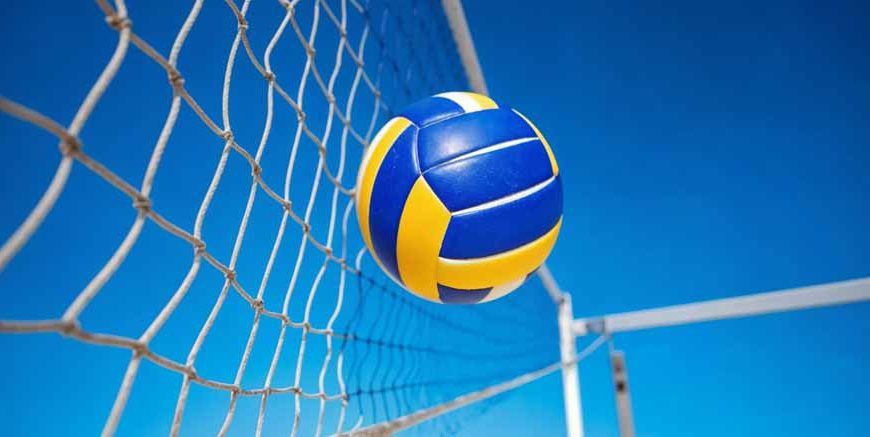
- It is usually painted in bright colours like yellow and blue so we can easily see it flying.
- Unlike a heavy football, it is soft so it does not hurt our arms when we bump it in the air.
- It is filled tightly with air, which makes it bounce incredibly high off the hard floor.
- I love throwing the ball up and trying to tap it right over the tall net.
10 Lines for Class 2 Students
When kids move up a year into Class 2, their vocabulary naturally expands. They can start describing the actual rules and the layout of the court. If your child needs to write ten points for a school project, here is a handy, age-appropriate list they can use:
- This energetic sport needs two teams playing on a court separated by a high net.
- Each team has six active players ready to jump and defend their own side.
- The main rule is that you must keep the ball in the air using your hands and arms.
- You score a point when the ball touches the ground on the other team’s side.
- Players cannot hold, carry, or throw the ball at any time during the match.
- A team can only touch the ball three times before sending it back over the net.
- We play it indoors on wooden floors or outdoors on warm, sunny beaches.
- The person standing at the very back starts the game by serving the ball.
- Everyone talks to each other and shouts loudly so they do not crash into their friends.
- Playing this game makes my legs strong, my arms fast, and keeps me very healthy.
Read More – Essay on Basketball in English for Kids
A Complete volleyball essay for Class 3
By the time children reach the third grade, they are entirely ready for paragraph structures. They can weave individual thoughts together to tell a flowing story. Here is a short volleyball essay they can use as inspiration for their writing tasks.
This thrilling game is one of the most popular sports around the world because it is incredibly fast and requires brilliant teamwork. A match begins with a strong serve, sending the ball soaring right over the net. The receiving team then has up to three touches to return it safely. Usually, the first person bumps the ball off their forearms to slow it down. The second person sets it high into the air using their fingertips.
Finally, the third person jumps up and spikes it down hard. Because everything happens so quickly, players have to stay alert and constantly watch the ball. You cannot win a match on your own. You have to trust your friends to cover the empty spots on the court. Whether we play on the beach during a summer holiday or in the school gym, it is always a fun adventure.
The Real-World volleyball application
Why do schools encourage children to play this specific sport? The true volleyball application in daily life goes way beyond just burning off energy. Think about the strict rules of the game. One person cannot hit the ball twice in a row. You are literally forced by the rules to pass it to your teammate. This builds an immense amount of social trust.
It teaches kids that sharing is not just a nice thing to do; it is the only possible way to succeed. They learn to communicate clearly under pressure, shouting to claim a pass or cheering loudly when a friend scores a tricky point. These are the exact communication skills they will use later in life, whether they are working on a difficult university project or running a busy office.
Read More – Essay On Park in English for Kids
Conclusion
Sports are the ultimate classroom without walls. A simple game bounded by a net and some painted lines teaches a child how to fall down safely, how to get right back up, and how to lean on the people standing next to them. When a child sits down to write about these experiences, they cement those vital life lessons into their memory forever. They slowly start to realise that every successful spike over the net required a perfect pass from a teammate just seconds before. That beautiful realisation, that we are all connected and need each other to succeed, is the true victory of childhood sports. To explore more engaging ways to support your child’s early education and physical development, visit the EuroKids Blog and secure their place today through EuroKids Preschool Admission.
FAQs
Is the ball too heavy for a younger child to hit?
Professional balls can sting a bit, but primary schools use specially designed, ultra-lightweight foam training balls. They are incredibly soft, completely removing any fear of getting hurt while learning the ropes.
What is the most important skill for a beginner to practise?
Learning the proper forearm pass, often called a ‘bump’, is crucial. Children must learn to create a flat, steady platform with their arms and let the ball bounce off them without swinging wildly.
Can young children actually serve the ball over a tall net?
During early physical education classes, teachers significantly lower the net and let the kids stand much closer to the middle of the court. This ensures they get to experience the joy of a successful serve without feeling frustrated.