Every single morning, before we even manage to swing our legs out of bed and rub the sleep from our eyes, a massive, entirely silent factory is already furiously hard at work inside us. It is pumping warm fluids, filtering the air, and sending lightning-fast electrical messages from our toes straight up to our brains. The human machine is an absurdly brilliant piece of engineering. Yet, most children simply treat their physical forms as a basic vehicle to run to the swings, climb trees, or aggressively chase a football across the muddy grass.
Teaching them exactly how this fleshy, bone-filled machine actually operates turns a boring, dry biology lesson into a highly fascinating puzzle of self-discovery. Rather than just asking them to blindly memorise a textbook diagram, we can turn their anatomy into a fun, interactive challenge. Let us break down the absolute best ways to test their knowledge and explore the hidden, bizarre mechanics keeping us alive every single day.
The Value Of Biological Trivia
When a young child understands exactly what sits beneath their skin, it completely shifts how they view their own health and safety. Regularly asking them human body general knowledge questions is not just about making them sound clever in front of their primary school teachers. It is about building vital spatial awareness and practical health literacy.
If you simply tell a child to put a heavy safety helmet on before riding their bicycle, they will likely complain that it feels itchy or looks silly. However, if they have already learned through trivia that their skull is a fragile bone cage protecting their soft, squishy brain, the safety rule suddenly makes perfect logical sense.
Similarly, explaining the mechanics of how the stomach aggressively dissolves food with strong acids makes the concept of eating a healthy, balanced dinner much more interesting than simply ordering them to finish their green vegetables. Knowledge removes the mystery and replaces it with genuine, protective respect for their own physical form.
Read More – Discover the Organs in the Human Body
Creating An Interactive Challenge
If you want to ensure the information actually sticks in their developing memory, you cannot deliver a human body quiz with answers like a highly stressful school examination. It needs to feel entirely like a game.
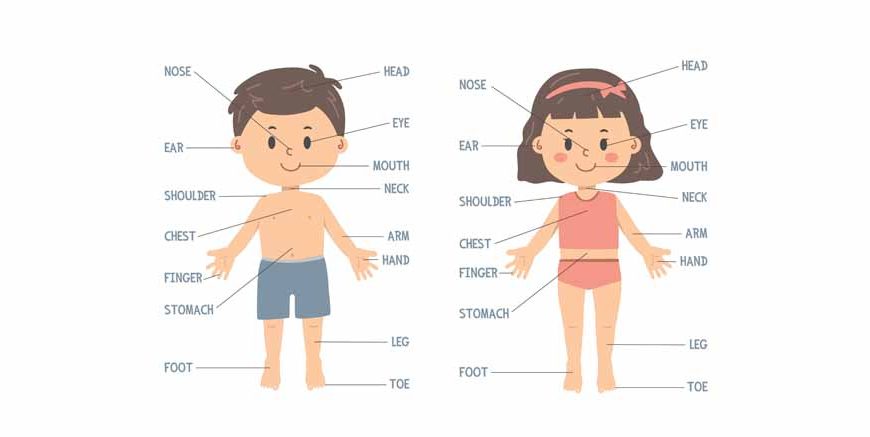
The best place to tackle these questions is during a long, boring car journey, or while sitting around the dinner table on a quiet Sunday afternoon. Make it a highly physical game. If you ask them a question about a specific bone or joint, encourage them to physically touch that exact spot on their own body before they are allowed to shout out the answer.
If you ask them about their heart, make them sit perfectly still and press two fingers against their neck to physically feel the heavy, thumping pulse. By tying the spoken vocabulary directly to a physical sensation, the brain permanently locks the information away.
The Ultimate Biology Quiz List
Here is a comprehensive, kid-friendly list of thirty-five questions covering everything from basic limbs to fascinating internal organs. They are perfectly designed to spark loud debates and a lot of pointing during your next family game night.
- What massive organ sits safely inside your skull and controls every single thought?
- How many lungs does a healthy human have inside their chest?
- Which hard-working muscle constantly pumps red blood around your entire body?
- What is the absolute largest organ that covers your outside and keeps your insides safe?
- What do we call the hard, white framework hidden deep inside your body?
- How many baby teeth do we naturally grow before they all wobble and fall out?
- Which dark, circular part of your eye opens up to let the light in so you can see?
- What are the small, hard, scratchy shields at the very ends of your fingers called?
- Which watery liquid sits in your mouth to help soften your dinner?
- What is the name of the long tube that carries chewed food straight down to your stomach?
- Which part of your face helps you physically smell a cake baking in the oven?
- What complex joint helps your long leg bend perfectly in the middle?
- What sharp joint allows your arm to fold in half so you can touch your shoulder?
- Which specific sense are you using when you stroke a very fluffy cat?
- What pair of organs do you use to pull invisible oxygen out of the air?
- Where does your mashed-up food go immediately after you finally swallow it?
- What do we call the small patches of hair growing horizontally right above your eyes?
- What is the bright, beautifully coloured part of your eye actually called?
- Which massive, heavy organ cleans your dirty blood and creates a bitter green liquid?
- What specific pigment naturally gives your skin and your hair its dark or light colour?
- How many primary senses do human beings typically use to explore the world?
- What flexible muscle sits inside your mouth and helps you taste different flavours?
- What are the thousands of tiny, invisible bumps sitting on your tongue called?
- Which strong bones in your face constantly move up and down to help you chew tough food?
- What is the warm, red liquid that constantly travels through your microscopic veins?
- What heavy gas do we naturally breathe out after our body finishes using the oxygen?
- What do you call the funny, sudden noise you make when air gets trapped in your throat?
- What salty water drops out of your eyes when you feel very sad or chop an onion?
- What is the absolute longest, heaviest bone in your entire body?
- What thin, curved bones protect your heart and your lungs exactly like a bird cage?
- What short, thick digit on your hand helps you easily grip a pencil or hold a cup?
- What specific part connects your heavy, round head safely to your broad shoulders?
- What tiny, microscopic holes do we sweat through when we get way too hot?
- Which incredibly fast muscles cover your eyes to protect them from flying dust?
- What is the soft, squishy tissue hidden directly inside the middle of your bones called?
Answer: The brain.
Answer: Two.
Answer: The heart.
Answer: The skin.
Answer: The skeleton.
Answer: Twenty.
Answer: The pupil.
Answer: Fingernails.
Answer: Saliva.
Answer: The food pipe (or oesophagus).
Answer: The nose.
Answer: The knee.
Answer: The elbow.
Answer: Touch.
Answer: The lungs.
Answer: The stomach.
Answer: Eyebrows.
Answer: The iris.
Answer: The liver.
Answer: Melanin.
Answer: Five (Sight, smell, touch, taste, hearing).
Answer: The tongue.
Answer: Taste buds.
Answer: The jaw.
Answer: Blood.
Answer: Carbon dioxide.
Answer: A hiccup.
Answer: Tears.
Answer: The thigh bone (or femur).
Answer: The ribs.
Answer: The thumb.
Answer: The neck.
Answer: Pores.
Answer: Eyelids.
Answer: Bone marrow.
Read More – Best Body Parts Activities for Preschoolers
Conclusion
Stripping away the boring textbook jargon and looking at the raw, physical biology of our bodies completely changes how a young mind views themselves in the mirror. They stop seeing just a face and start recognising a highly complex, brilliantly engineered survival machine. It is genuinely thought-provoking to realise that a simple trivia game can completely reshape a child’s understanding of their own fragility and strength.
When they finally understand that their ribs act as a physical shield, or that their skin acts as a waterproof coat repairing itself every single month, they naturally begin treating their bodies with the heavy respect it deserves. We only get issued one of these magnificent machines for our entire journey, so teaching the next generation precisely how it works is the greatest gift we can provide. Discover more fantastic ways to fuel your child’s daily learning, nurture their boundless curiosity, and explore the wonders of biology by diving into the EuroKids Blog, and secure their exciting educational adventure today through EuroKids Preschool Admission.
H2 -FAQs
Is it normal for a young child to not know where their organs are?
Yes, it is entirely normal. Because organs are completely hidden from plain sight, children struggle to conceptualise them until they are actively taught using physical pointing games or clear, kid-friendly diagrams.
How can I explain the circulatory system to a five-year-old?
Keep it highly visual and practical. Compare the heart to a massive water pump, and their veins to tiny garden hoses that deliver food and air to every single inch of their growing body.
Why do kids ask so many weird questions about their bodies?
Children are naturally curious scientists actively testing the boundaries of their environment. When their bodies make a strange noise, produce a weird smell, or feel pain, they simply want to understand the mechanical cause and effect behind it.