Imagine sitting at your kitchen table, attempting to bake a batch of chocolate chip biscuits using a fantastic recipe you found on an American website. The instructions confidently tell you to preheat your oven to 350 degrees. If you blindly twist the dial on your British oven to the number 350, you are going to end up with a tray of smoking, blackened charcoal instead of a sweet afternoon treat.
Why does this happen? It all comes down to the fact that different parts of the world speak completely different languages when it comes to measuring heat. Understanding these invisible numbers is a brilliant way to help children make sense of global weather reports, basic science experiments, and everyday cooking. Today, we are going to untangle the numbers on the thermometer and explain exactly how we measure hot and cold.
The Basics of Measuring Heat
To get to the bottom of this, we first need to answer a very basic question: what is temperature scale in the first place? Simply put, it is an agreed-upon system of numbers used to measure exactly how much heat energy is trapped inside an object or floating in the air.
Without a reliable temperature scale, we would just be guessing. One person’s idea of a ‘warm’ bath might be completely freezing to someone else. We need strict numbers to keep things fair and scientifically accurate. If a curious student asks you to name the scales used to measure temperature, you only really need to remember three main ones to cover almost every situation on Earth and in deep space.
Read More – Fascinating Science Facts for Kids
The Everyday European Standard
Let us start with the system we use every single day in the UK and across most of the globe. If you are wondering what is the celsius scale of temperature, it is the absolute easiest system for children to learn because it is based entirely on something they interact with daily: water.
Originally known as the centigrade system, this measurement was created by a clever Swedish astronomer named Anders Celsius.
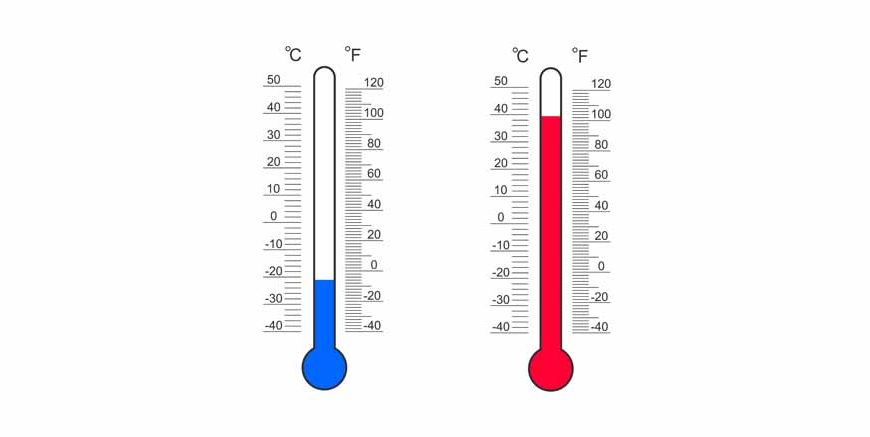
He wanted a measurement system that made logical sense. So, he decided that the exact moment water freezes into solid ice should be marked as zero. Then, he decided that the exact moment water gets hot enough to boil and turn into steam should be marked as 100. It is a perfectly neat, tidy scale ranging from 0 to 100 for everyday things. This makes doing mental maths regarding the weather incredibly straightforward for kids.
The American Way
Now, we cross the ocean to look at the system used primarily in the United States. The range of fahrenheit scale looks completely random to anyone who did not grow up using it.
Created by a physicist named Daniel Gabriel Fahrenheit, this system places the freezing point of water at 32 degrees and the boiling point of water at a massive 212 degrees. Because the gap between freezing and boiling is much larger here (180 degrees of difference compared to just 100 in the Celsius system), each individual degree represents a slightly smaller change in actual heat.
When older children start doing science homework, they quickly realise that the centigrade and fahrenheit scales are related as a bit of a tricky mathematical puzzle. They are entirely different ways of measuring the exact same heat. To accurately swap between them, you have to multiply the Celsius number by 1.8 and then add 32. However, a brilliant, quick trick you can teach kids for everyday guessing is to just double the Celsius number and add 30. It will not be scientifically perfect, but it will quickly tell them if they need to wear a heavy winter coat or a light summer t-shirt!
Read More – Heat Zones of the Earth
The Ultimate Science Ruler
When we leave the kitchen and the daily weather reports behind and step into a high-tech laboratory, scientists need something much stricter. This brings us to the most extreme measurement of all. So, what is the kelvin temperature scale?
Also formally known as the thermodynamic temperature scale, this system was designed by Lord Kelvin for hardcore science. You see, heat is actually just the physical movement of tiny atoms. When things are hot, the atoms are dancing around quickly. When things are cold, the atoms slow down. Lord Kelvin wanted a scale that started at the exact point where atoms stop moving completely.
This absolute freezing point is called ‘Absolute Zero’. Because the scale starts at the lowest possible physical energy limit in the universe, there are absolutely no negative numbers in this system. Absolute Zero is marked as 0 K. If you want to know how cold that is in our normal language, it is a staggering -273.15 degrees Celsius!
Spotting the Differences
To make studying for a science test incredibly easy, let us clearly break down the difference between kelvin celsius and fahrenheit by looking at how they handle three completely normal, everyday things:
- Freezing Water: In Celsius, it happens at 0. In Fahrenheit, it happens at 32. In Kelvin, it happens at a massive 273.15.
- Boiling Water: In Celsius, the kettle boils at 100. In Fahrenheit, it boils at 212. In Kelvin, it boils at 373.15.
- A Healthy Human Body: A normal forehead feels warm at about 37 in Celsius, 98.6 in Fahrenheit, and roughly 310 in Kelvin.
Summary
Looking closely at how the world measures hot and cold proves that humans are incredibly good at inventing different ways to solve the exact same problem. It is genuinely thought-provoking to realise that when you say you are feeling ‘cold’, you are actually just saying that the tiny, invisible atoms in your skin have slowed down their dancing. Whether you are using a standard household thermometer to check if you need a jumper, or a massive telescope using thermodynamics to measure the heat of a distant, exploding star, you are simply counting how much invisible energy is trapped inside something. Understanding these different numbering systems helps growing children become truly global citizens, ready to read American recipes, travel to foreign countries, or even study deep-space astrophysics. To uncover more fascinating scientific concepts and find creative ways to boost your child’s daily learning, explore the latest educational resources on the EuroKids Blog and secure their vibrant academic future today through EuroKids Preschool Admission.
FAQs
Why doesn’t the whole world just use one system?
People are very used to the systems they grew up with. While almost the entire world has officially adopted the metric Celsius system for daily life, the United States has kept Fahrenheit because changing millions of road signs, ovens, and weather stations would be incredibly difficult and expensive.
Is it possible to get colder than zero Kelvin?
No, it is physically impossible. Zero Kelvin is known as Absolute Zero, which is the exact point where all atomic movement completely stops. You cannot have less movement than standing completely still!
Does the UK ever use Fahrenheit anymore?
Sometimes you might hear older generations use it during a very hot summer, saying something like “It is in the nineties today!” However, all official weather reports, schools, and modern appliances in the UK strictly use Celsius.