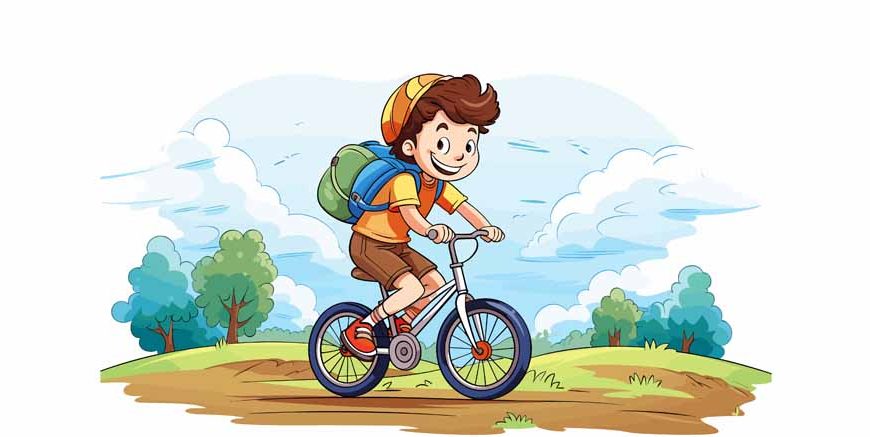
The rhythmic clicking of a metal chain and the gentle hum of rubber tyres on the pavement are the universal sounds of childhood independence. Before a young child ever learns to drive a car or navigate a complex public transport system, they conquer the bumpy pavement on two wheels. Mastering those pedals is a massive, highly emotional milestone filled with wobbly starts, scuffed knees, and eventual, soaring triumph. Writing an essay on bicycle adventures helps young learners put that thrilling, physical experience into clear, descriptive words, allowing them to practice their growing vocabulary while discussing something they genuinely love.
Understanding the True bicycle meaning
Let us break down the exact bicycle meaning for young, developing minds. Technically speaking, it is a highly efficient, human-powered vehicle featuring two wheels attached to a solid metal frame, driven entirely by pushing foot pedals. However, if you ask a seven-year-old for the definition, the meaning completely shifts. To a child, it is a shiny, metal horse. It is their very first golden ticket to independent travel, allowing them to race the evening wind down the local park paths and explore the far corners of their neighbourhood without holding an adult’s hand.
Read More – Teaching Kids About Bicycle Safety and Helmet Use
10 Lines for Class 1 Students
When very young children try to draft a sentence about bicycle fun, keeping the language highly factual, short, and punchy is the best educational approach. Here is a simple, straightforward list perfect for first graders looking to practice their early handwriting and reading skills:
- I have a beautiful, bright red bicycle.
- It has two round wheels and a soft black seat.
- My parents bought it for me on my fifth birthday.
- It has a loud, shiny silver bell on the handlebars to warn people.
- I always wear a hard blue helmet to keep my head completely safe.
- I use my strong feet to push the pedals and make it move forward.
- My bicycle does not need any dirty petrol to run.
- I ride it in the local park every single evening with my school friends.
- Riding makes my leg muscles feel very strong and incredibly fast.
- I absolutely love my bicycle because it is my favourite outdoor toy.
A Short paragraph on cycling for Class 2
As children confidently enter the second grade, they can begin linking their isolated sentences together to form a cohesive, descriptive paragraph on cycling. This teaches them the basic structure of a story.
Every afternoon, I take my favourite blue bicycle out into the back garden. Cycling is a marvellous physical exercise that keeps my growing body highly active and perfectly healthy. When I vigorously push the pedals, the cool, fresh air rushes past my face, making me feel incredibly happy and free. I always make sure to wear my protective safety gear, especially my heavy helmet and thick knee pads, before I start rolling down the driveway. If I want to turn, I carefully twist the shiny handlebars to the left or the right. It is the absolute best way to spend a sunny weekend afternoon playing outside with my family.
Read More – Road Safety Essay for Kids
A Detailed bike essay for Class 3
By the time a student reaches the third grade, they are fully capable of tackling a much more comprehensive bike essay that touches upon both environmental impact and complex mechanical functions.
A bicycle is far more than just a fun playground toy; it is an incredibly brilliant, eco-friendly mode of transport. Unlike heavy cars or incredibly noisy motorbikes, it does not release any thick, harmful exhaust smoke into the air, which actively helps keep our local environment completely clean and safe to breathe. Learning to physically balance on two narrow rubber tyres takes immense concentration and highly brave practice.
When I first tried to ride my bicycle without the small, supportive training wheels attached to the back, I felt extremely nervous and wobbled a terrible amount. However, by fiercely refusing to give up and getting right back on the leather saddle after a tiny fall, I finally mastered the tricky balance. Now, I can confidently steer around tight corners and firmly squeeze the hand brakes to stop safely. This simple machine has taught me a wonderful, lifelong lesson about patience and resilience.
The Physical and Mental Benefits of Riding
Writing about this topic also means celebrating how the physical act of riding transforms a child’s rapidly developing brain. When a child learns to accurately steer, quickly pedal, and maintain their centre of gravity all at the exact same time, their brain fires on multiple different cylinders.
This active, highly physical style of problem-solving aligns perfectly with progressive educational frameworks like the Heureka curriculum, which strongly emphasises learning through direct, messy, hands-on experience rather than passive, silent watching. The child physically experiences the complex laws of gravity and momentum in real-time, instead of just reading about them in a dry, boring science textbook. They learn how to instantly calculate distance, measure their own speed, and react quickly to sudden obstacles in their path.
Read More – Essay On Health And Fitness in English for Kids
Conclusion
The emotional journey from gripping the rubber handlebars in pure terror to coasting smoothly down a grassy hill is a beautifully accurate metaphor for growing up. The bicycle secretly acts as a child’s very first, incredibly strict teacher of personal resilience. It physically demands that they try, fail, fall down, and bravely try again until they finally succeed. It is genuinely thought-provoking to realise that a simple metal frame with two spinning tyres can actively build a child’s unshakeable self-confidence, teaching them that they have the absolute personal power to steer their own path forward in life. To discover more wonderful, practical ways to nurture your child’s brave independence and support their daily academic growth, explore the brilliant educational resources on the EuroKids Blog and secure their vibrant learning journey today through EuroKids Preschool Admission.
FAQs
What is the most important safety rule for a child learning to ride?
Wearing a properly fitted, hard safety helmet is the absolute most critical, non-negotiable rule, as it physically protects the delicate head and brain from severe injury during an unpredictable accidental fall.
At what age should a child learn to ride without their supportive training wheels?
Every child develops entirely at their own unique pace, but most children naturally develop the physical balance and gross motor skills required to ride without support between the ages of four and eight years old.
Why is cycling universally considered an eco-friendly transport method?
It relies entirely on pure human muscle power, meaning it burns absolutely no ancient fossil fuels and releases zero harmful exhaust fumes or greenhouse gases into the earth’s delicate atmosphere.