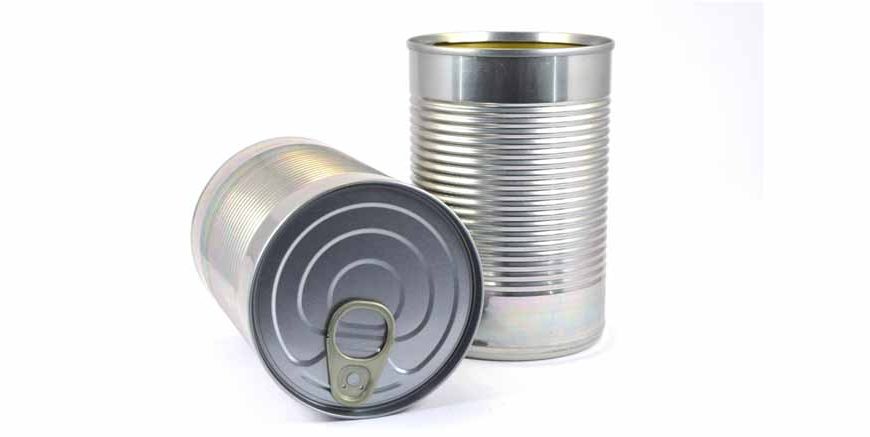
Most children immediately associate the word ‘tin’ with a standard baked bean can or the crinkly foil wrapped around their packed lunch sandwiches. However, this incredibly versatile, shiny, and silvery-white substance has been quietly holding human civilisation together for thousands of years. Long before the invention of modern plastics, stainless steel, or digital computers, ancient blacksmiths discovered that adding a tiny handful of this soft material to copper created a brand new, highly durable alloy called bronze.
This single chemical discovery sparked an entire historical era known as the Bronze Age, completely changing how early humans built tools, farmed the rocky land, and constructed ancient empires. Vast global trade routes were established purely to hunt down this valuable resource. Today, it remains one of the most useful materials on the planet, secretly powering our modern technology and keeping our pantry food fresh on the shelves. Helping young learners understand the natural building blocks of our physical world makes science feel incredibly real and relevant to their daily lives. Let us delve straight into the core facts to understand exactly how this fascinating element works.
Understanding what is tin metal and its origins
When curious young students ask what is tin metal, we are looking at a highly pliable, silvery-white post-transition metal that is pulled directly from the earth. Unlike hard cast iron or heavy, dense rocks, it is remarkably soft and malleable. You can actually cut a pure, solid block of it with a standard, sharp kitchen knife if you apply a little bit of force.
When people wonder exactly what tin is made up of, the scientific answer is quite straightforward. It is a pure chemical element, meaning it is not a baked mixture of different ingredients or manufactured chemicals. Its basic tin composition consists entirely of identical atoms vibrating together in a steady metallic structure. Historically, it has always been quite a rare find in nature. It is mostly extracted from a heavy, dark, and ancient mineral called cassiterite.
For many centuries, the rainy region of Cornwall in the United Kingdom was one of the most important mining centres in the entire world, sending wooden ships full of this precious ore across the globe. Miners would dig the cassiterite out of deep, dangerous underground rock veins or pan for it in cold, running riverbeds.
Read More – What is Cobalt Element?
Exploring the tin periodic table data
Scientists strictly organise every single known element in the universe on a large, colourful chart so that they can quickly predict how different chemicals will react with one another. If you look closely at the tin periodic table section, you will find it sitting comfortably in Group 14, right underneath carbon and silicon.
But here is a fantastic historical mystery for primary school children to solve: the tin element symbol is actually Sn. This often confuses young students immensely because the letters do not match the modern English word at all! The chemical symbol of tin comes from its ancient Latin name, stannum. The Romans used this word heavily when they traded the metal across their vast empire, and the abbreviation simply stuck in the scientific community.
When studying the periodic table tin entry in a science textbook, you will also notice some highly important scientific numbers attached to the box. It has an atomic number of 50, which simply means every single atom contains exactly 50 protons packed tightly inside its central core. Additionally, the standard tin mass number is recorded as roughly 118.7. This specific mass number tells laboratory scientists exactly how heavy the core of the atom is when compared to other, much lighter elements floating around, such as pure oxygen gas or lightweight helium.
Read More – Unveiling the Periodic Table and Its Secrets
Amazing physical properties
This specific material exhibits some incredibly quirky physical behaviours that make it highly useful for modern engineering and manufacturing. Here is a clear, detailed list of its most unusual and beneficial properties:
- The Crying Metal: If you take a solid, pure bar of this metal and bend it quickly near your ear, you will actually hear a strange, high-pitched crackling or screaming noise. Scientists refer to this odd phenomenon as the ‘tin cry’. It happens simply because the microscopic internal crystals are forcefully breaking and rubbing against each other as the metal bends.
- High Rust Resistance: Unlike standard iron, which turns bright orange and drops flaky dust when left outside in the damp rain, this material does not rust or corrode easily when exposed to water. It acts as a brilliant, waterproof shield against the harsh elements.
- Low Melting Point: It melts very quickly when exposed to a simple heat source. Because it turns into a hot liquid at a relatively low temperature, it is exceptionally easy for factory workers to mix it with other metals or use it as a liquid metallic glue for delicate electrical wires.
- The Winter Disease: In extremely freezing temperatures, this shiny metal actually changes its entire physical structure and slowly crumbles into a dull, grey powder. Historians call this strange crumbling effect ‘tin pest’.
- Non-Toxic Nature: It is highly safe to use near hot food and clean drinking water, which is precisely why it has been a staple material in busy domestic kitchens and royal dining halls for centuries.
How we rely on it today
Even though we do not use heavy, solid chunks of it for drinking cups as much as ancient blacksmiths and medieval kings did, it is still hiding in plain sight all over your modern house.
The absolute most famous example is the standard baked bean can sitting in the kitchen cupboard. Interestingly, these food cans are actually manufactured out of strong, rigid steel. However, they are coated with a microscopically thin layer of this rust-proof metal to stop the wet food inside from rotting the steel walls.
It is also heavily relied upon in modern electronics. Every single time you play a game on a tablet or watch a cartoon on the television, the tiny, green computer chips inside are securely glued together using a special melted metallic mixture called solder, which relies heavily on this soft metal. Furthermore, modern glass manufacturers use a massive, boiling bath of this melted liquid metal to float hot, molten glass on top. Because the liquid metal is perfectly smooth, the glass sets completely flat, creating the brilliant, clear window panes we use for our houses and cars.
Read More – Fascinating Science Facts for Kids & Students
Conclusion
Learning about the raw elements that build our world transforms a standard, dry science lesson into a highly engaging detective story. It is genuinely thought-provoking to realise that a soft, shiny metal discovered and traded by dusty, ancient civilisations is the exact same material currently holding the microscopic computer chips inside our modern smartphones safely together.
It proves that the earth continuously provides us with timeless building blocks; it is simply up to human ingenuity and clever engineering to figure out completely new ways to use them. Our absolute daily reliance on these hidden natural resources highlights the deep, unbroken connection between ancient human history and rapid modern technology.
To discover more fascinating science facts and give your child the perfect learning environment to grow under the brilliant Heureka Curriculum, read through our latest educational updates on the EuroKids Blog and secure their vibrant educational journey today via EuroKids Preschool Admission.
FAQs
Is modern kitchen foil actually made of this metal?
Surprisingly, the modern kitchen foil we use today is entirely made out of aluminium. We just continue to call it by its old historical name because aluminium replaced it many decades ago due to being much cheaper to produce on a massive scale.
Why do we mix it with copper?
Copper is a very soft metal on its own. When you melt it down and add a small portion of this element, the two chemicals combine to create bronze, which is an incredibly hard alloy perfect for making heavy statues, bells, and strong tools.
Can you find pure veins of it in the ground?
It is extremely rare to find it sitting purely on its own in the soil. It almost always binds with oxygen to form heavy rock ores, meaning miners have to heat the crushed rocks in massive, roaring furnaces to successfully extract the pure metal inside.