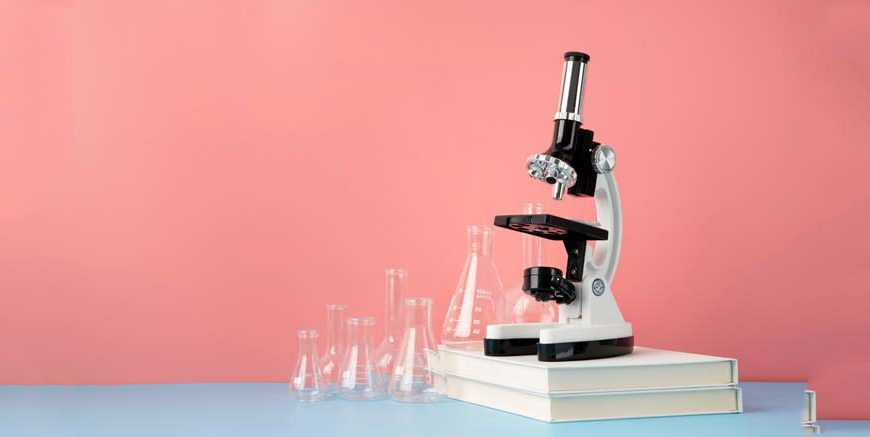
A tiny drop of water can hold an entire hidden world. A leaf that looks smooth to the eye can reveal beautiful patterns when seen closely. This sense of wonder begins when children first learn about the microscope. It is not just a scientific tool but a doorway to curiosity, discovery and observation. Understanding the uses of microscope helps children realise that learning science is not about memorising facts but about exploring life itself.
This guide is designed to help students clearly understand the microscope meaning, its types, functions and real-life applications in a simple and engaging way.
Microscope Meaning and Basic Understanding
The microscope meaning is simple. A microscope is a scientific instrument used to see very small objects that cannot be seen clearly with the naked eye. The word microscope comes from two Greek words meaning small and to look.
When students ask what is the use of a microscope, the answer is easy. It helps us study tiny living and non-living things like cells, bacteria, fibres and insects in great detail.
Learning the study of microscope builds observation skills, patience and curiosity which are important learning habits in early education.
Read More – Fun Learning with Science Kits for Kids
Microscope Information for Students
Basic microscope information includes understanding how it works. A microscope uses lenses to magnify objects. Magnification means making small things appear bigger so that we can study their structure.
In classrooms and laboratories, microscopes help students learn biology, chemistry and environmental science in a hands-on way. These microscope notes form the foundation for future scientific learning.
How Many Types of Microscope Are There
Students often wonder how many types of microscope exist. There are many types used for different purposes. At the school level, students mainly learn about light-based microscopes. At higher levels, advanced microscopes are introduced. Understanding the various types of microscope helps students connect scientific tools with real-world uses.
Read More – 100 Science Quiz Questions and Answers for Kids
Different Types of Microscope Explained Simply
Light Microscope
The most commonly used microscope in schools. It uses light and lenses to magnify objects. The uses of light microscope include studying plant cells, animal cells and microorganisms.
Compound Microscope
This microscope has more than one lens for higher magnification. The application of compound microscope is common in laboratories to study cells and tissues.
Simple Microscope
A simple microscope uses a single lens. It works like a magnifying glass and is useful for basic observation.
Electron Microscope
Used in advanced laboratories. It provides extremely high magnification and helps scientists study viruses and tiny cell parts.
Scanning Microscope
Used to study the surface of objects in detail.
These are some of the different types of microscope students learn about during their academic journey.
Read More – Science Gifts for Kids’ Exploration
10 Different Types of Microscope at a Glance
To answer the question, what are the different types of microscope, here are commonly known ones used in science.
- Simple microscope
- Compound microscope
- Light microscope
- Electron microscope
- Scanning electron microscope
- Transmission electron microscope
- Stereo microscope
- Digital microscope
- Fluorescence microscope
- Phase contrast microscope
Learning about 10 different types of microscope helps students understand how science adapts tools for different discoveries.
Read More – How do you make science interesting for kids
Uses of Microscope in Daily Learning
The uses of microscope go far beyond classrooms. The use of microscope includes studying bacteria in water, observing blood cells, examining plant tissues and understanding how insects are structured. In schools, microscopes help children see what books cannot fully explain. This practical exposure strengthens concept clarity and interest.
Microscope Uses in Laboratory
The microscope uses in laboratory is very important. Scientists use microscopes to diagnose diseases, research medicines and study microorganisms. The application of microscope in laboratories has helped in major medical discoveries and treatments.
Application of Light Microscope
The application of light microscope is especially useful in schools and basic laboratories. It is used to observe onion cells, cheek cells and pollen grains. These activities help students connect theory with practice and make science enjoyable.
Read More – Science Shows for Kids to Enhance their Knowledge
Educational Importance of Microscope for Children
Learning about microscopes supports scientific thinking. Children learn to ask questions, observe carefully and record what they see. At EuroKids, learning is designed to encourage exploration rather than rote learning. The HEUREKA Curriculum focuses on experiential learning where children understand concepts through observation and discovery. The study of microscope fits naturally into this approach by nurturing curiosity and critical thinking from an early age.
Microscope Notes for Easy Revision
Students preparing for exams often rely on clear microscope notes. These notes include definitions, types, uses and diagrams. Understanding the application of microscope helps students answer questions confidently and clearly.
Read More – Importance of Science Exhibitions in Schools
Types of Microscope PDF and Learning Resources
Many students search for types of microscope pdf to revise their lessons. Visual learning resources with diagrams make understanding easier and more effective.
Schools that integrate digital and hands-on learning create stronger foundations in science education.
Why Learning About Microscopes Matters Early
Early exposure to tools like microscopes builds scientific literacy. Children begin to understand that science is not distant or difficult but a part of everyday life. Knowing what is the use of microscope inspires children to explore nature, health and the environment with curiosity.
Learning Science the EuroKids Way with HEUREKA Curriculum
At EuroKids, science learning is hands-on and meaningful. The HEUREKA Curriculum encourages children to explore, ask questions and learn by doing. Concepts like microscopes are introduced through age-appropriate activities that build curiosity rather than fear of science. This approach ensures that children develop confidence and a love for learning that stays with them for life.
The EuroKids Franchise is built on trust, innovation and child-centric learning. With a structured curriculum, trained educators and modern teaching methods, EuroKids creates a strong foundation for early education. Parents looking for quality preschool education benefit from a system that blends academics with life skills and curiosity-driven learning.
Read More – Toddler-Friendly Science Experiments At Home
Explore More on the EuroKids Blog
The EuroKids Blog offers insightful articles on early education, child development and learning tools. From science basics to everyday learning tips, the blog supports parents and educators in nurturing young minds.
Final Thought
A microscope teaches children one powerful lesson. There is always more to discover if we look closely. By introducing tools like microscopes early, education becomes an adventure rather than a task. With the right guidance and curriculum, every child can become a curious explorer of the world around them.
FAQs on Microscope for Students
What is the microscope meaning in simple words?
A microscope is a tool that helps us see very small things clearly.
What are the main uses of microscope?
The uses of microscope include studying cells, bacteria, plants and small organisms.
How many types of microscope are taught in school?
Students usually learn about simple, compound and light microscopes at school level.
What is the application of compound microscope?
The application of compound microscope is studying cells and tissues at higher magnification.
Why is microscope important for students?
It helps students understand science practically and improves observation skills.