Every year, parents face a common dilemma when the holiday season arrives. You want your young children to appreciate their cultural roots, but competing with digital screens, video games, and animated shows feels incredibly difficult. When a school teacher asks for an Onam essay, children often see it as a dry homework chore rather than an entry point to an epic historical tale. They might copy a few random facts from an old textbook without ever understanding why a whole state bursts into absolute joy during this time.
This complete guide solves that problem directly for your family. It breaks down Kerala’s festive spirit into simple, lively segments you can share with your little ones. By connecting ancient customs to everyday human values, you can help your child write a thoroughly engaging Onam essay in English that stands out in the classroom.
What is Onam?
The Onam festival is a spectacular ten-day harvest celebration that originates in the beautiful coastal state of Kerala, located in southern India. It falls during the traditional Malayalam month of Chingam, which usually corresponds to late August or early September in the calendar. This vibrant holiday marks the official state festival, bringing together people from all walks of life, regardless of their background or community.
Read More – Essay on Festivals of India for Kids
The Story of King Mahabali and Vamana
Long ago, Kerala was ruled by an incredibly kind and wise ruler named King Mahabali. Although he belonged to a family of powerful demons, his heart was full of pure gold. Under his fantastic reign, the entire land experienced complete peace, harmony, and prosperity. Poverty did not exist, crime was completely unheard of, and every single citizen lived in absolute equality.
The growing fame of King Mahabali eventually made the gods in heaven feel very anxious about losing their own influence. To test the king’s legendary charity, Lord Vishnu visited the earth disguised as Vamana, a very short and poor Brahmin boy. Vamana walked straight into the royal palace and asked for a simple favour: just as much land as he could measure out with three of his tiny footsteps. King Mahabali smiled warmly and granted the request instantly, refusing to back down from his word even when warned by his royal priest.
The moment the promise was sealed, the tiny boy began to expand into a massive cosmic form. With his very first giant step, Vamana measured the entire earth. With his second stride, he claimed the sky and the vast heavens. Realising that there was absolutely no space left for the final step, the honest king quietly bowed down and offered his own head.
Lord Vishnu was deeply moved by this supreme act of honesty and selflessness. Before sending the king to the netherworld, he granted Mahabali a wonderful annual boon. The king received special permission to return to his beloved homeland once every single year. The people of Kerala celebrate this holiday to welcome the spirit of their favourite ancient ruler, decorating their doorsteps to prove that they are still living happily and united.
How Early Education Enhances Cultural Roots
Early learning environments play a vital role in keeping these wonderful regional narratives alive for the younger generation. At EuroKids, educators move far away from rigid textbook memorisation by introducing children to cultural themes through interactive storytelling, simple flower crafts, and sensory experiences. By participating in group activities like sorting vibrant petals or listening to illustrated legends, young minds build strong fine motor skills, creative thinking, and a natural respect for diverse traditions. Experiencing the joy of festivals alongside peers helps children develop essential social-emotional values right from their foundational years.
Read More – Pongal Festival Essay for Kids
Conclusion
The ancient story of King Mahabali shows us that real prosperity is always built on the foundations of kindness, truthfulness, and looking after our neighbours. Onam teaches children that sharing our blessings with the wider community brings the truest form of happiness to our lives. As your family enjoys these bright holidays, encourage your little ones to practice the values of generosity, humility, and fairness in their daily interactions.
You can find more practical parenting tips and creative child development ideas on the EuroKids Blog or explore our holistic pre-school programs by applying for a EuroKids Preschool Admission today.
Frequently Asked Questions
1. Why do people wear cream-and-gold outfits during Onam?
The traditional attire, known as the Kasavu, features a simple cream cloth with a beautiful golden border. Wearing this uniform looks across the whole state represents purity, simple living, and a sense of shared pride during the new year festivities.
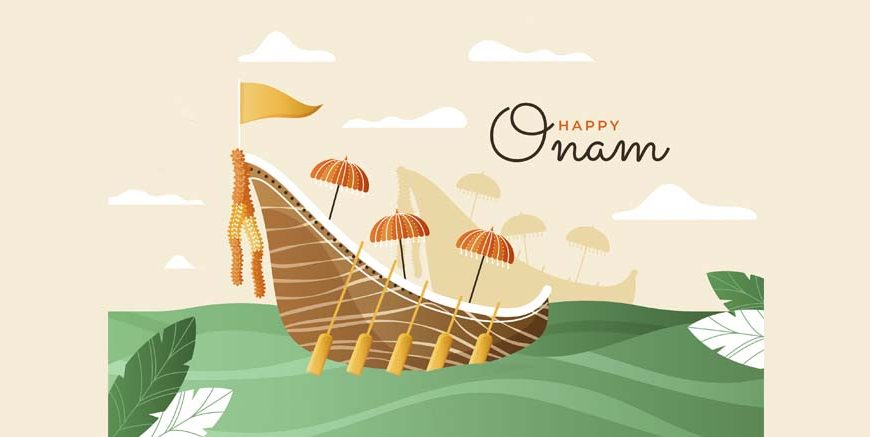
2. What makes the snake boat race a great lesson in teamwork?
A traditional snake boat requires over a hundred rowers to move their paddles at the exact same split second. If even one person drops out of rhythm, the entire boat slows down, showing kids that large goals are achieved when people work in perfect harmony.
3. Why is the feast served entirely on a banana leaf?
Using a fresh banana leaf is an eco-friendly tradition that honours nature and ensures complete cleanliness. It also provides a uniform way of dining where everyone shares the exact same meal sitting side by side, reminding us that no one is above another.
4. How can very young kids help with the festival at home?
Young children can take charge of tearing up flower petals into small pieces, sorting them into different colour bowls, and helping parents map out the simple outer circular guidelines for the courtyard flower carpet.