Take a deep, slow breath. Hold it in your lungs for just a second, and now let it all out. You probably assume you just inhaled a giant gulp of pure oxygen and breathed out carbon dioxide. You aren’t wrong, but you definitely missed a completely silent, invisible passenger that just hitched a ride into your body and floated right back out again. Almost one percent of the air surrounding you right now is made of a completely tasteless, odorless, and invisible gas called argon. It is constantly bumping into your skin, floating across your classroom, and hiding quietly inside everyday objects around your house.
Let’s pull back the invisible curtain. We are going to explore the unique identity of this gas, find out who finally caught it hiding in the air, and discover why its absolute “laziness” makes it incredibly useful for science and history.
What is the Meaning of Argon? (And Its Secret Identity)
To truly understand this element, you just have to look at its name. If you ask a scientist, “what is the meaning of argon?”, they will point you straight back to ancient Greece. The name comes from the Greek word argos, which literally translates to “lazy” or “inactive.”
Why would anyone bully a chemical element by calling it lazy? It all comes down to how it behaves. In the world of chemistry, some elements love to mix, explode, and react with other materials. Think about how iron mixes with oxygen to create crumbly rust. But this gas refuses to do that. It belongs to a special group called the noble gases. They are essentially the quiet introverts of the periodic table; they do not mix, they do not react, and they prefer to be left completely alone.
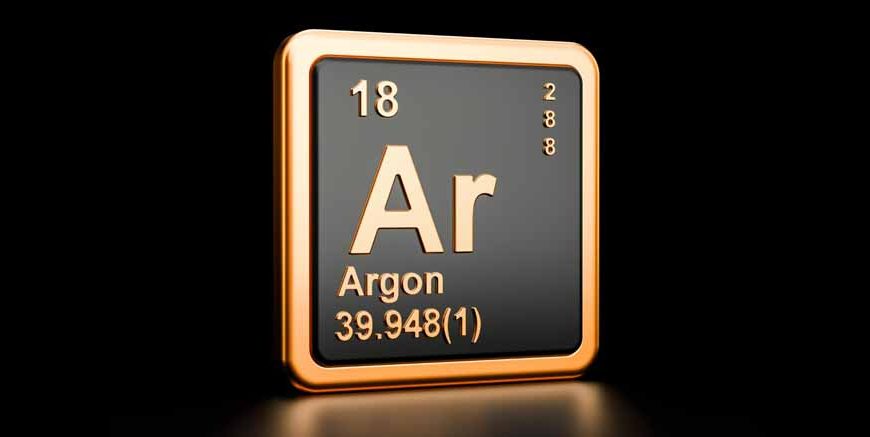
If you are looking at a science chart and wondering, what is the symbol of argon, you will find it easily. It is marked with the two letters Ar.
To identify it further, you need to look at its core. The official argon atomic number is 18. This simply means that if you could shrink down to a microscopic size and look directly at the center of the atom, you would see exactly 18 tiny protons packed tightly together. Finding the atomic no of argon right there in the middle of the periodic table proves that it is one of the foundational building blocks of our universe.
Read More – Discovering the Periodic Table Elements for Kids
The Great History Mystery: Argon was Discovered By?
Because this gas is completely invisible and refuses to react with anything, it successfully hid from human beings for thousands of years. It was hiding in plain sight!
So, how did we finally catch it? The credit for argon discovered by humans goes to two brilliant scientists in the year 1894: Lord Rayleigh and Sir William Ramsay. Lord Rayleigh was doing a very boring, routine experiment measuring the weight of nitrogen gas. He noticed something bizarre. The nitrogen he pulled directly from the outside air was slightly heavier than the nitrogen he made from chemicals in his laboratory.
He realized there had to be an unknown, heavy gas secretly mixed into the air. By teaming up with Sir William Ramsay, they finally isolated the “lazy” gas and proved it to the world. Their detective work was so impressive that they actually won the Nobel Prize!
An Ice Cold Reality: The Melting Point for Argon
Because we interact with this element as a gas floating in the air, it is hard to imagine it as a solid block of ice or a puddle of liquid. But just like water, it can freeze and melt. You just need to drop the temperature to a dangerously cold level.
The official melting point for argon is a staggering -189.4°C (-308.9°F). To put that extreme number into perspective, that is significantly colder than the absolute coldest winter day ever recorded in Antarctica! To turn this floating gas into a freezing liquid, scientists have to use specialized, heavy-duty lab equipment to chill it down.
Cool Real-World Uses and Argon Facts
You might be thinking, if this gas is so lazy and doesn’t do anything, why do we care about it? The truth is, its total lack of reaction is its greatest superpower. Here are some incredibly interesting facts about argon that show up in your daily life:
- Saving the Lightbulbs: Before modern LED lights, people used incandescent bulbs with a tiny, glowing metal wire inside. If you put regular air in that bulb, the oxygen would instantly burn the wire to a crisp. Instead, factories fill the glass bulbs with this lazy gas. It surrounds the hot wire, refuses to react with it, and keeps the light shining brightly for months.
- Protecting History: How do museums keep ancient, fragile pieces of paper from rotting away? They put them in sealed glass boxes filled with this exact element. The original American Declaration of Independence and the Magna Carta are currently protected by a blanket of this gas because it stops the paper from decaying over time.
- Glowing Signs: While neon signs are famous for glowing bright red, this gas has its own special party trick. If you pump it into a glass tube and shoot electricity through it, it creates a brilliant, glowing blue or purple light!
- Keeping Houses Warm: If you have thick, double-pane glass windows in your house, there is a very good chance the empty space between the two sheets of glass is pumped full of this gas. It acts as a transparent thermal blanket, stopping the freezing winter air from sneaking into your cozy living room.
Read More – Facts About the Noble Gases
Conclusion
Let’s quickly pull all these argon facts together. It is element number 18. It is completely invisible. It is freezing cold when melted down. And most importantly, it refuses to interact with basically anything else in the natural world.
But look past the simple science for a moment. This “lazy” element offers a rather beautiful lesson about how the world works. We usually praise things that are active, loud, and constantly moving. But sometimes, doing absolutely nothing is exactly what the universe needs. By standing perfectly still and refusing to react, this invisible gas protects our lightbulbs, preserves our most precious history, and keeps our homes warm. It proves that the quietest, most unseen things around us are often doing the most important work of all.
To read more fun, engaging, and educational articles, check out the EuroKids Blog, and visit our website for details on EuroKids Preschool Admission.
FAQs
Why is this specific gas considered “noble”?
In chemistry, noble gases are a unique family of elements that are incredibly stable. They rarely ever bond, mix, or react with other elements because their outer shell of electrons is completely full and satisfied.
Is it dangerous for humans to breathe it in?
No, it is not toxic or poisonous at all. You breathe in a small amount of it every single day naturally. However, in a closed room with zero oxygen, breathing only this gas would cause you to suffocate.
How does it actually protect old historical documents?
Oxygen and moisture cause old paper to turn yellow, crumble, and eventually rot away. By replacing the oxygen in a display case with a gas that refuses to react, the paper is basically frozen in time and stays completely safe.
Can I see it with my own eyes?
In its natural gas state, it is totally invisible and colorless. The only time you can actually see it is if you cool it down into a liquid, or if you trap it in a tube and electrify it to make it glow purple!