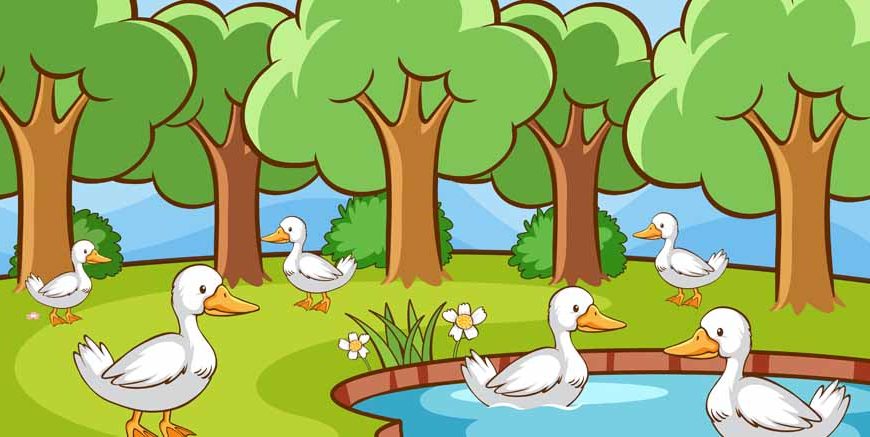
Every Indian parent knows the moment their toddler breaks into song: arms flailing, fingers counting, eyes bright with delight. The five little ducks nursery rhyme is one of those magical songs that crosses every cultural boundary, filling living rooms from Chandigarh to Chennai with cheerful quacks.
Whether you first heard it on a preschool screen, a YouTube channel, or a playgroup class, the five little ducks song has a way of staying with children (and parents) long after the music stops. In a world where Indian children are growing up bilingual, globally connected, and learning to compete on an international stage, nursery rhymes like this one do far more than simply entertain. They quietly lay the cognitive, linguistic, and emotional groundwork your child needs to thrive.
Full Lyrics of the Five Little Ducks Song
Before we explore what makes this rhyme so powerful, here are the complete lyrics of the 5 Little Ducks song so you can sing along with your child at home:
Five little ducks went out one day, Over the hills and far away.
Mother Duck said, “Quack, quack, quack, quack,”
But only four little ducks came back.
Four little ducks went out one day, Over the hills and far away.
Mother Duck said, “Quack, quack, quack, quack,”
But only three little ducks came back.
Three little ducks went out one day, Over the hills and far away.
Mother Duck said, “Quack, quack, quack, quack,”
But only two little ducks came back.
Two little ducks went out one day, Over the hills and far away.
Mother Duck said, “Quack, quack, quack, quack,”
But only one little duck came back.
One little duck went out one day, Over the hills and far away.
Mother Duck said, “Quack, quack, quack, quack,”
But none of the five little ducks came back.
Sad mother duck went out one day, Over the hills and far away.
Mother Duck said, “Quack, quack, quack, quack,”
And all of the five little ducks came back!
The beauty of the 5 five little ducks rhyme lies in its structure: the same melody repeats with just one small change each time. This predictability is not lazy writing; it is developmental genius. Children lock onto the pattern quickly, begin anticipating the next line, and experience the small triumph of being right. That sense of mastery builds the confidence young learners need to tackle harder content later on.
Read Also – Nursery Rhymes For Kids with Lyrics
Why Indian Children Connect So Deeply with This Rhyme
India has a rich oral tradition of rhymes, lullabies, and folk songs, from the aai geli maayar desh lullabies of Maharashtra to the machhli jal ki rani hai that most of us grew up with.
The five little ducks rhyme fits naturally into this tradition because it follows the same storytelling pattern: a family, a journey, suspense, and a reassuring homecoming. Indian children, raised with a deep cultural emphasis on family bonds, instinctively connect with the image of a mother duck calling her babies home. When your child sings “and all of the five little ducks came back,” they are not just practising English; they are affirming something they feel every day: that home is safe, and parents always come through.
For Indian parents preparing their children for global classrooms, through IB and IGCSE curricula right here at home, the five little ducks song offers a bridge. It normalises English as a warm, playful language rather than a stiff academic one. This is exactly the kind of early exposure that helps Indian children show up in international settings with confidence and comfort.
What Your Child Learns from the 5 Little Ducks Rhymes
● Counting Down and the Concept of Subtraction
Most children learn to count upwards long before they understand that numbers can go in reverse. The 5 Little Ducks rhyme introduces countdown counting in the most natural way possible — through story. Each verse takes away one duck, building an intuitive understanding of “one less” that forms the conceptual backbone of early subtraction. Educators in Montessori and international pre-primary programmes consistently recommend counting rhymes as the most effective pre-numeracy activity for children aged two to five. When your child holds up five fingers and folds one down with each verse, they are doing real mathematics — joyfully and without pressure.
● English Language Fluency and Phonemic Awareness
India’s English-medium school landscape is fiercely competitive. Yet many children arrive in nursery classrooms having heard English only in formal, transactional contexts. The five little ducks song changes that equation. Repeated listening and singing build phonemic awareness — the ability to hear, identify, and manipulate individual sounds in words. The rhyming pair of “day” and “away,” the rhythm of “over the hills and far away,” and the onomatopoeic “quack” all train the ear in ways that directly support reading readiness. Children who grow up singing rhymes in English consistently score higher on early literacy assessments, regardless of the language spoken at home.
● Emotional Intelligence and Understanding Family Bonds
The emotional arc of The Five Little Ducks is deceptively sophisticated. The ducks venture out (independence); one by one, they don’t return (anxiety, loss); the mother searches for them (parental love and persistence); and finally, all five come home (relief, reunion). This mirrors the emotional experiences children have every single day:
- Separation at school drop-off
- The worry of being apart
- The joy of being picked up again
Singing through this arc repeatedly helps children process these emotions safely, building what psychologists call emotional literacy. In a culture where emotional expression is often undervalued in favour of academic achievement, this is a quiet gift
Read Also – One Two Three Four Five Nursery Rhyme For Kids With Lyrics.
How EuroKids Builds Strong English Language Foundations
Learning English at a young age becomes natural when children engage with stories, songs, real-life objects, and interactive activities. Instead of rote memorisation, EuroKids focuses on developing language skills through meaningful experiences that make reading, writing, speaking, and listening enjoyable.
At EuroKids, foundational English concepts are taught through storytelling, picture books, phonics-based exercises, and interactive vocabulary games, all aligned with the HEUREKA – Visible Thinking Curriculum. This approach helps children connect words to ideas, build comprehension skills, and express themselves confidently.
Activities such as narrating short stories, describing objects, and participating in “Think-Pair-Share” or “See-Think-Wonder” routines reinforce language understanding. Children learn grammar, vocabulary, sentence formation, and pronunciation in ways that feel playful yet purposeful.
With a child-focused, activity-driven methodology refined over 20+ years and implemented across 1600+ preschools, EuroKids emphasises communication and confidence first. As children enjoy English learning English, their fluency, reading comprehension, and writing skills develop naturally, laying the groundwork for strong lifelong language abilities.
How the Five Little Ducks Song Prepares Kids for the Global Stage
International schools, foreign universities, and global workplaces do not just look for academic scores; they look for children who communicate clearly, collaborate naturally, and carry cultural fluency. The habits formed in early childhood, including singing, storytelling, and active listening, directly feed into these competencies.The 5 little ducks song builds all three simultaneously. Children who engage with English nursery rhymes regularly from age one onwards develop what linguists call “prosodic sensitivity”. This is an intuitive feel for the rhythm, stress, and intonation of the English language. This is the same quality that makes some speakers instantly engaging and easy to understand, and it cannot be taught from a grammar textbook.
Fun Activities for Indian Homes to Bring 5 Little Ducks Rhymes to Life
Finger Play with a Desi Twist
The classic finger play — holding up five fingers and folding one down per verse — works beautifully on its own, but you can personalise it for your child. Use small rubber ducks or even small rotis rolled into duck shapes for a playful, tactile version. Some families in India use clay or playdough to shape five small ducks, then let the child physically remove one from the group each time the verse changes. This hands-on, multi-sensory approach deepens number sense and keeps attention locked in far longer than a screen alone.
Act It Out in Your Living Room
Assign roles: one parent is Mother Duck; the child plays all five little ducks (waddling around the room and quacking). With each verse, the child “disappears” into a corner, and when sad Mother Duck calls, they dramatically waddle back. Indian children, who grow up in households full of drama, festivity, and storytelling, absolutely love this kind of roleplay. It also develops early theatrical skills: voice modulation, body language, and narrative understanding. All of these are assets in global communication.
Counting Backwards with Household Objects
After your child knows the song well, extend the learning by replacing “ducks” with objects around the house. “Five little idlis went out one day”, sung to the same tune while removing idlis one at a time from a plate, is the kind of culturally rooted, joyful extension that makes learning stick. Mixing familiar Indian context into global content is exactly how bilingual children build stronger conceptual bridges between languages.
Read Also – List of Classic Nursery Rhymes and Children’s Songs
Tips for Indian Parents: Making the Most of the Five Little Ducks Song at Home
Sing it without warning, in the kitchen, in the car, during bath time. The goal is for the rhyme to feel as natural and familiar as a favourite family story, not a lesson.
Let your child correct you when you get the count wrong: “No Amma, it’s THREE ducks now!” because that moment of correction is a peak learning event.
If your child is older and learning Hindi at the same time, try translating the concept into Hindi together: “Paanch chote batakh…” This code-switching between languages is associated with higher cognitive flexibility, a trait prized in international academic and professional settings. Above all, enjoy it.
The five little ducks have endured for generations because it is genuinely delightful, and delight is the most powerful teacher of all.
To explore more learning ideas, simple explanations, and early childhood resources, parents can visit the EuroKids Blog. Those who wish to understand the preschool journey better or explore enrollment options can find complete information on the Eurokids Preschool Admission, where learning is joyful, engaging, and child-friendly.