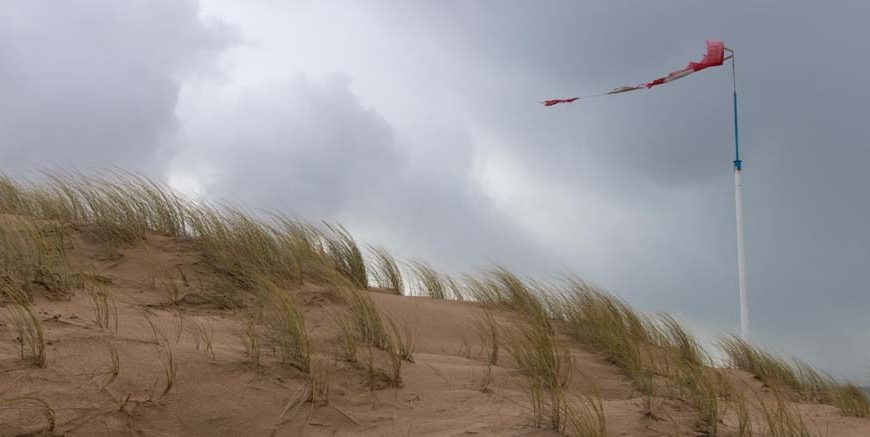
You step outside on a sweltering summer afternoon, and suddenly, a cool, invisible force brushes past your face, tossing your hair and rustling the leaves on the trees. We cannot see it, hold it, or keep it in a jar, yet it possesses the tremendous power to fly colourful kites, turn massive metal turbines, and even reshape entire coastlines over thousands of years.
This invisible force is an everyday miracle that we often take completely for granted as we go about our daily routines. Today, we are going completely behind the scenes of our atmosphere to figure out exactly where these breezes come from, how they move across the globe, and the brilliant science that keeps our weather system constantly spinning.
What is Wind? A Simple Definition
Let us start with the absolute basics to establish a proper wind definition. If a curious student tugs on your sleeve pointing at a swaying tree and asks, “what is wind?”, the most straightforward and scientifically accurate answer you can give is that it is simply moving air.
It is the large-scale flow of gases that make up our Earth’s atmosphere. While we mostly experience it locally as a gentle breeze on our cheeks on a spring morning or a fierce, howling gale rattling our windows during a winter storm, it is fundamentally just the invisible gases around us deciding to pack up and travel rapidly from one location to another.
Read More – Uses of Renewable Resources & Energy
Difference Between Air and Wind
A very common hurdle in early science classes is fully understanding the actual difference between air and wind. To make this perfectly clear, think about the still, quiet water sitting in your bathtub versus the powerful water flowing rapidly down a mountain river.
Air is the invisible mixture of physical gases, mostly nitrogen and oxygen, that surrounds our planet like a thick, comforting blanket. It is always there, even in a completely sealed, quiet room where absolutely nothing is moving. You can trap air inside a bicycle tyre or a party balloon and carry it around with you; it is a measurable substance.
So, what is the difference between air and wind? It entirely comes down to the concept of movement. Air is the actual physical substance itself, whilst wind is the dynamic action of that substance moving across the Earth’s surface. You breathe the air, but you physically feel the wind. The moment you try to put a breeze into a sealed box, it instantly stops moving and simply becomes still air once again!
is the Main Source for the Formation of Wind?
You might be quite surprised to learn that the mighty engine driving our breezy weather on Earth is actually located 93 million miles away in outer space. If you are ever wondering what is the main source for the formation of wind, the ultimate answer is the Sun!
Our brilliant sun shines down on the Earth every single day, but it does not warm the planet evenly. Because the Earth is completely round and tilted on an axis, the equator receives massive amounts of direct, scorching sunlight, while the distant North and South Poles receive much weaker, slanted rays.
Furthermore, our planet is covered in vastly different geographical surfaces, deep dark oceans, bright white ice caps, lush green forests, and dry sandy deserts, all of which absorb the sun’s heat at completely different speeds. This incredibly uneven heating of the Earth’s surface is the master key to understanding how our global weather operates.
Read More – Ecosystem for Kids
How is Wind Generated?
Now that we know the Sun provides the initial heat, exactly how is wind generated from that solar energy? It all comes down to a brilliant scientific principle called convection. Let us explain briefly how winds are caused using a simple, relatable everyday example.
When the sun heavily bakes a patch of land, the ground acts like a radiator, heating up the air resting directly above it. As this pocket of air becomes warm, its molecules spread out. It becomes lighter and expands, making it rise high up into the sky, behaving exactly like a colourful hot air balloon! However, mother nature absolutely hates an empty space. When that warm air rises, it leaves behind a temporary gap of lower air pressure near the ground. To fill this newly created empty space, heavier, cooler air from a nearby high-pressure area immediately rushes in sideways to take its place.
That rushing, horizontal movement of cool air sliding in to replace the rising warm air is exactly what you feel brushing past your face. It is a continuous, invisible, sweeping cycle of rising heat and rushing cool drafts. Because the Earth is also constantly spinning on its axis like a giant top, these rushing drafts do not just travel in a straight line. They curve and twist, creating massive, global weather patterns.
A brilliant local example of this exact process happens at the beach. During the day, the sandy shore heats up much faster than the ocean water. The warm air above the sand rises, and the cool, refreshing air over the ocean rushes in to replace it, creating a lovely, cooling ‘sea breeze’. At night, the temperature drops, the sand cools faster than the water, and the exact opposite happens, creating a ‘land breeze’ that blows back out to sea.
Read More – Facts About Cyclone For Kids
Conclusion
When we take a quiet moment to look up at the rustling tree branches, we realise that our atmosphere is essentially a massive, breathing engine. The simple act of the sun warming a patch of dirt sets off a magnificent chain reaction, pulling cool drafts across vast oceans and pushing heavy storm clouds across continents. Understanding these invisible mechanics teaches us that everything in nature is deeply and beautifully connected, proving that even the things we cannot physically see have immense power to shape our world.
By actively encouraging children to question these invisible forces, we help them build a profound, lifelong appreciation for the intricate environment they live in. To nurture this boundless curiosity and uncover more brilliant educational adventures for your child, please visit the EuroKids Blog and discover everything you need to know about EuroKids Preschool Admission today.
FAQs
What is the main source for the formation of wind?
The Sun is the absolute primary source, as its uneven heating of the Earth’s geographical surface creates the specific temperature and pressure differences needed to move the atmosphere.
What is the fundamental difference between air and wind?
Air is the actual mixture of invisible gases physically surrounding our planet, whilst wind is the horizontal movement of those exact gases rushing from one place to another.
Explain briefly how winds are caused?
They are dynamically caused when warm, lighter air rises high into the sky, creating a low-pressure gap near the ground that cooler, heavier air instantly rushes in sideways to fill.