Look closely at the tallest skyscrapers piercing the clouds, the heavy suspension bridges stretching across wide rivers, or even the small saucepan bubbling away on your kitchen stove. There is a common, incredibly strong thread weaving all these everyday things together. It is a sturdy, dependable element that quite literally forms the backbone of human civilisation. We are talking about Iron metal.
To truly answer the question, “what is Iron?”, we must look at it not just as a hard, industrial substance, but as a naturally occurring element that has dramatically shaped human history. It is a fundamental building block of our planet and a key ingredient in our own bodies. Let us embark on a geological journey to uncover the secrets of this remarkable metal, finding out exactly where it hides in nature and how it shapes our modern world.
Where Does Iron Come From?
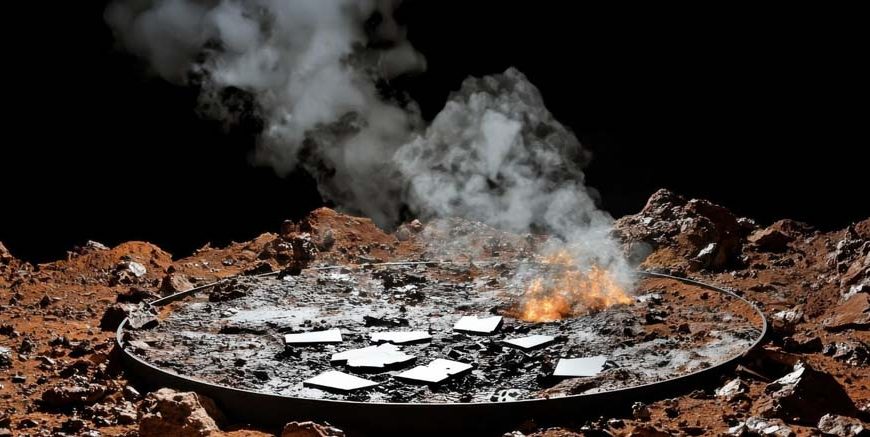
If you take a heavy shovel and dig deep into the ground, you might eventually hit something very special. But where does iron come from exactly? It does not sit in the soil as shiny, silver blocks waiting to be picked up by passersby. Instead, it is locked tightly inside rocky formations known as ores. To answer the common question of “from where we get iron”, we have to look closely at the global mining industry. Miners dig up enormous quantities of these reddish-brown rocks, which are then transported to factories and heated to incredibly high temperatures in giant blast furnaces. This extreme heat melts the rock and separates the pure metal from the stone.
But where is iron ore found globally? It is remarkably abundant across the Earth’s crust! Vast, sprawling mines are located in countries like Australia, Brazil, China, and India. However, its ultimate origin story is completely out of this world. Scientists firmly believe that this heavy element was originally forged in the fiery bellies of dying, exploding stars billions of years ago. It travelled across the cold universe, and today, it makes up a massive portion of the Earth’s inner core, actively generating the magnetic field that protects our planet from harsh solar winds.
Read More – Common Ore Types and Uses Explained for Students
When Was Iron Discovered?
Humanity’s working relationship with this metal is incredibly old. So, when was Iron discovered by our ancestors? Historians and archaeologists tell us that ancient civilisations began smelting and using it widely around 1200 BC, sparking a period of rapid technological and agricultural growth known as the Iron Age. Interestingly, before they learned how to extract it from deep underground rocks, ancient people actually found their very first chunks of this metal inside fallen meteorites that crashed down from space!
As scholars studied it over the centuries, it gained a formal identity in the scientific community. The iron scientific name is Ferrum, which comes directly from the ancient Latin language. This historical naming is exactly why the symbol for this metal on the periodic table of elements is simply ‘Fe’.
Examples of Iron
Because pure iron metal is quite soft and reacts very quickly with oxygen and moisture to form flaky orange rust, we rarely use it in its completely pure form today. Instead, metallurgists mix it with a tiny bit of carbon to create an incredibly strong alloy called steel. Therefore, when we look around our neighbourhoods for examples of Iron, we are usually looking at steel or heavy cast iron.
You can easily find it everywhere. The heavy, black frying pans hanging in a bustling restaurant kitchen are classic examples of cast iron. The thick, grey train tracks that guide heavy locomotives across the country are made of solid steel, as are the massive internal skeletons of modern office buildings. Even the humble, tiny paperclip holding your school homework together contains this essential element.
Read More – How do you make science interesting for kids?
Uses of Iron in Daily Life
It is almost impossible to get through a single day without relying on this metal in some capacity. The uses of Iron are so diverse that they touch absolutely every single industry on the planet. Let us break down some specific uses of Iron in daily life to see just how much we depend on it.
Here are 5 uses of Iron that keep our fast-paced world running smoothly:
- Transport: It is the primary base material used to build cars, giant ocean cargo ships, aeroplanes, and bicycles. Without it, global travel and trade would grind to a complete halt.
- Construction: Heavy steel beams provide the hidden structural strength required to build safe family homes, schools, hospitals, and long bridges. It gives concrete buildings the ability to stand tall against strong winds.
- Household Appliances: Look in your family kitchen; your washing machine, refrigerator, and microwave all rely on strong outer casings made from durable sheet steel to protect their delicate internal wires.
- Tools and Machinery: From the simple hammer and nails sitting in a garage toolbox to the massive, roaring tractors ploughing farm fields, this metal provides the necessary physical durability to get hard manual work done.
- Human Health: Surprisingly, our own human bodies need it to survive! It is a crucial component of haemoglobin, a clever protein in our red blood cells that actively carries fresh oxygen from our lungs to the rest of our body. Eating leafy green spinach, lentils, and red meat helps us get this vital daily mineral.
Read More – Science Quiz Questions and Answers for Kids
Conclusion
From the glowing, molten core of our planet to the microscopic red blood cells racing through our veins, this element is a fundamental pillar of our existence. It started as ancient stardust, fell to Earth as heavy meteorites, and was eventually mastered by clever ancient blacksmiths who forever changed the course of human history. When we take the time to understand how a simple, rocky ore is transformed into a towering city skyscraper or a life-saving medical tool, we gain a deep, lasting appreciation for the natural resources hiding beneath our feet.
The next time you cross a heavy bridge or ride in a family car, take a moment to remember the ancient, universal metal working tirelessly to hold it all securely together. To discover more fascinating educational topics and to actively support your child’s brilliant academic journey, explore the EuroKids Blog and find out everything you need to know about EuroKids Preschool Admission today.
FAQs
What is the scientific name for iron?
Its scientific name is Ferrum, which originates from the Latin language. This is why its official chemical symbol is Fe.
Where does iron come from mostly?
The vast majority of it is extracted from iron ore, which is a specific type of rock heavily mined from the Earth’s crust in countries like Australia, Brazil, and India.
When was Iron discovered?
Ancient civilisations began smelting and actively using it to make tools and weapons around 1200 BC, a significant period historically known as the Iron Age.