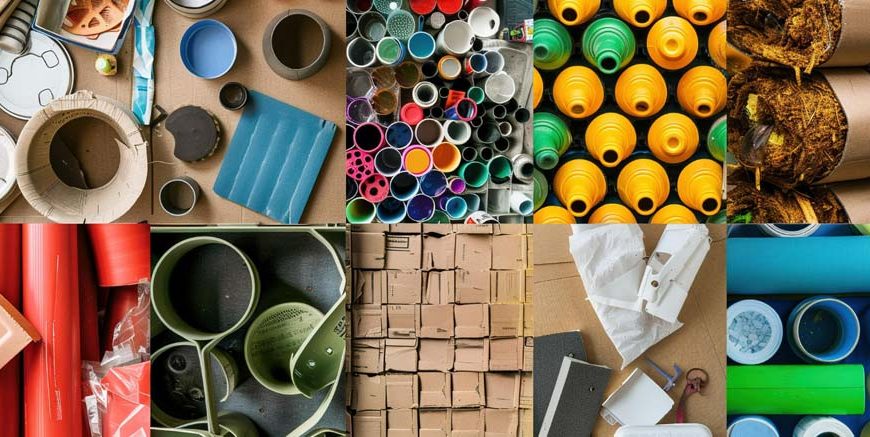
Imagine trying to drink your warm morning milk from a teacup made of soft, fuzzy wool. Or picture yourself trying to fall asleep on a heavy pillow made entirely of solid bricks! It sounds utterly ridiculous, doesn’t it? The reason we do not use knitted wool for cups or heavy stones for pillows all comes down to the brilliant, everyday science of the objects around us.
Every single item you interact with throughout your day, from the comfortable shoes on your feet to the smooth screen of the device you are reading this on, is carefully crafted from something highly specific. Today, we are going to dive into the physical world to understand the fundamental building blocks of our environment, exploring what things are made of, how they behave, and why we use them.
Defining the Basics: What is Material?
Before we start categorising the world around us, we need to answer a very simple question: what is material? In the simplest terms possible, it is the physical ‘stuff’ or matter from which a thing is made.
Our planet is overflowing with a vast variety of this ‘stuff’. Some of it is completely natural, meaning we find it growing in the wild or sitting deep within the earth. Examples of natural substances include fluffy cotton plucked straight from a plant, heavy stone carved from a mountain, or smooth leather. On the other hand, we have synthetic substances. These are man-made wonders crafted by clever scientists and engineers in large laboratories and factories, such as stretchy nylon, colourful plastics, and durable synthetic rubber.
Read More – Art Materials for Preschoolers
What Are the Different Types of Materials?
To truly understand our built environment, we must group these items into distinct families. So, what are the different types of matter we rely on daily? While the scientific list is incredibly long, we can easily break down the different types of materials into five main, easily recognisable categories:
- Wood: Harvested from the sturdy trunks of trees, this is one of the oldest resources used by humankind. It is warm to the touch, relatively easy to carve, and incredibly strong. We use it to build the frames of our houses, craft beautiful dining tables, and even mash it into a pulp to create the paper in our school books.
- Metal: These are typically hard, shiny substances dug out of the earth as rocky ores. Think of heavy iron, lightweight aluminium, or shiny gold. Because they can survive extreme heat and heavy impact, we use metals to build racing cars, towering skyscrapers, airplane wings, and everyday kitchen cutlery.
- Glass: It might surprise you to learn that this is actually made from melting ordinary sand at blistering, incredibly high temperatures! It is solid, waterproof, and clear. Without it, we would not have windows to let the sunshine into our homes, or spectacles to help people see clearly.
- Plastic: This is a highly versatile, synthetic product largely made from natural oils. Because it can be easily moulded into absolutely any shape or dyed any vivid colour, it is used for almost everything, from your favourite building block toys and drinks bottles to the protective helmets you wear while riding a bicycle.
- Fabric: Woven from thousands of tiny, thin threads, fabrics can be natural (like warm sheep’s wool and breathable cotton) or man-made (like stretchy polyester). This family of materials is entirely responsible for keeping us warm, dry, and stylish in the form of clothing.
Read More – Easy DIY Crafts for Preschoolers Using Recycled Materials
Understanding Traits: Write the Properties of Materials
If you are ever asked in a science class to write the properties of materials, you are essentially being asked to describe their unique physical personalities. Properties are the specific traits that define how a substance behaves, feels, and reacts to the environment.
Understanding these traits is the exact reason why inventors and engineers know which substance to pick for a specific job. Here are a few vital properties:
- Transparency: Does it let light pass through it? Glass is completely transparent, allowing us to see outside. Wood, however, is completely opaque, meaning it blocks light entirely.
- Flexibility: Can it bend easily without suddenly snapping in half? A rubber hose is highly flexible, whereas a brick is rigidly inflexible.
- Conductivity: Does it allow heat or electricity to travel through it quickly? Metals are fantastic conductors. This is why the bottom of a frying pan is made of metal (to cook the food), but the handle is often made of wood or plastic (which are insulators) so you do not burn your hand!
- Buoyancy: Will it sink to the bottom of a pond or float on the surface? A heavy iron coin will sink instantly, but a hollow plastic ball or a wooden twig will happily float.
Summary
Imagine for a moment a world where human beings never took the time to understand the unique traits of the natural elements around them. We would not have towering, safe buildings, aeroplanes that soar through the clouds, or even simple, waterproof wellington boots to jump in muddy puddles. Every single great invention in human history has relied entirely on discovering a new substance or finally understanding how to use an old one in a brand-new way.
Learning about the physical stuff that makes up our universe is not just about memorising science facts; it is about looking at a simple tree, a pile of sand, or a lump of rock and imagining the magnificent, endless possibilities of what it could one day become. Keep exploring, keep touching, and keep wondering what the world is made of. To discover more engaging learning adventures and to deeply support your child’s brilliant educational journey, explore the EuroKids Blog and find out all the vital details regarding EuroKids Preschool Admission today.
FAQs
What is a material?
It is the physical substance or tangible matter from which any object is made, which can be either naturally occurring or man-made.
What are the main types of materials?
The most common everyday categories include wood, metal, glass, plastic, and various fabrics.
Why is it important to know their properties?
Knowing their specific traits helps us purposefully choose the right substance for the right job, such as using waterproof, flexible rubber for a raincoat instead of absorbent, easily torn paper.