Have you ever noticed how a glass of water feels cold on a summer afternoon or how a warm blanket feels comforting on a rainy day? Children experience hot and cold sensations every single day, often without realising that they are learning science through these moments. This simple feeling of hot and cold is connected to an important concept called temperature.
From checking the weather before school to waiting for food to cool down, understanding what is the temperature helps children make sense of their surroundings. At an early age, learning about temperature builds curiosity, awareness, and scientific thinking. At EuroKids, such everyday experiences become meaningful learning moments through structured and playful exploration.
This blog explains temperature meaning, its scientific definition, real-life examples, and why it is important for students to understand it early.
What Is Temperature?
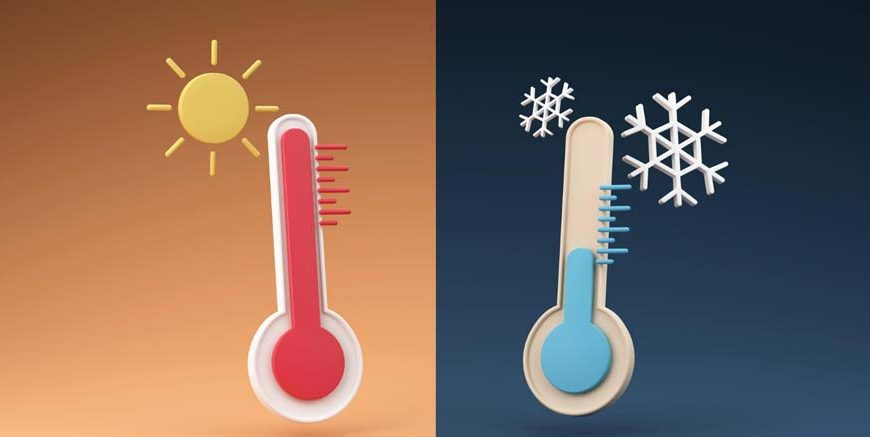
In simple words, temperature tells us how hot or cold something is. When you touch ice, it feels cold. When you touch warm milk, it feels hot. The measure that tells us how hot or cold these things are is called temperature.
So, what is the temperature of ice? It is low.
What is the temperature of hot milk? It is high.
Children often ask, what do you mean by temperature or what is meant by temperature. The answer is very simple. Temperature is a way to describe how warm or cold an object, place, or person feels.
This understanding helps children relate science to their daily life. Whether it is the weather outside or the water in the bath, temperature plays an important role everywhere.
Read More – Hot and Cold Activities for Preschoolers
Temperature Meaning in English
The temperature meaning in English refers to the degree of hotness or coldness of something. It is a word commonly used in daily conversations.
Children may hear or say words like temperature, temperature meaning, or even what’s the temperature. These are informal or incorrect forms. The correct word is temperature, and it always refers to how hot or cold something is.
Understanding the correct word helps children improve language skills along with scientific knowledge. At EuroKids, vocabulary is taught through conversation, stories, and real experiences so that learning feels natural and enjoyable.
Read More – How do you make science interesting for kids
Temperature Meaning in Science
In science, temperature has a clear and specific meaning. Temperature meaning in science is the measure of how hot or cold an object is based on the energy inside it.
When something is hot, its particles move faster. When something is cold, its particles move slower. This idea forms the base of scientific learning.
So, when students ask what is temperature in science, they are learning how scientists understand heat and cold in a structured way.
Temperature Definition Science
The temperature definition science can be explained simply for young learners.
Temperature is the measurement of how hot or cold an object is.
Teachers often define temperature in science using easy examples. A cup of tea has a higher temperature than a glass of cold water. Ice has a lower temperature than room air.
When children understand this, science stops being confusing and starts making sense.
Read More – The Importance of Science Exhibitions in Schools
What Is the Definition of Temperature?
Many textbooks ask students what is the definition of temperature. For early learners, the definition should be clear and relatable.
Temperature is the measure of how hot or cold something is. This definition is used across subjects including science and early chemistry. It helps students answer questions confidently in class and exams.
Temperature Definition Chemistry
In chemistry, temperature definition chemistry focuses on how heat affects substances. When temperature increases, solids can melt, liquids can boil, and reactions can happen faster. For example, chocolate melts when heated and water turns into steam when boiled. These changes happen because of temperature. At EuroKids, such concepts are introduced gently through observation and activities, not memorisation.
How Is Temperature Measured?
Children often wonder how is temperature measured. Temperature is measured using an instrument called a thermometer.
A thermometer shows numbers that tell us how hot or cold something is. When the temperature is high, the reading goes up. When it is low, the reading goes down.
There are different types of thermometers. Some are digital and some use liquid. Doctors use thermometers to check body temperature. Weather stations use thermometers to tell us how hot or cold the day will be. Understanding temperature measurement helps children see how science works in real life.
Units of Temperature
Temperature is measured in units. The most commonly used unit is degree Celsius. In the UK and India, weather temperature is usually shown in degrees Celsius.
Other units include Fahrenheit and Kelvin. Children do not need to memorise all units at an early stage, but knowing that temperature has different measurements builds awareness.
Examples of Temperature in Daily Life
Learning through real situations makes concepts easier to understand. Here is an example of temperature that children see every day.
In the morning, the weather may feel cool. By afternoon, it may feel warm. At night, it may feel cold again. This change happens because temperature changes throughout the day.
Another example is cooking. Food is hot when cooked and needs to cool before eating. Bath water should be warm, not too hot or cold. These experiences help children understand temperature naturally.
Why Is Temperature Important?
Temperature helps us make safe and smart decisions. It tells us what clothes to wear, what food is safe to eat, and how to stay comfortable.
If the temperature is very high, we drink water and stay in the shade. If the temperature is low, we wear warm clothes. This awareness keeps us healthy.
Learning about temperature also builds scientific thinking. Children start observing, comparing, and asking questions.
Fun Facts About Temperature
Temperature can be fun to learn about. The hottest places on Earth have very high temperatures, while the coldest places can freeze water instantly.
Body temperature stays almost the same every day. That is how doctors know if someone has a fever. These facts spark curiosity and encourage children to explore science further.
Temperature Activities for Kids
Children learn best when they can see and feel things. Simple activities help them understand temperature easily. They can touch a cold spoon and a warm cup and describe how each feels. They can watch ice melt in a bowl and notice how temperature changes solids into liquids. Such activities are part of experiential learning, which is strongly followed at EuroKids.
Common Mistakes Children Make About Temperature
Children may think that hot objects are always dangerous or cold objects are always safe. They may believe that the weather temperature never changes.
Through gentle explanations and real-life examples, these misunderstandings are cleared. Children learn that temperature varies and must be handled with care.
Temperature Learning at Different Ages
Young learners start by feeling hot and cold. As they grow, they learn to measure temperature and understand its effects.
This gradual learning matches a child’s developmental stage. EuroKids ensures that concepts are introduced at the right time and in the right way.
Conclusion
Understanding temperature helps children make sense of the world around them. From weather changes to everyday safety, temperature plays an important role in life.
At EuroKids, such concepts are taught through curiosity, conversation, and hands-on exploration under the HEUREKA CURRICULUM. Learning is joyful, meaningful, and age-appropriate.
For parents looking to give their child a strong foundation in early science and real-world learning, EuroKids Admission opens the door to a nurturing environment where curiosity is celebrated and understanding grows naturally.
FAQs
What is temperature in simple words?
Temperature tells us how hot or cold something is.
What is temperature measured with?
Temperature is measured using a thermometer.
What does temperature mean in science?
It is the measure of how hot or cold an object is based on energy.
Why do we learn temperature in school?
It helps children understand daily life, safety, and science basics.
How does EuroKids teach science concepts?
Through hands-on activities, observation, and guided learning using the HEUREKA Curriculum.