Next time you finish a large packet of breakfast cereal, do not just throw the empty cardboard box straight into the recycling bin. Instead, call your child over and carefully pull apart the glued flaps at the very top and bottom. Then, use a pair of scissors to cut down one single vertical side and lay the entire cardboard piece flat on the kitchen table. What you are currently looking at is not just a piece of household rubbish. You have just successfully created a perfect mathematical net.
Children often struggle to understand how flat, 2D drawings on a piece of workbook paper magically turn into real, bulky items they can actually hold in their hands. Taking apart everyday packaging is the absolute best way to bridge that confusing mental gap. Let us look closely at how flattening out boxes helps young minds master early geometry, making maths feel like a highly engaging, hands-on craft project rather than a boring textbook chore.
Unfolding the Mystery of nets of solid shapes
When a young child hears the word ‘net’, they immediately picture a fisherman catching fish in the sea or a goalkeeper catching a football. In geometry, the definition is completely different. When we talk about the nets of solid shapes, we are simply talking about an unfolded, completely flat version of a 3D object.
Imagine taking a sharp pair of scissors to a hollow shape and unfolding it so it lies totally flat on a desk, just like a pancake. If you fold along the natural creases and stick the outside edges back together with a bit of sticky tape, it pops right back into its original bulky form. Understanding a net of solid figures is exactly like having the secret builder’s blueprint for a house. It shows a curious child exactly how many flat faces, sharp edges, and pointy corners hide inside a bulky object, allowing them to count every single part easily.
Read More – Fun Ways to Teach Shapes to Kids
Visualising with a solid shapes chart
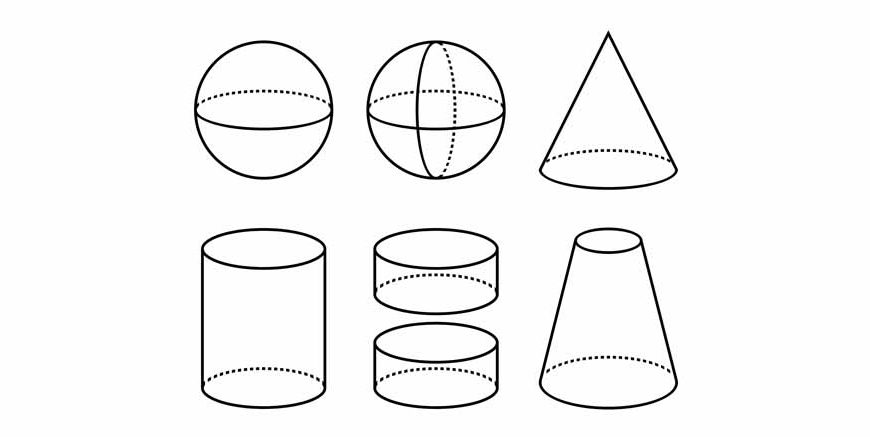
If you walk into a vibrant, busy primary school classroom, you will almost certainly spot a brightly coloured solid shapes chart pinned securely to the wall. This poster is not just there for simple decoration to make the room look nice. It acts as a brilliant visual cheat sheet for developing brains.
The chart helps kids directly connect the flat 2D names (like squares, rectangles, and triangles) to the bulky 3D forms (like cubes, cuboids, and pyramids). When kids study these educational posters, they quickly realise that every single bulky item in the physical world is actually just made up of simple, flat shapes stitched tightly together. It removes the mystery from geometry and breaks difficult concepts down into shapes they already know how to draw.
Exploring Common 3D shapes and their nets
The mathematical connection between solids and nets becomes incredibly obvious when you start looking at specific household examples. Every hollow shape unfolds into a very specific, unique pattern. If you try to fold up the wrong pattern, you will end up with annoying gaps or overlapping pieces of paper.
Let’s explore some everyday net shapes and what they actually look like when squashed completely flat on a table:
- The Cube: A standard playing dice or a Rubik’s Cube is a perfect cube. If you completely unfold a hollow cube, it looks exactly like a flat cross made out of six perfectly equal squares.
- The Cuboid: Think of a standard cardboard shoebox. The net of solid shapes for a cuboid is very similar to a cube’s cross shape, but instead of six equal squares, it is made up of a mixture of rectangles and squares that perfectly match up when folded.
- The Cylinder: Picture a tin of baked beans. If you peel off the paper label and take off the top and bottom metal lids, you have found the net. It is basically one long, wide rectangle with two separate, identical circles attached to the top and bottom.
- The Square-Based Pyramid: Picture the massive ancient tombs in Egypt. If you unfold a model of one of these, it looks like a flat square sitting right in the middle, surrounded by four identical triangles pointing outward like a four-pointed star.
- The Triangular Prism: Think of the famous triangular cardboard packaging of a Toblerone chocolate bar. Unfolded, it features three long rectangles sitting side-by-side in the middle, with a triangle attached to each end.
Read More – Importance of Math in Everyday Life
Simple Practice Questions for Kids
To really master the tricky idea of 3D shapes and their nets, children need to actively test their own visual imagination. Here are a few quick, highly descriptive practice questions you can ask them at the dinner table to get their brains working:
- I have a flat drawing on my paper made of exactly six equal squares arranged in a cross. What bulky shape will it build when I fold up the edges?
- (Answer: A cube)
- I am holding a shape that has one square face flat on the bottom and four triangle faces touching together at the very top. What is it?
- (Answer: A square-based pyramid)
- If you take a pair of scissors and cut straight down the cardboard tube from the centre of a kitchen roll, what flat shape does the cardboard actually make when you unroll it?
- (Answer: A rectangle)
- Which 3D shape do you get if you fold together three long rectangles and two triangles?
- (Answer: A triangular prism)
Read More – Preschool Math Assessments for Kids
Conclusion
It is quite profound to realise that every single complex, bulky item in our busy physical world is essentially just a collection of simple flat shapes folded and joined together. When a young child successfully learns how to mentally unfold a cardboard box or picture the flat blueprint of an Egyptian pyramid, they are doing incredibly advanced spatial reasoning without even realising it. They are actively learning to look right through solid walls to fully understand the hidden skeleton of the world around them.
This hands-on, deeply practical approach to solving mathematical puzzles is a massive, foundational part of the Heureka Curriculum, turning abstract classroom theories into physical things children can touch, cut, and build themselves. To find more exciting, highly creative ways to support your child’s early maths skills and daily problem-solving abilities, read the latest articles on the EuroKids Blog and secure their vibrant academic future today through EuroKids Preschool Admission.
FAQs
At what age should children start learning about flat and solid shapes?
Most toddlers start identifying basic flat shapes like circles and squares around the age of three. However, they usually begin exploring how flat nets physically fold into bulky 3D items around the age of six or seven during their primary school maths lessons.
Do all cubes unfold into the exact same cross pattern?
Surprisingly, no! While the traditional cross shape is definitely the most famous and commonly taught pattern in schools, there are actually eleven completely different ways you can arrange six connected squares so that they perfectly fold up into a closed cube.
How can I make learning about these shapes fun at home?
Ditch the boring written workbooks and grab the recycling bin. Let your kids physically cut apart empty toothpaste boxes, cereal packets, and toilet roll tubes to see the flat patterns completely hidden inside everyday household items.