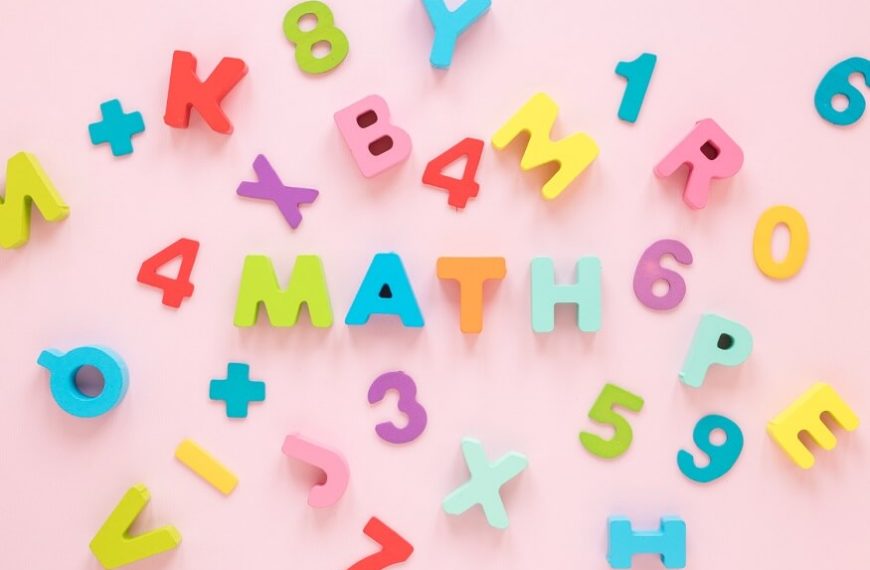
The early years are crucial for development. During this period, children naturally develop mathematical thinking without realizing it, sorting toys by colour, counting stairs, comparing sizes, and arranging objects in patterns. These early explorations form the foundation for all future mathematical learning.
Pre-math skills introduce mathematical thinking through play and everyday activities. Children with strong pre-math foundations experience greater confidence, deeper comprehension and more enthusiasm for learning before formal schooling begins.
What Are Pre-Math Skills?
Pre-math skills are foundational mathematical abilities that precede formal education. They develop naturally through exploration and play rather than memorization. A child grasping that “three” represents a quantity, whether holding three fingers, grabbing three toys, or pointing to three birds. This develops an authentic understanding that forms the foundation for later numerical learning.
Pre-math skills develop naturally, just as children speak before learning formal grammar. Recognizing and nurturing this natural development transforms early learning experiences.
Read More – Why is Math Important?
Why Pre-Math Concepts Matter
Research consistently demonstrates that preschoolers exposed to pre-math concepts experience significant academic advantages. But the benefits extend far beyond test scores.
- Cognitive Development and Brain Growth
When children engage with pre-math concepts, they activate multiple brain regions simultaneously. Comparing sizes activates visual processing and critical thinking. Counting activates memory and attention. Recognizing patterns engages logical reasoning. This multi-faceted brain engagement literally develops neural connections that support lifelong learning. - Problem-Solving Capacity
Pre-math concepts introduce children to the idea that problems have solutions. When a child arranges sticks from shortest to longest, they’re not just learning sequencing, but that there’s a logical approach to organizing information. This problem-solving mindset translates to all areas of learning and life. - Mathematical Confidence and Identity
Perhaps most importantly, early exposure to pre-math concepts shapes how children see themselves. Children who play confidently with numbers, shapes, and patterns develop mathematical identity. They see themselves as “people who are good at math,” which influences their choices and effort throughout schooling.
Read More – Learning Math with Everyday Objects
Essential Pre-Math Concepts For Preschoolers
1. Counting and Number Recognition
Counting involves one-to-one correspondence, each number said corresponds to exactly one object. Number recognition means identifying numerals and connecting them to quantities. The symbol “2” represents two of something.
Learning this skill helps children:Understand quantity, develop memory, and sequence information logically.
2. Shapes and Spatial Awareness
Recognizing shapes develops children’s ability to identify patterns and understand how objects fit into space. Two-dimensional shapes (circles, squares, triangles, rectangles) and three-dimensional shapes (cubes, cones, cylinders, spheres) form a visual vocabulary. Spatial awareness helps children understand positioning (above, below, beside, inside).
Learning this skill helps children:Understand geometry, develop visual processing, navigate physical spaces, and engage in construction and design.
3. Patterns and Sequences
Pattern recognition is foundational to mathematical thinking. When children recognize repeating patterns (big-small-big-small), they engage in logical reasoning supporting problem-solving. Patterns appear in music, nature, routines, clothing and not just visually.
Learning this skill helps children:Predict outcomes, understand sequences, develop logical reasoning, and recognize mathematical relationships.
4. Measurement and Comparison
Children understand comparative concepts before formal measurement: bigger-smaller, longer-shorter, heavier-lighter, full-empty. These comparisons develop spatial reasoning and a foundation for later quantitative measurement.
Learning this skill helps children:Understand quantity, develop comparative reasoning, and connect abstract concepts to concrete experience.
5. Sorting and Categorization
Grouping objects by shared characteristics, such ascolour, shape, size, texture, function. Itdevelops logical thinking and classification skills. Multiple sorting possibilities develop cognitive flexibility (same blocks sorted by colour or shape).
Learning this skill helps children:Organize information, develop logical categories, and think flexibly about relationships.
6. One-to-One Correspondence
Understanding that objects in one group correspond with objects in another group andhaving the same quantity without counting helpsdevelops relational thinking. If two children need two cups, or three dolls need three beds, the child grasps equivalence.
Learning this skill helps children:Understand equivalence, develop matching strategies, and prepare for addition and subtraction.
7. Addition and Subtraction Concepts
Children understand putting together and taking apart before formal symbols. Stories introduce addition and subtraction as actions: “Two dolls were playing. Three more arrived. How many now?”
Learning this skill helps children:Understand combining and separating quantities, develop mathematical language, and prepare for formal arithmetic.
8. Fractions and Parts-to-Whole Relationships
Breaking objects into parts, like half a sandwich, a quarter of an orange, introduces fractional thinking. Children learn that objects can be divided and portions represent parts of a whole.
Learning this skill helps children:Understand divisibility, develop proportional thinking, and apply mathematics to real situations.
9. Problem-Solving and Reasoning
Pre-math problem-solving involves figuring out “what comes next” in a pattern, solving simple puzzles, or finding multiple solutions to open-ended problems. This develops reasoning abilities and confidence in facing challenges.
Learning this skill helps children:Develop perseverance, think logically, and approach challenges confidently.
10. Observation and Data Gathering
Children use their senses to observe details like colours, textures, quantities, and relationships. Organizing these observations into categories develops data literacy, crucial in modern mathematics.
Learning this skill helps children:Develop attentiveness, organize information systematically, and think analytically.
Read More – Mental Math Strategies: Tips and Tricks for Students
Practical Strategies For Introducing Pre-Math Concepts
- Play-Based Learning: Playing with blocks, construction materials, and toys naturally develops pre-math thinking. When children build towers, line up toys, or arrange objects, they explore mathematical concepts organically.
- Everyday Integration: Mathematical learning happens during daily routines. Counting stairs, sorting laundry, comparing food portions, these casual moments build mathematical thinking naturally.
- Nature-Based Learning: Outdoors, children find abundant pre-math opportunities. Patterns appear in flowers and trees. Shapes emerge in clouds and rocks. Sizes vary among natural objects. Nature provides rich mathematical exploration.
- The Role of Parents and Educators: Parents and educators serve as guides in children’s pre-math journeys. The goal isn’t formal instruction but rather noticing and nurturing children’s natural mathematical thinking.
Read More – Fun Math Activities for Kindergarten
Tips For Parents To Enhance Pre-Math Skills
Narrative Counting: Engage in storytelling about numbers. For example, you can narrate a tale about five little ducks on an adventure. As each duck faces challenges, reduce or increase the count, encouraging participation. Stories transform counting into meaningful practice where numbers have real significance.
Kitchen Math: The kitchen introduces pre-math concepts naturally. For example, count the spoons needed for dinner or sort vegetables by colour, measure ingredients, compare portions, and discuss quantities while cooking. Mathematical thinking embeds into daily routines effortlessly.
Nature Walks: Outdoors, nature offers abundant mathematical opportunities. Discuss shapes likecircular sun, triangular peaks, patterns on flowers. Collect and compare sizes, count features, and arrange items by colour. Nature transforms mathematical concepts into genuine discovery.
Art and Craft Activities: Encourage your child to indulge in art andcraft activities. These develop shapes, symmetry, and patterns while building fine motor skills. Children simultaneously develop spatial awareness and understand relationships between shapes.
Positive Reinforcement: Celebrate small achievements like recognizing shapes, counting correctly, and identifying patterns. This boosts confidence and fosters love for mathematical thinking. Adult enthusiasm becomes the child’s enthusiasm.
Read More – Simple Math Magic Tricks to Intrigue Your Child
Pre-Math Concepts By Age
Ages 2-3 (Nursery)
- Recognizing simple shapes
- Counting to five
- Sorting by colour or size
- Basic comparisons (big/small)
Ages 3-4 (Lower Kindergarten)
- Counting to ten or beyond
- Recognizing numerals to 5-10
- Identifying and creating simple patterns
- Understanding basic measurements
- Grouping by multiple characteristics
Ages 4-5 (Upper Kindergarten)
- Counting and number correspondence to 20+
- Basic addition and subtraction concepts
- Complex patterns and sequencing
- Understanding fractions (half, quarter)
- Developing problem-solving strategies
Creating Pre-Math Rich Environments
Effective pre-math learning environments share common features:
- Accessible materials:Blocks, sorting objects, pattern-making materials, and measuring tools should be available for exploration.
- Inviting displays:Arranging materials in visually appealing ways encourages engagement.
- Rotation of materials:Changing materials periodically maintains novelty and continued learning.
- Natural integration:Mathematical materials coexist with art, dramatic play, and sensory materials.
- Documentation:Photos and displays of children’s mathematical thinking celebrate their learning and model what’s possible.
Read More – Why Counting 1–10 Builds Early Math Confidence in Kids
Frequently Asked Questions About Pre-Math Concepts
Q1: What are pre-math concepts?
Pre-math concepts are foundational mathematical ideas children develop through play and exploration before formal instruction. They include understanding quantity, shape, patterns, measurement, and problem-solving.
Q2: Why are pre-math concepts important for preschoolers?
They build cognitive abilities, develop problem-solving skills, create mathematical confidence, and shape how children see themselves as mathematical thinkers.
Q3: What are pre-math concepts for nursery-aged children?
Nursery-aged children explore simple shapes, count small quantities, sort by colour or size, and make basic comparisons through sensory exploration and play.
Q4: What pre-math concepts should kindergarteners know?
Kindergarteners should understand counting with one-to-one correspondence, recognize basic numerals, identify patterns, understand measurement comparisons, and begin understanding addition and subtraction concepts.
Q5: What are pre-math concept worksheets?
Pre-math worksheets provide visual exercises like counting, matching, and pattern completion. However, hands-on exploration and play-based learning are more effective.
Q6: How can I teach pre-math concepts at home?
Use everyday activities like cooking, sorting, playing with toys, and nature walks to introduce concepts. Ask questions, play games, read mathematical picture books, and create exploration opportunities.
Q7: At what age should pre-math concepts start?
Pre-math concept development begins naturally in infancy. Intentional teaching can start around age two or three, though children benefit from mathematical play at any age.
Q8: How do I know if my child is struggling with pre-math concepts?
Concern arises if a child shows no progress, actively avoids mathematical activities, or displays significant frustration. Consulting educators or specialists helps identify whether support is needed.
Conclusion
By nurturing these early skills through play, conversation, and exploration, parents and educators help children build confidence, curiosity, and a positive relationship with mathematics.
When pre-math learning is woven naturally into daily routines through stories, nature walks, art, cooking, and playchildren begin to see mathematics as meaningful rather than intimidating. These early experiences not only support academic readiness but also strengthen cognitive development, logical thinking, and perseverance.
Ultimately, fostering strong pre-math foundations is not about accelerating formal instruction; it is about honouring how young children learn best. By creating rich, supportive environments and celebrating small discoveries, we empower children to approach learning with enthusiasm, resilience, and a lifelong love for thinking mathematically.
As we conclude, it’s worth noting that institutions likeEuroKidsplay a pivotal role in introducing and nurturing these concepts among young learners. With their expertly designed curriculum and emphasis on holistic development, EuroKids sets the stage for a brighter, mathematically enriched future for every child.
Also Read:
Easy Ways to Teach Your Child Basic Counting
2D Shapes for Preschoolers with Fun Activities
How to Teach Backward Counting to Kindergarteners