Most kids today grow up in bright towns and busy cities. Thanks to glaring streetlights, house alarms, and car headlamps, looking up at night usually just reveals a dull, flat sky with a handful of the brightest stars. But if you pack the family into the car and drive out to the deep countryside on a freezing, pitch-black night, the view completely changes. Without light pollution ruining the show, you might spot a weird, cloudy white smear stretched right across the dark sky.
Ancient people did not have massive telescopes or orbiting satellites. They just looked up, saw this thick, glowing stripe, and thought it looked exactly like spilled milk running across a dark table. That ancient visual observation is the literal origin of the Milky Way meaning in English. However, the actual scientific Milky Way meaning has absolutely nothing to do with a spilled breakfast drink.
That hazy stripe is actually a colossal, spinning cosmic structure made of billions of suns. We are looking edge-on into the dense heart of our own stellar neighbourhood. Let us strip away the complicated university jargon and explore exactly how this giant machine operates.
The Basic Astronomical Definitions
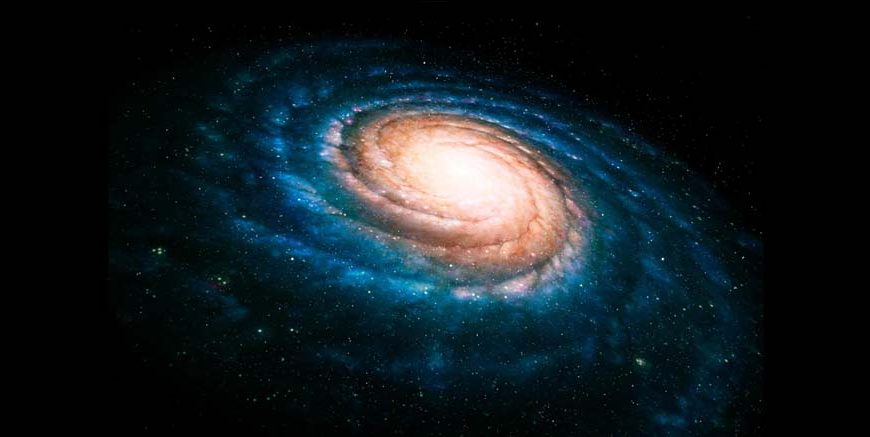
Before we dive into black holes and exploding stars, we need to nail down a proper Milky Way galaxy definition. In modern astronomy, it is classified as a barred spiral galaxy. That simply means it looks like a giant, flattened pinwheel with a bright, straight bar of older stars cutting directly through the middle.
If your child is doing a science project and asks you, “our solar system is a part of which galaxy?”, you can confidently tell them this is the one. We live in the quiet suburbs of this massive pinwheel. The true Milky Way galaxy meaning is quite simply “home”. It is the intense gravitational boundary that binds our Sun, our planet, and billions of other objects together, ensuring we don’t all go drifting off alone into the freezing, empty void of deep space.
Read More – Fascinating Science Facts for Kids
The Anatomy of Our Neighbourhood
A galaxy is not just an empty room full of random floating rocks. It is a highly organised, incredibly complex physical structure. If we want to gather properly useful Milky Way information, we need to unpack the actual elements hiding inside it. Here is a breakdown of the core anatomy:
The Supermassive Black Hole:
Right at the very dead centre sits a terrifying, invisible anchor known as Sagittarius A*. This black hole weighs roughly four million times more than our Sun. Its gravity is so intensely powerful that not even light can escape its grip. This heavy monster acts as the ultimate tether, forcing the entire galaxy to spin around it like a giant carousel.
The Galactic Bulge:
Packed tightly around that central black hole is a massive, glowing ball of ancient stars. It is the busiest, brightest, and oldest traffic jam in our local universe. From the outside, it looks like a giant, glowing egg yolk sitting in the middle of a frying pan.
The Flat Disc and Spiral Arms:
Spreading far outward from that glowing centre is a relatively flat, spinning disc. This disc is broken up into huge, sweeping tentacles called spiral arms. These arms are areas where gravity has bunched gas and stars tightly together. Our tiny solar system sits on a minor, quiet branch called the Orion Spur.
Gas and Dust (Nebulae):
The dark space between the stars is actually packed with thick, colourful clouds of freezing gas and dust. These clouds are stellar nurseries. Over millions of years, gravity squashes this gas together until it gets unimaginably hot and ignites, birthing a brand new baby star.
The Dark Matter Halo:
Wrapped completely around the outside of the galaxy is a massive, invisible shield of dark matter. We cannot actually see it with any telescope, but its heavy gravitational pull is the invisible glue that stops the rapidly spinning galaxy from ripping itself apart and flying in all directions.
The Ultimate Cosmic Headcount
Kids absolutely love huge numbers, and they will inevitably ask you about the exact number of stars in Milky Way structures. The honest truth is that astronomers cannot physically count them all individually. It is totally impossible because thick, dusty space clouds constantly block our view of the other side of the galaxy.
Instead, scientists use advanced physics to calculate the overall mass of the pinwheel, estimating that the total number of stars in Milky Way ecosystems sits somewhere between 100 billion and 400 billion. Trying to explain massive things to a primary schooler is tough! Tell them to imagine walking onto a massive sandy beach.
If you were to count every single grain of sand on that beach, and then every grain of sand on every other beach on Earth, you still would not match the number of stars swirling out there in our galaxy. Our massive, blindingly bright Sun is just one single, lonely grain of sand in that colossal bucket.
Read More – How do you make Science Interesting for kids?
Brilliant Facts Driven by Science
Space science becomes genuinely exciting when you look past the basic vocabulary and explore how these massive systems actually behave in real time. Here is a list of fascinating facts, driven entirely by pure logic and astronomical observation:
- We are moving at terrifying speeds: You feel like you are sitting perfectly still on the sofa reading this, but our solar system is actually hurtling around the galactic centre at over 500,000 miles per hour. Even travelling at that mind-snapping speed, the galaxy is so vast that it takes our Sun roughly 230 million years to make one single lap around the centre!
- A colossal crash is coming: We are currently on a direct collision course with our nearest large neighbour, the Andromeda Galaxy. Gravity is pulling both massive pinwheels together. Do not panic, though, it won’t happen for another four billion years. When they finally smash together, they will merge to form one giant, messy mega-galaxy.
- The shape is actually warped: Our galaxy is usually drawn in textbooks as a perfectly flat dinner plate, but it is actually bent. Because it is constantly fighting a gravitational tug-of-war with smaller satellite galaxies orbiting nearby, its outer edges are warped and twisted, looking a bit like a plastic vinyl record left out in the hot sun.
- It is a cosmic cannibal: The galaxy only grew to its current massive size by acting like a cosmic bully. For billions of years, it has constantly torn apart and swallowed up tiny dwarf galaxies that happened to wander too close to its gravitational pull. We can still see the leftover streams of stars from these ancient galactic meals floating around our skies today.
Learning Through Active Discovery
Trying to wrap a young brain around the endless scale of outer space can give anyone a headache. You cannot just write these massive numbers on a classroom whiteboard and expect a child to actually care. They need to develop a strong sense of spatial reasoning through active, physical discovery.
This exact focus on practical logic is where the Heureka curriculum truly shines. Rather than forcing kids to passively memorise the names of the planets for a Friday spelling test, it pushes them to actively question the mechanics of their environment.
Why do things orbit? How does gravity actually pull? When you shift the educational focus away from rote memorisation and move towards active logical problem-solving, the entire universe becomes an exciting, interactive puzzle waiting to be unlocked. It builds confident thinkers who aren’t afraid to ask massive questions.
Conclusion
When you finally grasp the sheer, terrifying scale of the cosmos, it completely changes how you view your ordinary morning routine. Our home galaxy is a violent, beautiful, swirling metropolis of supermassive black holes, toxic gas clouds, and billions of boiling suns. Yet, sitting right in the middle of all that chaotic space, our little blue planet has somehow managed to provide the exact perfect conditions for life to thrive.
It is incredibly thought-provoking to realise just how fragile, rare, and mechanically brilliant our existence truly is. Looking up at the dark night sky shouldn’t make us feel small and insignificant; it should make us realise how incredibly lucky we are to be here at all. Discover more fantastic ways to fuel your child’s daily curiosity on the EuroKids Blog and secure their next great educational adventure through EuroKids Preschool Admission today.
FAQs
H3 – Why can we not see the entire shape of the galaxy from Earth?
Because our solar system sits right inside the flat disc of the galaxy, it is like trying to see the outside shape of a massive building while you are standing locked inside a tiny room on the third floor. We can only see it edge-on as a stripe across the sky.
What exactly is a light-year?
A light-year is not a measurement of time; it is the actual physical distance that a beam of light can travel in one single year. Light moves incredibly fast, covering roughly 5.8 trillion miles in a year!
Is there a physical edge to our galaxy?
Yes, there is. The main visible disc of stars stretches across roughly 100,000 light-years from one side to the other, eventually thinning out into nothing, though the invisible dark matter halo extends much further out into deep space.