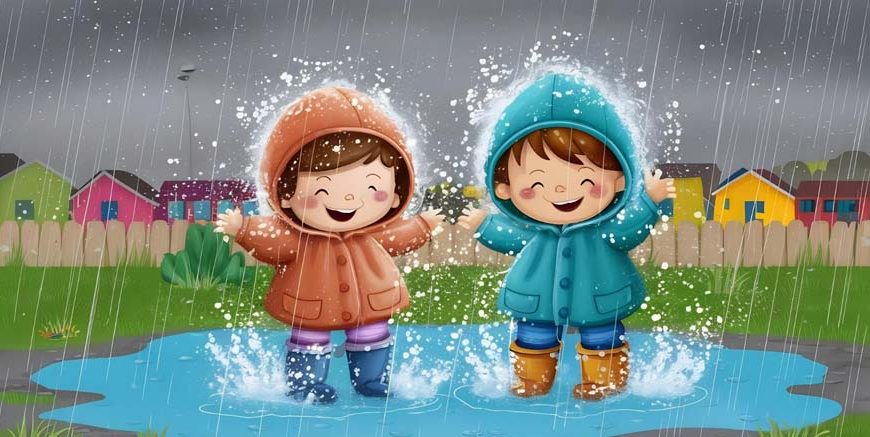
Pitter-patter, splash, squelch. The very first heavy drops of the monsoon hitting a dry, dusty pavement create an instant, wonderful orchestra. The rich smell of wet earth fills the air, and suddenly, the boring grey street outside your window transforms into an exciting playground of watery reflections. For young children, a sudden downpour is pure, unadulterated magic.
They naturally want to catch the cold drops on their tongues, sail tiny boats in the gutters, and stomp aggressively in the absolute deepest puddles they can find. Capturing this wild, wet excitement in words is a brilliant way to help them process the changing seasons. Rhyming verses and rhythmic stanzas perfectly mimic the tapping of rain against the glass, making poetry the ultimate tool for celebrating the stormy weather. Let us dive into the wonderful world of monsoon rhymes and explore how these simple verses can spark your child’s boundless imagination.
The Magic of a poem on rainy season
Children are naturally drawn to rhythm. Long before they can properly read or write complex sentences, they respond enthusiastically to the bouncing beat of a good nursery rhyme. When you introduce a poem on rainy season, you are doing much more than just reading a book; you are giving them the specific vocabulary they need to describe the sensory overload of a thunderstorm.
The loud crack of thunder, the slippery feel of mud, and the bright colours of blooming flowers can be quite overwhelming. A beautifully crafted verse organises this chaotic outdoor world into neat, predictable, and highly comforting sounds. It teaches them about the natural water cycle, the behaviour of garden animals hiding from the wet, and the sheer joy of playing outside in a brightly coloured waterproof coat.
Read More – Nursery Rhymes For Kids with Lyrics
A short poem on rainy season to Read Aloud
When introducing young minds to the concept of rhyming, you must keep the verses incredibly brief and highly relatable. A short poem on rainy season should focus on the exact things a child physically experiences when they step out of the front door.
Here is a fun, easy verse to share while watching the clouds gather:
The heavy grey clouds fill the sky,
To wave the bright, hot sun goodbye.
The silver drops begin to fall,
Washing the garden, trees, and all.
I grab my boots of shiny red,
And pull my raincoat on my head!
The muddy puddles call my name,
Jumping in water is my favourite game.
This piece works perfectly because it creates a clear, chronological narrative. It starts with the darkening sky, moves to the physical act of getting dressed in appropriate wet-weather gear, and ends with the ultimate childhood reward: aggressively jumping in the mud. Reading a rainy season poem in English like this helps them connect the spoken words directly to their own real-world actions.
Exploring a poem on rainy season for class 1
As children enter their early primary years, their attention span grows rapidly, and their imagination becomes much more detailed. A poem on rainy season for class 1 can introduce slightly more complex ideas, like how the local wildlife reacts to the sudden flood, or the classic childhood tradition of making paper boats.
Try reading this descriptive piece with your six-year-old:
Look at the puddles, deep and wide,
Where my little paper boat can glide.
It sails across the tiny sea,
Just a paper captain, brave and free.
A quick green frog gives a giant leap,
While the sleepy garden snails slowly creep.
The thirsty flowers drink the rain,
Until the summer sun comes back again.
Notice how this specific verse shifts the focus slightly away from just the child, encouraging them to carefully observe the tiny creatures and plants sharing their wet environment. It builds brilliant early empathy for nature.
Read More – Rain Rain Go Away Poem for Kids
Nature in a rainy season poem for kids
The monsoon completely transforms the natural landscape, turning dry, brown fields into lush, vibrant green carpets almost overnight. A dedicated rainy season poem for kids is the perfect way to explain how vital this water is for the survival of our planet.
Here is a gentle, nature-focused rhyme:
The dry, brown earth was cracking wide,
With nowhere for the worms to hide.
Then came the wind, so loud and strong,
Bringing the heavy rain along.
The tall oak tree drinks from the ground,
While splashing creates a happy sound.
The world is washed completely clean,
And every single leaf is bright and green.
This type of poem on rainy season for kids introduces basic environmental science in a highly digestible format. It subtly teaches them that the rain is not just an annoying event that cancels their trip to the playground; it is a desperate, necessary drink of water for the entire earth.
How to Make Poetry Fun at Home
You cannot just hand a child a piece of paper with a poem written on it and expect them to instantly fall in love with literature. You have to actively bring the words completely to life.
Here is a highly practical list of ways to make these verses exciting:
- Act it out: While you read the lines out loud, encourage your child to physically act out the words. Have them pretend to put on heavy boots, leap like a frightened green frog, or sway their arms like a tall tree drinking the water.
- Create sound effects: Give them a wooden spoon and a plastic tub, or a hollow cardboard box. Ask them to gently tap the box to mimic the falling drops, and strike it loudly when you read the word ‘thunder’.
- Draw the story: After reading the verses a few times, hand them a blank piece of paper and some bright crayons. Ask them to draw exactly what they saw in their head while they were listening to the rhythm.
- Build a real paper boat: If the poem mentions a paper boat, grab some old newspaper and fold one together. Take it outside immediately and float it in a safe, shallow puddle to connect the fiction directly to reality.
Read More – Popular Short Rhyming Word Poems For Children
Conclusion
It is deeply thought-provoking to realise that the nursery rhymes and simple verses we teach our children today will permanently shape how they view the natural world for the rest of their lives. Poetry is not just a clever collection of rhyming words; it is a brilliant lens that magnifies the hidden magic in everyday moments. By wrapping the chaotic, wet, and messy monsoon season into neat, rhythmic verses, we teach our kids to find absolute joy and beauty in the gloomiest of weather. These short moments of splashing in puddles and reciting silly rhymes fade incredibly fast as they grow older, making it vital to capture the magic while their wellies are still small. To uncover more delightful ways to bond with your child and explore the wonders of early learning, browse the EuroKids Blog and begin their creative journey today through EuroKids Preschool Admission.
FAQs
Why do young children respond so well to rhyming words?
Rhyming provides a highly predictable, comforting auditory pattern. This repetitive structure makes it significantly easier for a developing brain to process new vocabulary and successfully memorise sequences of events.
How can I help my child write their very own verse?
Start incredibly small. Pick a base word like ‘rain’ and ask them to shout out any words they know that sound similar, like train, pain, or brain. Then, help them build very simple, silly sentences around those matching sounds.
Is it actually safe to let children play outside during a storm?
As long as there is absolutely no lightning, thunder, or heavy flooding in your local area, jumping in shallow, clean puddles during a light, warm shower is perfectly safe and a brilliant sensory experience for toddlers.