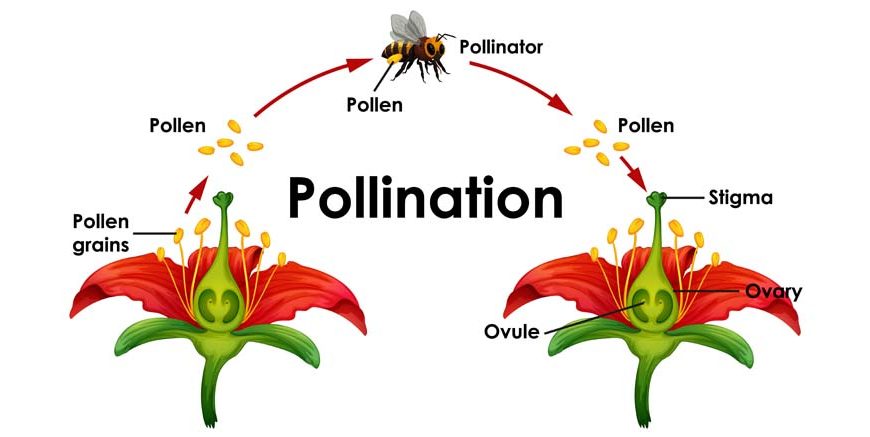
Flowers are much more than just colourful decorations for our gardens. Beneath their bright petals and sweet smells, a highly organized system is at work. Plants cannot walk around to find a partner to create seeds and grow new baby plants. They are completely rooted in the ground. Because they are stuck in one place, they need a special delivery service to help them reproduce. This delivery service is one of the most important processes in nature. Today, we look closely at this botanical mission, learn the specific terms, and understand how tiny flying bugs help feed the whole world.
The Basics of the Mission
To give a clear introduction of pollination, we first need to look at the anatomy of a flower. Most flowers have two main parts. The male part produces a fine, yellow dust called pollen. The female part contains tiny, unfertilized seeds waiting deep inside.
For a seed to grow into a fruit or a new plant, the yellow dust from the male part must travel to the female part. The actual pollination meaning in English is the transfer of pollen grains from the male structure of a flower to the female structure. The word itself comes from the Latin word pollen, which simply means “fine flour” or “dust.” When this dust successfully makes the trip, the flower can finally create seeds, which eventually grow into apples, pumpkins, or beautiful new sunflowers.
Read More – Parts of a Flower and Their Role in Nature for Kids
The Helpers of Nature
Since flowers cannot move to pass the dust themselves, they rely heavily on outside help. This brings us to a very important term in biology. The true pollinators meaning refers to any animal, insect, or even weather force that carries the pollen from one flower to another.
These helpers do not usually know they are delivering pollen. A fuzzy bee lands on a bright flower because it wants to drink the sweet liquid hidden inside, known as nectar. As the bee drinks, the sticky yellow pollen naturally clings to its fuzzy legs and body. When the bee flies away to drink from the next flower, the dust falls off its body onto the new flower. The delivery is completely successful!
Different Types of Delivery Agents
Let us look at some of the best helpers in nature to see how they do their daily jobs.
- Bees: They are the absolute champions of the flower world. They visit hundreds of flowers a day, moving massive amounts of pollen to feed their hives.
- Butterflies: With their long legs and delicate wings, they prefer flowers with flat, wide tops so they can land easily and sip nectar comfortably.
- Hummingbirds: These tiny birds love bright red and orange flowers. When they dip their long beaks deep into the petals to drink, pollen rubs directly onto their heads and feathers.
- Wind and Water: Not all plants use living animals. Grasses and large pine trees rely on the strong wind to blow their dry, lightweight pollen through the air. Some aquatic plants use river currents to float their pollen to other waiting plants.
Read More – What Is Flora and Fauna for Kids?
Two Different Ways to Succeed
Scientists categorize this process into two main types. Plants have figured out different methods to make sure their seeds grow properly. Here is a simple table to show the differences:
|
Type of Process |
How It Works |
|
Self-Pollination |
The pollen moves from the male part to the female part of the exact same flower, or another flower on the same plant. |
|
Cross-Pollination |
The pollen travels from a flower on one plant to a flower on a completely different plant of the exact same kind. |
Why We Need It to Survive
It is easy to think this process only matters to bugs and plants, but it directly affects human beings every single day. Every time you bite into a juicy strawberry, a crisp apple, or a slice of tomato, you are eating the result of a successful pollen delivery.
Without these flying helpers, our grocery stores would be almost completely empty. Most of the fruits, vegetables, and nuts we eat depend entirely on this natural system. In fact, scientists estimate that out of every three bites of food we take, one bite exists only because a bug or bird did its job. Even the cows that give us milk eat clover and alfalfa, which are plants that must receive pollen from insects to grow.
Read More – Types of Plants for Kids
Conclusion
To summarize the topic, pollination is the essential transfer of yellow pollen dust from the male part of a flower to the female part. This physical transfer allows plants to create seeds and grow fruits. The hardworking delivery agents, like bees, birds, and even the wind, act as a free service to make this entire natural system function.
As you watch a small bee buzzing around a garden, it leaves you with a very serious thought. That tiny insect is not just looking for a sweet drink; it is carrying the heavy responsibility of feeding the entire planet. If all the bees suddenly stopped doing their daily jobs, the plants would stop growing food, and humans would have very little left to eat. It is a quiet reminder that our massive world relies entirely on the smallest creatures to keep it alive. To read more fun and educational articles, check out the EuroKids Blog, and visit our website for details on EuroKids Preschool Admission.
FAQs
What happens if a flower never receives any pollen?
If the yellow dust never reaches the female part, the flower will simply wither and drop off the plant without ever producing any seeds or fruit.
Do all flowers have bright colours and sweet smells?
No! Flowers that rely entirely on the wind do not need to attract bugs, so they are usually small, green, and have no smell at all.
Are bats considered pollinators?
Yes, they absolutely are. In many warm, tropical areas, fruit bats fly around at night and help pollinate fruits like mangoes, bananas, and guavas.
Why is the pollen so sticky?
Plants designed it to be sticky so it easily grabs onto the legs, fur, or feathers of passing animals, ensuring it does not blow away too quickly before the bug reaches the next plant.