Look at the spine of a massive, heavy encyclopedia sitting on a library shelf. Or maybe wait until the very end of a massive Hollywood blockbuster and watch the credits roll. You won’t always see normal, curly digits tracking the dates or volumes.
Instead, you see letters. Sharp, capitalized letters placed together.
It looks like a typo. It looks like a password. But it isn’t. It is a completely different way of tracking the universe. When a child first bumps into the XVII symbol, their brain usually glitches. Letters belong in reading class. Numbers belong in math. Why are they suddenly mixing?
Let’s completely demystify this. We are going to rip this ancient code apart, figure out the exact math behind the XVII number, and discover why these straight lines survived for thousands of years.
The Core Translation: What is the XVII Meaning?
To decode this, you have to stop looking at it as a single word. It is not a word. It is a highly organized math equation sitting quietly on the page.
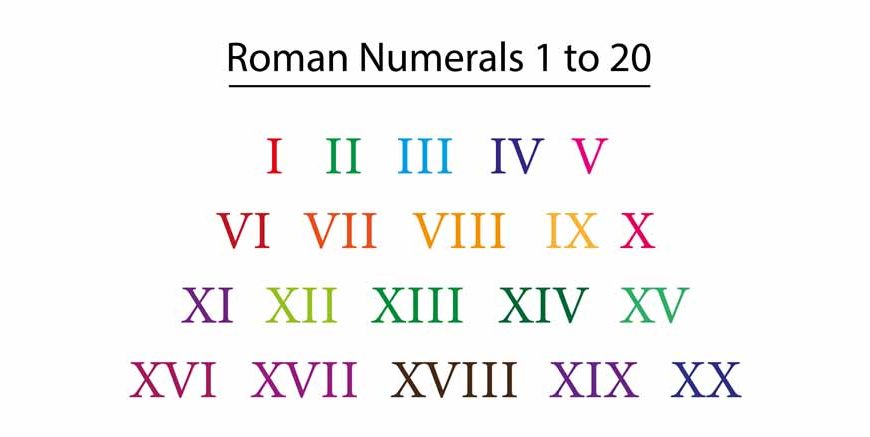
If a young student asks about the exact XVII meaning, the answer is seventeen. Plain old 17.
But how do those specific letters create that specific amount? You have to look at the individual building blocks. The Romans didn’t have keys to press or digital screens to tap. They used an alphabet-based counting system.
- X stands for ten.
- V stands for five.
- I stands for one.
That is your toolkit. Just three specific letters. When you know what each block weighs, you can start building the tower.
Read More – Teaching Kids About Roman Numerals
Doing the Math: Building the XVII Number
Here is the golden rule of ancient Roman math. It is all about direction.
When you read a book in English, you read from left to right. Roman math works the exact same way. If you place a large number on the left, and smaller numbers on the right, you are telling the reader to add them all up. You just collect the values as you walk across the letters.
Let’s build the XVII number together.
Start on the left. You hit an X. Grab ten points.
Keep walking right. You hit a V. Add five points. (You are at 15).
Take another step. You hit an I. Add one point. (Now 16).
Take the final step. You hit another I. Add one more point.
10 + 5 + 1 + 1 = 17.
That is the entire secret. You just created XVII roman numerals perfectly. It isn’t a mysterious code at all. It is literally just an addition problem wearing a very clever disguise.
Read More – Roman Numerals 1 to 20
Why Did They Use Such Sharp Letters?
Kids always ask a very smart question. Why didn’t they just draw a 1 and a 7? Why use an X and a V?
You have to look at the tools they were holding. The Romans weren’t using soft lead pencils on smooth white paper. They were carving daily records, building dates, and laws directly into solid stone and marble. They used heavy iron hammers and sharp metal chisels.
Try this experiment. Go outside and try to carve a loopy, curved number ‘8’ or a curly ‘7’ into a piece of hard wood. It is incredibly frustrating. The tool slips. The curves look messy. Now, try carving straight lines. Slashes. Crosses. It is incredibly fast and highly accurate. The XVII symbol exists purely because straight lines were the easiest shapes for a tired stone worker to carve into a building.
Hunting for the Number 17
So, why bother learning this today? We have smartphones now.
Because history refuses to be erased. These numbers are still hiding absolutely everywhere in our modern world. Once a child knows how to read them, they turn into a historical detective.
Where can you spot this specific number today?
- History Books: If you are reading about French history, you will definitely run into King Louis XVII. Kings and queens use these letters to avoid mixing up people with the exact same name.
- Time Travel: When historians talk about the 1600s, they don’t say “the 1600s.” They call it the XVII Century.
- Sports: Massive sporting events, like the Super Bowl, refuse to use regular digits. Super Bowl 17 is written entirely in these ancient letters on the championship rings.
Wrapping Up
Let’s pull all these threads together. X is ten. V is five. II is two. Smush them together from left to right, and you get seventeen.
But look past the math for a second. Think about what this actually means. Thousands of years ago, a person carved these exact straight lines into a dusty stone pillar halfway across the world. Empires fell. Castles crumbled into dust. The world completely reinvented itself with electricity, airplanes, and the internet. Yet, when a child writes those four letters on a piece of homework paper today, the meaning hasn’t changed by a single drop. Mathematics is the ultimate time traveler. It is a permanent, unbreakable language that connects us directly to the past.
To read more fun and educational articles, check out the EuroKids Blog, and visit our website for details on EuroKids Preschool Admission.
FAQs
What does XVII translate to in normal numbers?
It translates exactly to the number 17.
How do you do the math to get seventeen?
You read the letters from left to right and add their values. X (10) + V (5) + I (1) + I (1) = 17.
Why is the V placed after the X?
In this system, placing a smaller value (V) to the right of a larger value (X) means you must add them together.
Are you allowed to write XVIIII for nineteen?
No! The rules state you cannot put more than three of the exact same letters in a row. Nineteen is written as XIX, using subtraction for the nine.