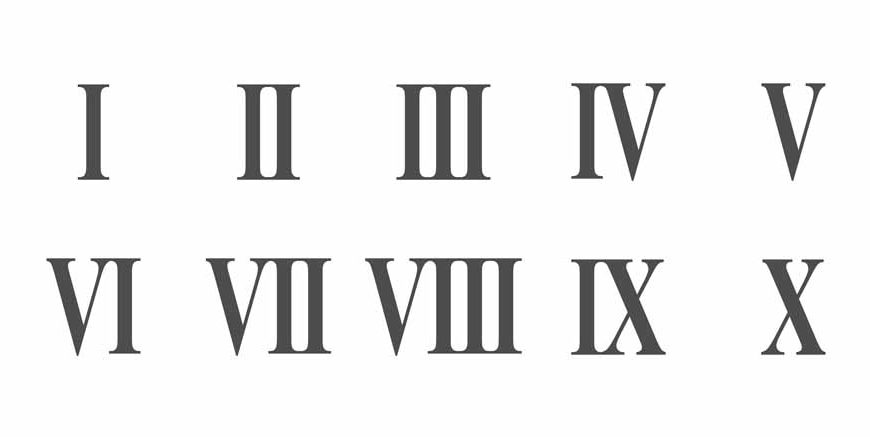
Children absolutely love secret codes. They invent highly complicated secret handshakes on the playground. They write hidden messages to their best friends using invisible lemon juice ink. Finding a hidden puzzle is always thrilling for a young mind. So, when they open a history book or stare at a clock and suddenly see the alphabet crashing directly into their math problems, it feels exactly like stumbling upon a locked treasure chest.
It looks like a massive printing mistake. A typo. But it isn’t. It is a two-thousand-year-old mathematical system staring right back at them. Let’s decode the XXII symbol today. No stress. No complicated formulas. Just a fun, ancient puzzle waiting to be solved.
Cracking the Code: What is the XXII Number?
Before a child can read a thick, exciting storybook, they have to learn the basic alphabet. Ancient Roman math works the exact same way. You have to understand the foundational building blocks first before you try to build the house.
The Romans completely ignored curvy shapes. They relied strictly on straight letters.
Here is your toolkit for this specific puzzle:
- The letter X stands for the number ten.
- The letter I stands for the number one.
That is your entire list. You only need two specific letters to build this XXII number. Once a young learner knows exactly what these individual letters weigh, they can start stacking them up like heavy wooden blocks. It completely removes the panic from the math equation.
Read More – Teaching Kids About Roman Numerals
Doing the Math: XXII in Roman Numerals
How do we actually stick these letters together to make a bigger digit? The Romans operated under a very strict, unbreakable rule for reading their math. Direction matters immensely.
You always read from left to right. Just like reading a regular sentence in a normal English textbook. If the larger letters come first, you just add everything up as you walk your eyes across the page.
Let’s break down XXII in roman numerals step by step.
- Take your very first step. You hit an X. Grab ten points.
- Take another step forward. You hit a second X. Add ten more points to your pile. Now you are sitting at twenty.
- Keep going. You hit an I. Add one single point. You are at twenty-one.
- Take the final step. Another I. Add one last point.
10 + 10 + 1 + 1 = 22.
You did it. The final answer is twenty-two. It really is that straightforward. It is just a basic, first-grade addition wearing a very clever alphabetical disguise.
Read More – How to Write XXI in Numbers?
Why Letters Instead of Normal Numbers?
Kids always point out a very obvious flaw in this system. Why make things so incredibly complicated? Why not just grab a pen, write a curly 22, and go play outside?
You have to think about the physical tools they held in their hands. They did not have smooth gel pens. They did not have lined notebook paper or shiny digital tablets. They had heavy iron hammers. They had razor-sharp metal chisels. They carved their daily records, laws, and dates directly into solid rock walls and giant marble pillars.
Try carving a curvy, looping number ‘2’ into a rough piece of rock. It is incredibly frustrating. The stone chips away. The chisel slips. It ends up looking sloppy. Now, try carving a straight ‘X’. Two quick, aggressive slashes. Perfect. Straight lines were simply the fastest, easiest way for tired, dusty workers to carve information into a building.
Hunting for the Number 22
History absolutely refuses to stay locked in the past. It sneaks into our modern world constantly. Once a kid actually knows how to read this ancient code, they turn into a real-life historical detective.
Where can you spot this specific number today?
- Sports: Fans know it well. Giant championship games, like Super Bowl XXII, use these letters on their shiny rings and television logos to look grand and official.
- Old Books: Check the end of an old, heavy encyclopedia. The volumes or the original publishing dates are often printed this exact way.
- City Clocks: Look at the giant analog clocks sitting in the middle of a big city square or a train station.
These ancient letters are hiding absolutely everywhere in plain sight, just waiting for a smart kid to decode them.
Read More – Roman Numerals 1 to 50
Conclusion
Let’s pull all the scattered pieces together. X gives us ten. I gives us one. Stack them up neatly from left to right, and you get exactly twenty-two.
But let’s pause and think about this deeply for a second. We live in a frantic world of smartphones, artificial intelligence, and digital screens. Our technology changes and updates every single month. Yet, when a child writes those four straight letters on a piece of homework paper, they are using the exact same logic an ancient Roman builder used thousands of years ago.
Math simply does not break. It does not fade away. It is a permanent, unbreakable language. It acts as an invisible bridge connecting our fast-paced modern world straight back to the dusty, ancient streets of history.
To read more fun and educational articles, check out the EuroKids Blog, and visit our website for details on EuroKids Preschool Admission.
FAQs
What does XXII translate to in normal digits?
It translates exactly to the number 22.
How do you calculate the final value?
You simply add the letters together from left to right. X (10) + X (10) + I (1) + I (1) = 22.
Why can’t I write 22 using just ‘I’ twenty-two times?
The Roman system has a strict rule to prevent messy, unreadable writing. You use the largest symbols possible first, which is why we use two tens instead of a giant, confusing pile of ones.
Do we still use this number system today?
Yes! You will often see it on clock faces, in classic book chapters, and numbering massive sporting events.