Walk into any busy nursery or local playground, and you will inevitably witness a familiar standoff. Two toddlers firmly grasp opposite ends of a bright red toy fire engine. One pulls left, the other pulls right. Faces turn red, tears begin to well up, and neither child is willing to let go. Eventually, the toy slips, both children tumble backward onto the carpet, and neither gets to play with the coveted fire engine. This universal display of pure, unyielding stubbornness is a natural part of growing up, but it is also a behaviour that requires gentle correction.
Long before plastic toys were invented, storytellers used the natural world to explain the dangers of refusing to compromise. Animals, with their distinct personalities, serve as the perfect stand-ins for human behaviour. Today, we are going to travel high up into the steep, rocky mountains to explore a brilliantly simple fable. We will look at what happens when pride takes over, how a simple change in perspective can solve massive problems, and why this specific narrative is an invaluable tool for teaching young children about cooperation.
A Classic Goat Story
To set the stage for our adventure, we must first picture a lush, green mountain range. High up in the hills, the air was crisp, and the grass was incredibly sweet. However, a deep, dangerous gorge split the mountains right down the centre. At the bottom of this steep gorge roared a fast, freezing river, crashing violently against sharp, grey rocks.
The only way to cross from one beautiful green mountain to the other was a single, narrow bridge. It was not a grand bridge made of sturdy stone or thick steel. It was simply the trunk of an old, fallen pine tree that had toppled over during a wild storm. The log was extremely thin, covered in slippery green moss, and only wide enough for one creature to cross at a single time.
This precarious log is the setting for every variation of the famous goat story. It represents a bottleneck, a situation where two opposing forces are forced to deal with one another.
Read More – Best Bedtime Stories for Kids
The Two Silly Goats Story
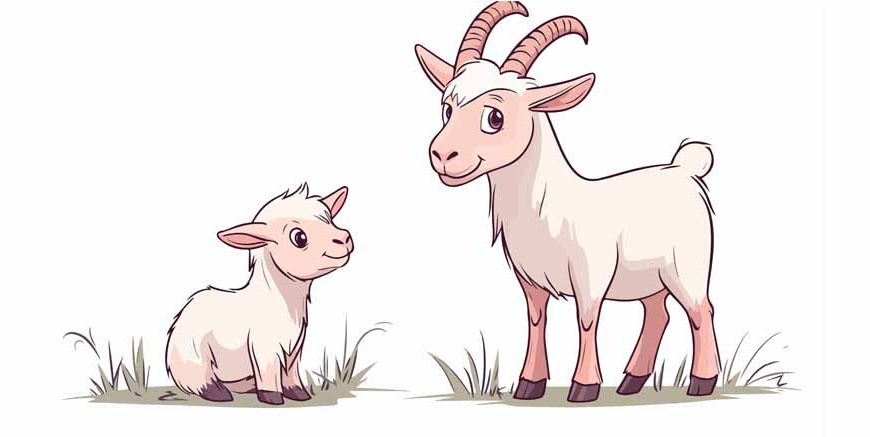
One bright morning, a fierce, brown goat was grazing on the East mountain. He looked across the gorge and decided that the grass on the West mountain looked much tastier. At that exact same moment, a proud, black goat grazing on the West mountain looked over and decided he wanted to eat the grass on the East mountain.
Without looking ahead, both animals confidently stepped onto the ends of the fallen log and began to walk towards the centre.
This is where the famous two silly goats story truly begins. The two animals met right in the middle of the narrow, slippery trunk. The brown goat stomped his hoof and commanded, “I am older and stronger! Move backward and let me pass!”
The black goat scoffed, tossing his heavy horns in the air. “I will do no such thing! I stepped onto this bridge first. You must walk backwards to the edge and let me cross!”
Neither animal was willing to budge an inch. Their pride was far too large to allow them to take a step backward. They argued for several minutes, their voices echoing loudly down the deep canyon.
The Fate of the Two Silly Goats
Because they acted like two silly goats, words quickly turned into action. They lowered their heads, pointed their sharp horns at one another, and charged.
They crashed together in the very centre of the narrow log. They pushed, they shoved, and they kicked. But a wet, slippery log hanging high over a rushing river is absolutely no place for a physical fight. Within seconds, both animals lost their footing. Their hooves slipped on the damp moss, and with a terrified bleat, both of them tumbled off the wooden bridge.
They splashed heavily into the freezing, fast-moving river below. The current dragged them downstream, bumping them against the sharp rocks. While they eventually managed to swim to the muddy banks, they were bruised, shivering, and completely exhausted. Most importantly, because of their overwhelming pride, neither of them ever got to taste the sweet grass on the other side of the mountain.
Read More – Short Moral Stories for Kids
The Two Wise Goats Story
When teaching children, it is often incredibly helpful to show them the right way to handle a situation immediately after showing them the wrong way. Thankfully, there is a brilliant alternative ending to this fable, often referred to as the two wise goats story.
Imagine the exact same scenario. Two different goats meet in the very middle of that same slippery pine log. They realise they are stuck. But instead of lowering their horns to fight, they stop and communicate.
One goat says to the other, “If we fight on this narrow log, we will both surely fall into the freezing river and get hurt. We cannot walk past each other, and walking backwards on a slippery log is too dangerous.”
The second goat nods in agreement. “You are right. I have a plan. I will lie down flat on my stomach right here on the bark. You can carefully step over my back. Once you are safely on the other side, I will stand up and continue on my way.”
And that is exactly what they did. One lay down, the other stepped over gently, and both arrived safely at their chosen destinations to enjoy a wonderful meal of fresh green grass.
Read More – Animal Rescue Stories
Real-Life Lessons from the Two Goats Story
The two goats story provides a perfect framework for helping children navigate their own daily conflicts. When we translate this mountain fable into real-world scenarios, the lessons are profound.
1. The Danger of Stubbornness
When you refuse to bend, you eventually break. Just like the children pulling on the toy fire engine in the nursery, fighting out of pure stubbornness usually means that nobody gets what they want. It teaches kids that holding onto your pride is not worth falling into the ‘cold river’ of a ruined friendship or a lost opportunity.
2. The Power of Compromise
The wise animals showed us that solving a problem requires teamwork. If two siblings want to watch different television programmes, fighting over the remote control will just lead to the television being switched off entirely. But if they communicate and agree to watch one programme now and the other programme later, they both win. Compromise is the ‘stepping over the back’ that allows everyone to cross the bridge safely.
3. Brains Over Brawn
Physical fighting never solved the problem on the log. It only made things worse. The animals who used their intellect and communicated with each other were the true victors. This highlights to young readers that using your words to find a clever solution is always vastly superior to using your fists or shouting.
Summary
In the end, this classic woodland narrative is not really about animals or mountain bridges; it is a profound reflection on how we choose to treat one another. We will all inevitably face moments where our path is blocked by someone else who wants the exact same thing we do.
When you strip the story down to its core, it teaches us that winning an argument does not always mean you have won the situation. If you destroy your own peace, your relationships, or your environment just to prove a point, you have already lost. The greatest sign of maturity, whether you are a growing child or an adult navigating a complex world, is the ability to lay your pride down for a moment so that everyone can safely move forward. The next time you find yourself stuck in a frustrating standoff, ask yourself: will you lower your horns, or will you find a way to share the bridge?
To uncover more enriching tales, educational parenting strategies, and supportive learning environments for your child, head over to the EuroKids Blog, and take a moment to explore the admission pathways available at EuroKids Preschool Admission.
FAQs
What does it mean to be stubborn?
Being stubborn means refusing to change your mind or your actions, even when someone else gives you a very good reason to do so. It is like being stuck in the mud and refusing a hand to pull you out!
How can I teach my child to compromise?
Model the behaviour at home! Say things out loud like, “I want pizza for dinner, but you want pasta. Let us compromise: we will have pasta tonight, and we will make homemade pizza tomorrow.”
Why do fables use animals instead of humans?
Animals in fables represent specific human traits (like a proud lion, a sly fox, or a stubborn goat). This makes it much easier and far less intimidating for children to understand complex social behaviours without feeling personally judged.