Imagine stepping into a lush, green garden on a warm spring morning. If you gently peek under a broad, dew-covered leaf, you might just spot a tiny, wriggling creature munching away on its breakfast. Long before the magnificent, colourful butterflies and fuzzy moths take to the sky, they begin their lives in a much humbler, earthbound form. Today, we are going to explore the wonderful world of this creeping, crunching marvel of nature. We will uncover how they grow, how they behave, and why they are so absolutely vital to our shared environment.
What is a Caterpillar?
If an inquisitive child tugs on your sleeve pointing at the dirt and asks, “what is caterpillar?”, how do you explain it simply? To truly understand the caterpillar meaning, we must look at the fascinating, magical life cycle of flying insects. A caterpillar is essentially the larval stage of members of the order Lepidoptera, which encompasses all butterflies and moths. Think of it as a very hungry teenager! Its sole purpose during this stage of life is to eat, grow, and safely store enough energy to survive the incredible transformation waiting for it inside a chrysalis or cocoon.
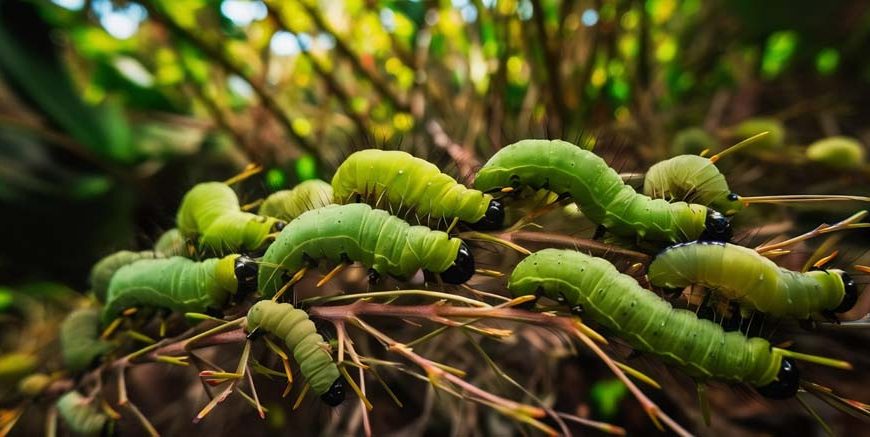
While it is classified as a true caterpillar insect, it certainly does not look like the typical six-legged bugs we often spot in the grass. Because they need to move their long, heavy, segmented bodies across wobbly leaves and thin twigs, they have cleverly evolved to have several pairs of tiny, gripping ‘prolegs’ along their abdomen to help them Csafely without falling.
As for the caterpillar scientific name, it actually does not have just one single label! Because there are over 175,000 incredibly different species of butterflies and moths on our planet, each specific larva directly shares the unique scientific name of its adult flying form. For instance, the larva of the famous, bright orange Monarch butterfly is scientifically known as Danaus plexippus.
Read More – List of Animals That Live On Land And Water
Practising Language: Five Sentences About Caterpillar Life
Learning new vocabulary is always much easier when we put it into clear context. If you are actively helping a young learner practice their school writing skills and need a good caterpillar sentence to use as a strong example, we have a handy list to inspire you.
Here are five sentences about caterpillar habits that you can use for creative stories or homework projects:
- The bright green caterpillar slowly munched on a large, crisp oak leaf in the garden.
- Before becoming a beautiful, delicate butterfly, the insect must spend several weeks as a creeping caterpillar.
- Many hungry birds try to hunt the caterpillar, so it uses clever, natural camouflage to hide deeply amongst the plants.
- I gently placed the fuzzy caterpillar back onto the soil so it could find a safe, quiet place to rest.
- The incredibly hungry caterpillar completely outgrew its old skin and had to shed it to keep growing.
Brilliant Discoveries: Caterpillar Facts for Kids
Nature is constantly full of magical, bizarre surprises. To make your next family garden adventure even more exciting, here is a fascinating list of caterpillar facts that will completely amaze young, curious explorers.
These caterpillar facts for kids beautifully highlight just how wonderfully strange these little creatures truly are:
- They have terrible eyesight: Despite having six tiny pairs of eyes (known scientifically as stemmata), they can hardly see detail at all! They can only really tell the basic difference between light and dark, relying entirely on their sensitive antennae to feel their way around a plant.
- They possess incredible muscle power: A grown human being has roughly 600 muscles in their entire body. A single crawling larva, however, has a staggering 4,000 muscles! They have over 200 muscles in their head alone just to help them aggressively chew through tough, thick leaves.
- They literally breathe through their sides: They do not have internal lungs like mammals do. Instead, they cleverly breathe through tiny, invisible holes positioned along the sides of their segmented bodies called spiracles.
- They grow remarkably fast: A newly hatched larva is incredibly tiny, but because it eats almost non-stop, it can increase its overall body mass by up to 1,000 times in just a few short weeks.
- They shed their skin like snakes: Because their thick outer skin does not stretch, a rapidly growing larva must moult (which means to shed its outer layer) multiple times before it is finally large enough to build a cocoon.
Read More – The Very Hungry Caterpillar Story for Kids
Conclusion
When we pause to observe a slow, clumsy larva crawling across a damp garden path, it is incredibly easy to dismiss it as just another simple, everyday bug. Yet, this tiny, munching creature quietly represents one of the most profound, magical transformations in the entire natural world. It teaches us a beautiful, silent lesson about patience, necessary growth, and unseen future potential.
The creeping larva does not worry about the fact that it cannot fly yet; it simply focuses entirely on nourishing itself, bravely trusting the quiet process of change. Just as a tiny larva patiently gathers the strength to eventually conquer the open skies, a child quietly gathers daily knowledge and confidence to brilliantly conquer their future. To discover more joyful learning adventures and effectively support your child’s early development, read more on the EuroKids Blog and find out all the vital details regarding EuroKids Preschool Admission today.
FAQs
What exactly is a caterpillar?
It is the active, feeding larval stage of a butterfly or a moth, primarily focused on eating leaves and growing rapidly.
How many legs does a caterpillar actually have?
They have exactly six true legs just behind their head, plus several extra pairs of sticky ‘prolegs’ along their abdomen to help them grip branches.
Why do they eat so much food?
They must store a massive amount of physical energy to survive the pupal stage, where they completely transform their bodies into adult flying insects without eating anything at all for weeks.