Watching a busy motorway junction from a bridge on a weekday morning is a mesmerising experience. You see hundreds of heavy lorries carrying supermarket supplies, small cars zipping along to school, and rapid delivery vans dropping off parcels, all moving seamlessly without crashing into each other. Now, take a second to look down at the back of your own hands. Right beneath your skin is a transport network millions of times more complex and efficient than the biggest, most advanced road system on Earth.
When we try to explain blood vessels to children, we are essentially talking about this ultimate biological motorway. It never sleeps, there are no traffic jams, and it keeps absolutely everything from your brain down to your little toe functioning perfectly. Let us strip away the complicated medical jargon and take a practical look at the brilliant plumbing keeping us all alive and moving every single day.
The Core Biological Plumbing System
Kids often stumble across complex biology terms in their homework and ask their parents to accurately define blood vessels before dinner time. The standard textbook blood vessels definition usually states that they are a continuous network of hollow, tubular structures that circulate blood throughout the entire human body. However, a much more accessible way to grasp the blood vessels’ meaning is to simply think of them as a massive, flexible plumbing system.
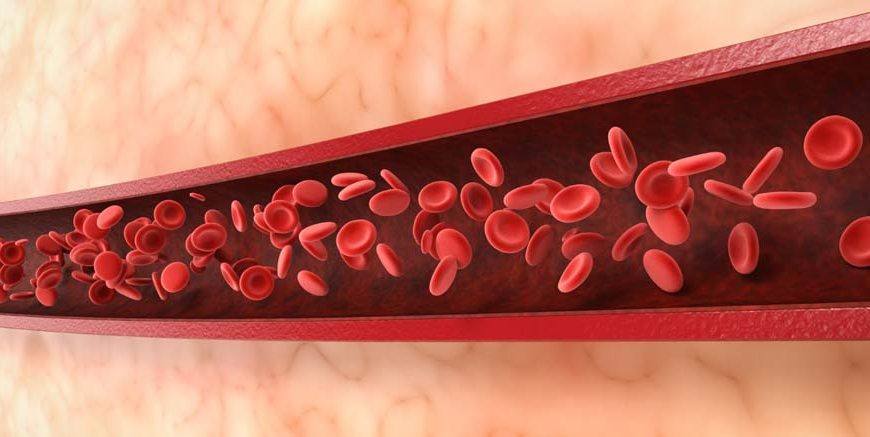
If anyone asks what the meaning of blood vessels is, just tell them they are the soft, living pipes that carry the delivery vans (your red blood cells) around the body. These vans are responsible for dropping off essential oxygen and sugary food to hungry muscles, while simultaneously picking up the dirty rubbish and carbon dioxide to be washed away. They are the ultimate supply chain.
Read More – Circulatory System Explained for Kids
Mapping Out the Different Routes
To properly map out this internal road network, we have to ask a fundamental anatomical question: exactly how many types of blood vessels are there? The human body relies heavily on three distinct structures to get the job done. Understanding how many types of blood vessels we have helps us see how clever and adaptable our biology truly is.
We can easily categorise the types of blood vessels based entirely on the specific direction they travel and the specific jobs they do. We collectively call this hardworking group the blood vessels capillaries, veins & arteries.
Arteries: The High-Pressure Motorways
Let us look at the arteries first. These are the heavy-duty, outbound motorways of the body. Their only job is to carry bright red, freshly oxygenated blood forcefully away from the central station (the heart) to every other corner of your body.
Because your heart is a massive, incredibly powerful muscular pump, the blood shoots out into these tubes at a brilliantly high pressure. To survive this constant, heavy pounding without violently bursting, arteries are built with incredibly thick, elastic, and muscular walls. Every single time you place two fingers against the side of your neck or your wrist to check your pulse, you are not feeling the blood itself; you are physically feeling the thick, rubbery wall of an artery expanding outwards and bouncing back as a massive wave of high-pressure liquid rushes past.
Read More – Teaching Human Body Systems to Students
Veins: The Slow Return Journey
Veins handle the long, tiring return journey. Once the outbound blood has successfully dropped off its fresh oxygen to your brain or your leg muscles, it looks a bit darker and needs to travel all the way back to the lungs and heart for a fresh refill. Veins carry this used blood back home.
Because the blood has travelled so far through the body, it has lost all of that intense, bouncing pressure from the initial heartbeat.
It is moving much slower now. This creates a huge logical problem: how does heavy liquid travel slowly up your legs, fighting constantly against Earth’s heavy gravity, without just falling backwards and pooling in your feet? Veins brilliantly solve this by having tiny, clever one-way doors built inside them. These microscopic valves open to let blood move up towards the heart, and instantly snap shut so the liquid cannot slide back down.
Capillaries: The Microscopic Alleys
The major motorways are brilliant for moving large amounts of traffic very quickly, but a massive articulated lorry cannot deliver a small parcel directly to your front door if you live down a tiny, narrow, winding alleyway. That is exactly where the capillaries step in.
These are the microscopic, ultra-thin alleyways that physically connect the very end of an artery to the very start of a vein. They are so ridiculously narrow that your red blood cells literally have to line up and squeeze through them one by one in a single, tight file. Their walls are incredibly thin, only one cell thick, in fact, so that the oxygen and nutrients can easily slip right through the wall directly into the hungry muscle tissue, while the carbon dioxide waste simply slips back in to be safely washed away.
Read More – Science Quiz Questions and Answers for Kids
Brilliant Scientific Facts and Logic
This internal plumbing system is full of bizarre and wonderful science. Here is a list of genuinely brilliant biological facts, backed by pure logic, to share with your kids:
- An Unbelievable Distance: If you could magically untangle the entire pipe network inside a single young child and lay it all out in one straight line, it would stretch for roughly 60,000 miles. By the time that child grows into a fully sized adult, the network grows to nearly 100,000 miles long. That is physically long enough to wrap around the entire Earth four times!
- The Brain is a Greedy Engine: Your brain only accounts for a tiny percentage of your total body weight, but it is such a high-performance, demanding computer that it requires roughly 20 percent of all the blood flowing through your pipes. It needs massive, constant energy to help you solve tricky maths puzzles or remember the lyrics to your favourite song.
- Self-Healing Tarmac: Unlike the tarmac roads outside our houses that require noisy digging machines to fix massive potholes, your internal pipes repair themselves. If you accidentally scrape your knee climbing a tree, the pipes immediately tighten up to stop the leak, and special sticky cells rush to the damaged area to build a solid scab, completely patching the hole in a matter of minutes.
- Internal Temperature Control: These tubes act exactly like the metal radiators in a central heating system. When you are boiling hot after running around a playground, the pipes near your skin physically widen to release extra body heat into the cooler air, making your face look red and flushed. When you are freezing cold in the winter, they shrink tightly away from the skin to keep the warm blood safely trapped deep inside your chest near your vital organs.
Active Biological Discovery
Reading about dry biology in a textbook is completely fine, but children truly understand how their complex bodies work when they actually get up and move around. The Heureka curriculum relies entirely on this type of active, experiential approach to physical learning.
Instead of just sitting quietly and memorising a flat diagram of the human heart, children are encouraged to actively find their own resting pulse, and then find it again after sprinting wildly across the garden. This practical, physical testing shows them exactly how their internal engine physically revs up to deliver more oxygen through the pipes when the physical demand increases. Connecting dry medical facts to their own living, breathing bodies turns a standard science lesson into a deeply personal, interactive puzzle that they genuinely want to solve.
Conclusion
It is quite incredible to think that we walk around every single day completely ignoring a 100,000-mile transport network ticking away silently beneath our skin. Our biology is a perfectly balanced, flawless piece of natural engineering. The thick arteries take the massive, bouncing pressure, the tiny, delicate capillaries do all the precision deliveries, and the clever veins constantly fight against gravity to bring it all back home.
It really makes you stop and think: if our own bodies can quietly coordinate billions of tiny, complex deliveries every single minute without making a single error, what other brilliant, complex systems are hiding out there in the natural world just waiting for us to uncover them? To discover more unique ways to nurture your child’s inquisitive mindset and fuel their daily discoveries, check out the fantastic resources on the EuroKids Blog and set their educational journey in motion through EuroKids Preschool Admission.
FAQs
Can you actually see your blood vessels through your skin?
Yes, you can easily see some of your veins, especially on the back of your hands or your wrists. They often look blue or green through the skin, but the blood inside them is actually dark red.
What happens if a blood vessel gets blocked?
If a pipe gets blocked by a buildup of unhealthy fat, the blood cannot reach its destination. If this happens near the heart, it causes a heart attack, highlighting exactly why exercise and a healthy diet are so important.
Do capillaries ever grow or change?
Absolutely. When you exercise regularly and build new muscles, your body physically grows thousands of brand new microscopic capillaries to ensure those new muscles get all the oxygen they need to stay strong.