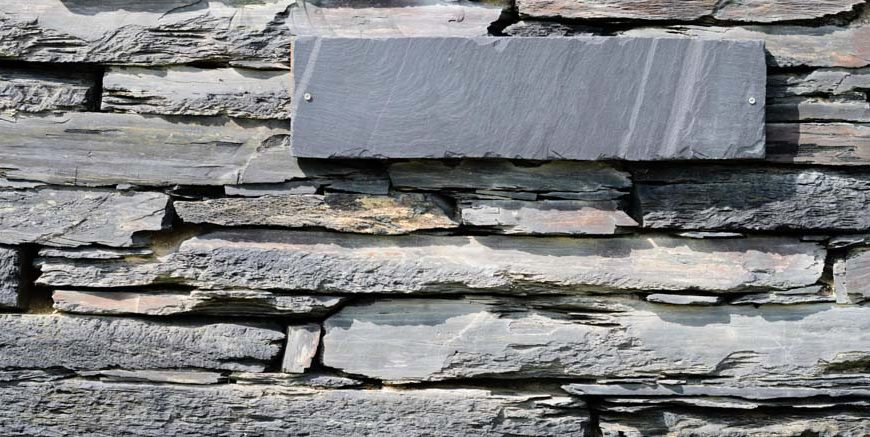
Let’s be completely honest for a second. When you think of exciting, action-packed subjects to learn about, rocks probably don’t sit right at the top of the list. Most of us just see them as boring grey lumps sitting in the dirt. But if you have ever tried skipping a stone across a quiet pond, you usually spend ages hunting for something flat, smooth, and easy to hold. Chances are, you were actually holding a piece of slate rock.
But what is slate exactly, beyond being a brilliant skipping stone? It is actually one of the most useful, hard-working materials on the entire planet. It is literally keeping the freezing rain off our heads, and a hundred years ago, it was the only way kids could practice their spelling in the classroom. Let’s dig into the mud and figure out the wild, ancient story behind this fascinating stone.
The underground pressure cooker: how is slate formed?
If you want to know how is slate formed, you have to travel back in time. We aren’t just talking about a few hundred years; we are talking about millions of years.
Imagine a completely quiet, prehistoric ocean. Slowly, over a ridiculous amount of time, tiny particles of sticky mud, clay, and volcanic ash settled right at the bottom of the water. This massive pile of muck eventually squashed together to form a very soft, crumbly rock known as shale. If things had stayed quiet, that would be the end of the story.
But our planet is constantly moving. The earth’s crust is made up of massive tectonic plates that slowly crash into each other. When these plates collide, they squeeze that soft shale with unimaginable heat and absolutely crushing weight. It acts exactly like a giant, underground vice. Under all that intense pressure, the messy clay particles get squashed completely flat, lining up perfectly in neat, straight rows. That extreme squeezing gives the stone its ultimate superpower: the ability to snap cleanly into thin, flat sheets without shattering.
Read More – Different Types of Rocks
Categorising the stone: which type of rock is slate?
In geography and science classes, teachers absolutely love sorting things into neat, organised boxes. You have your igneous rocks (born from hot lava) and your sedimentary rocks (layers of sand and mud). So, if a curious student asks, which type of rock is slate? The answer is that it belongs to the third, highly dramatic family.
Because it was forced to change its entire physical shape under extreme heat and pressure, it is part of the metamorphic family. The word ‘metamorphic’ literally just translates to ‘change of form’. Therefore, if a textbook ever asks you, is slate metamorphic, you can confidently tick the ‘yes’ box without a second thought. In fact, it is considered one of the absolute finest examples of a slate metamorphic rock that you can find anywhere on earth. It acts as perfect, solid proof that our planet can take a soft puddle of clay and literally bake it into something tough enough to build a house with.
Looking closely at the slate mineral recipe
Every rock you pick up is essentially just a baked recipe made from different natural ingredients. If scientists take a remarkably thin slice of this stone and place it under a highly powerful laboratory microscope, they can see the exact slate mineral mix hiding inside.
It is predominantly packed with quartz, which is a mineral that makes it incredibly tough and durable. Alongside the quartz, you will find microscopic, shiny flakes of mica and chlorite. These specific ingredients are the exact reason why the rock has a slight, silky shine to it when you hold it up to the light. They are also the reason it splits so perfectly.
While we typically just picture a boring, dark grey stone, a slight natural tweak in that mineral recipe can actually produce stunning variations. Depending on where it is dug up, you can find this stone in beautiful shades of deep purple, sea green, or even a rusty, reddish-brown colour.
Read More – What Are Ores for Kids?
Brilliant slate rock uses in daily life
Because this unique stone is completely waterproof, refuses to catch fire, and breaks into neat, flat tiles so easily, humans have been utterly obsessed with it for centuries. It requires almost zero maintenance, which builders love. Here is a clear, descriptive list of some brilliant slate rock uses that you might actually spot on your walk to school today:
- Weatherproof roofing: Look up at old historical houses, churches, or village cottages in the UK. Those dark grey, overlapping tiles keeping the freezing British rain and snow out? That is slate. Because it absorbs absolutely zero water, it acts as the perfect, permanent umbrella for a building.
- Old-school chalkboards: Way before glowing iPads, smartboards, and paper notebooks became normal, school kids practised their maths and handwriting on small, personal blackboards. These were quite literally just smooth, flat pieces of this stone! They used a softer piece of chalk to scratch their answers directly onto the rock.
- Garden paths and patios: Its natural, slightly rough texture means it doesn’t get ridiculously slippery when it gets wet. This makes it a fantastic, highly safe choice for outdoor stepping stones, garden pathways, and even kitchen floors.
- Professional snooker tables: If you ever watch a professional game of snooker or pool on the television, you are actually looking at a massive rock. Hidden right underneath that soft green cloth is a giant, incredibly heavy bed of flat slate. The stone absolutely guarantees that the colourful balls roll smoothly in a perfectly straight line without wobbling off course.
- Fancy cheese boards: In modern restaurants, chefs absolutely love serving cheeses, fruits, and snacks on a clean, dark piece of this stone. It looks brilliantly stylish, keeps the food cool, and is incredibly easy to wash in the sink afterwards.
Read More – What is an Asteroid?
Conclusion
It is pretty wild to think that a stone we use to play a game of snooker, or rely on to keep the winter rain off our heads, started its long life as a pile of wet, sticky mud at the bottom of a prehistoric ocean. The intense, violent journey from a squishy clay puddle to a tough, completely waterproof tile is a perfect reminder of just how much quiet, ancient power the earth actually holds beneath our feet. The next time you find a flat, grey stone sitting in the garden, remember that you are holding millions of years of extreme geological history right in the palm of your hand.
Getting kids to genuinely connect with their surrounding environment like this, rather than just memorising dry facts from a textbook, is a foundational part of the Heureka Curriculum. It turns a standard geography lesson into a tangible, real-world adventure that sparks lifelong curiosity. To explore more brilliant ways to actively support your child’s education and natural development, dive into the wonderful resources waiting for you on the EuroKids Blog, and secure their vibrant learning journey today through EuroKids Preschool Admission.
FAQs
Is it safe to put hot pots and pans on this stone?
Yes, it is highly heat-resistant and completely non-combustible. Because it was literally formed by intense heat deep inside the earth, many people use it in their kitchens as safe resting spots for hot cooking pans.
Can you ever find ancient dinosaur fossils hidden inside it?
It is incredibly rare to find them. Because the extreme, crushing pressure required to form the stone usually destroys any delicate shells or bones, intact fossils are almost never found surviving inside.
Why does it naturally split perfectly into thin tiles?
It splits so easily because the massive underground pressure forces all the microscopic mineral flakes to line up in exactly the same flat direction. Scientists call this natural weakness ‘foliation’, which acts like the grain in a piece of wood.