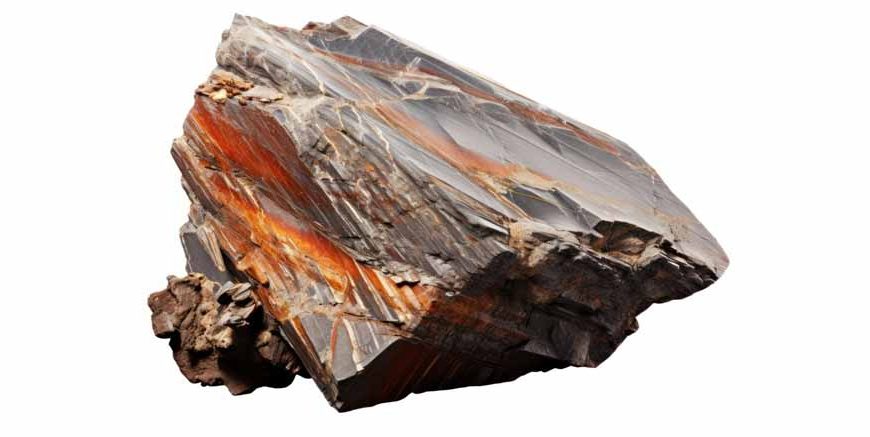
Have you ever returned from a breezy weekend family holiday with your coat pockets heavily weighed down by a bizarre collection of random, shiny pebbles your kids discovered on the beach? We all have a glass jar of these collected, salty treasures sitting on a kitchen windowsill somewhere in the house. Usually, we just call them ‘pretty stones’ and leave it at that.
But if you actually stop to look closely at the swirling, compressed patterns and sparkling silver stripes on those heavy pebbles, you are looking at millions of years of violent, dramatic Earth history. Today, we are entirely skipping the dusty, boring geology textbooks. Let us dig right into one of the most fascinating types of stones on our planet, figuring out exactly how extreme underground weather completely changes the physical world beneath our feet.
Decoding the Metamorphic Rocks Meaning
When a curious child asks for a proper metamorphic rock definition, it really helps to look at the actual words rather than just pointing at a stone. It sounds like a highly complex scientific term, but it is actually just ancient Greek. ‘Meta’ means change, and ‘morph’ means form. Therefore, the core metamorphic rocks meaning is simply a rock that has completely changed its physical form.
They are the ultimate shape-shifters of the natural world. They do not start out looking like swirling, sparkly masterpieces. They begin their lives as totally ordinary, boring grey stones, soft mud, or old volcanic ash before undergoing a brutal, heavy-duty physical makeover deep underground. They are nature’s ultimate recycling project.
Read More – Different Types of Rocks and Their Uses
The Giant Underground Oven: Metamorphic Rocks Formation
So, how exactly does a boring chunk of grey river mud turn into a sparkling, hard stone? To understand metamorphic rocks formation, you have to imagine the Earth’s crust as a gigantic, incredibly hot pressure cooker.
When we ask what metamorphic rocks are formed by, the answer is always extreme heat and crushing physical pressure. Imagine you have a thick, soft slice of white bread. If you squash it flat with your heavy hands, it completely changes shape. If you put it in a hot toaster, it changes colour, gets incredibly hot, and becomes hard. The Earth does exactly this to older rocks.
Heavy layers of dirt, sand, and heavy ocean water pile up over millions of years, slowly pushing the older rocks deep down into the Earth. Down there in the dark, the rocks get violently squashed by the unbelievable weight of the world above them. Simultaneously, they get baked by the intense, boiling heat radiating up from the Earth’s molten core. Crucially, they do not actually melt into a bubbling liquid.
If they completely melted, they would become igneous volcanic rocks. Instead, they just get baked and squashed so intensely that their internal chemical ingredients completely rearrange themselves, crystallising into a brand new, hardened stone without ever turning into a puddle.
The Two Main Types of Shape-Shifters
When these newly baked rocks finally make it back up to the surface for us to find on a beach walk, geologists generally split them into two distinct categories based entirely on how they look.
1. Foliated Rocks (The Striped Ones)
Because these stones are squeezed so incredibly hard by the weight of the Earth, their internal minerals get flattened out and line up in neat, tight rows. This creates beautiful, wavy bands or stripes across the rock. It looks a bit like the stacked pages of a thick book. A brilliant example is Slate. Slate starts its life as soft, squishy mud at the bottom of a lake. After being squashed underground, it turns into a dark, hard rock that splits perfectly into flat sheets. We actually use these flat sheets to build waterproof roofs on our houses!
2. Non-Foliated Rocks (The Solid Blocks)
Sometimes, the minerals inside the rock do not flatten out into neat stripes. Instead, they just grow into massive, interlocking crystals that form one solid, heavy block of colour. The most famous example is Marble. Marble actually begins its life as limestone, which is made from millions of crushed, microscopic sea shells. When that limestone gets baked in the Earth’s underground oven, the tiny shells melt together to form the heavy, smooth, gorgeous white marble that sculptors use to carve statues.
Read More – Facts About Minerals for Kids
Brilliant Scientific Facts to Share
Learning the basic vocabulary is fine, but kids learn best when they hear something slightly weird or brilliant that breaks the normal rules. Here is a list of totally fascinating facts about these stones, backed by logic and science:
- They hide precious gemstones: The extreme heat and pressure required to make these rocks is the exact same recipe needed to make precious gems. If you crack open certain types of metamorphic stones, you can often find stunning, blood-red garnets or glowing rubies growing right inside the grey rock!
- The Taj Mahal connection: One of the most famous and beautiful buildings in the entire world, the Taj Mahal in India, is built entirely out of white marble. The builders specifically chose this rock because it is incredibly strong, but soft enough to carve delicate, beautiful flowers into the walls.
- Mountain builders: You will almost always find these types of rocks wherever massive mountain ranges are forming. When two giant tectonic plates crash into each other to push up a mountain like the Himalayas, the unbelievable crashing pressure instantly bakes and squashes the rocks trapped in the middle.
- Chalk and Marble are twins: It sounds completely illogical, but the soft, dusty white chalk your child uses to draw on the pavement is made of the exact same chemical ingredients as a heavy marble kitchen worktop. The only difference is that the marble spent millions of years being squashed and heated, while the chalk was left alone.
Read More – Fascinating Science Facts for Kids
Shifting the Educational Focus
Understanding the physical history of a simple beach pebble completely changes how a child views the outdoors. Suddenly, a boring grey rock is a hardened piece of ancient history that survived being squashed inside a giant underground oven. Getting children to question these everyday things and actively investigate the physical mechanics of their environment is exactly what the Heureka curriculum is built upon.
It actively shifts their education away from just passively pointing at pictures in a book, pushing them to physically pick up a stone, test its hardness, look at its stripes, and logically deduce how it was made. Once they understand that science is constantly happening beneath their very feet, they start looking at the entire world with a sharper, more inquisitive mind.
Conclusion
The ground we walk on is not just a static, boring piece of dirt. It is a massive, slowly churning recycling machine. Knowing that a delicate, beautiful marble statue was once a pile of crushed sea shells, or that a waterproof slate roof was once squishy river mud, completely redefines how we view the natural world.
It is incredibly thought-provoking to realise that the most beautiful, valuable, and resilient things on Earth are only created by surviving intense pressure and extreme heat. Perhaps there is a brilliant little life lesson hiding in there for all of us! Keeping that natural, daily curiosity alive is exactly how we build confident, brilliant thinkers.
To find more practical ways to turn a simple afternoon walk into a fascinating educational journey, read the latest insights on the EuroKids Blog and secure a bright foundation for your child by registering for EuroKids Preschool Admission today.
FAQs
Can you find these rocks in your garden?
Yes, you certainly can! Because human beings use them constantly for building walls, paving driveways, and laying roof tiles, it is incredibly easy to find small, broken fragments of slate or marble mixed into normal garden soil.
Are these the oldest rocks on Earth?
Some of them are! Because they are constantly recycled, geologists have found certain metamorphic rocks in places like Canada and Greenland that are nearly four billion years old.
Do these rocks ever turn back into mud?
Eventually, yes. Over millions of years, wind, heavy rain, and freezing ice will slowly chip away at the hard rock, grinding it back down into soft sand and mud, starting the entire geological cycle all over again.