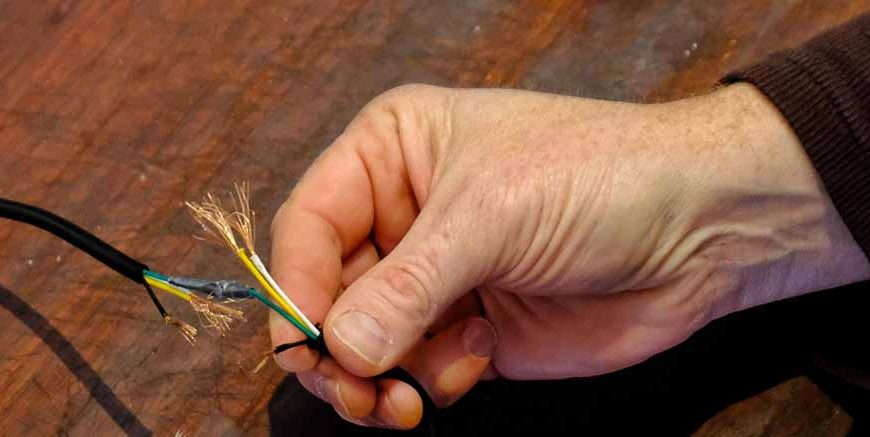
Have you ever noticed the thick, brightly coloured plastic casing wrapped tightly around the charging cable of your tablet or television? That stretchy outer layer is not just there to look pretty or keep the wire neat. It is actually acting as a brave, invisible shield, keeping you completely safe from the powerful energy rushing around inside.
To really understand how our modern world works, we have to look at how energy travels. Sometimes, we want power to move incredibly fast from one place to another. But other times, we desperately need to stop it right in its tracks. Today, we are exploring the brilliant materials that act like giant brick walls for electrical currents, breaking down exactly how they keep our homes safe every single day.
Breaking Down the Basics
To make sense of this topic, we first need to define poor conductor in a way that is easy to picture. Imagine electricity as a massive, frantic crowd of tiny, highly energetic runners trying to sprint down a long school hallway. Some materials, like shiny copper wires or wet metal pipes, act like a wide, open race track. They let the runners sprint through at top speed without any hassle.
However, other materials act like a hallway completely stuffed to the ceiling with heavy desks, chairs, and bouncy castles. The tiny runners constantly crash, stumble, and completely lose their energy trying to get through. When a curious child asks what is poor conductor, we are simply talking about these awkward, blocked hallways. They deliberately make it incredibly difficult for electrical energy to flow through them. A poor conductor of electricity is also known by another famous scientific name: an insulator.
Read More – Good and Bad Conductors of Electricity
Why Are Insulators So Important?
You might wonder why we would ever want to slow down or stop power. Surely we want our gadgets to get all the energy they need? The answer is entirely about human safety. Our bodies are actually remarkably good at letting energy flow through them, mostly because we are made of so much water!
If the wires powering our household lamps, toasters, and televisions were left completely bare, touching them would give us a nasty, highly dangerous shock. By wrapping those fast metal wires in a thick layer of a poor conductor of electricity, we force the dangerous energy to stay exactly where it belongs. The power flows straight to the television, but it cannot escape through the plastic casing into our fingers.
Read More – Uses of Insulators for Kids
The Cheeky Metal Rule Breaker
If you look at a standard science textbook, you will usually learn a very basic rule: metals are fantastic at letting energy zip through them. Copper, silver, and gold are the absolute champions of the race track. But science always has a few cheeky exceptions that love to break the rules.
If a teacher ever asks you to name a metal which is poor conductor of electricity, you can confidently raise your hand and tell them about Bismuth or Lead. Lead, for instance, is a very heavy, dense, dull grey metal. But despite being a true metal, it behaves terribly when it comes to letting those tiny electrical runners pass through. Its internal structure creates massive amounts of friction, making it an absolute oddball in the metal family. Stainless steel is another one that, while it does allow some power through, is shockingly bad at it compared to its shiny cousin, copper.
Common examples of poor conductors
You absolutely do not need a fancy science laboratory to find these brilliant blockers. They are hiding in plain sight all over your house and garden. Let us look at a descriptive list of everyday examples of poor conductors that silently protect us:
- Dry Wood: Have you ever noticed that the giant poles holding up the heavy power lines outside your house are usually made of thick wooden logs? Dry wood is a fantastic blocker. It stops the dangerous power from travelling down the pole and into the muddy ground.
- Rubber: This is an electrician’s absolute best friend. When professionals come to fix the wiring in your house, they always wear thick rubber gloves and boots with heavy rubber soles. The rubber acts as a dead end for the energy, keeping the workers completely safe.
- Plastic: Almost every single plug socket, light switch, and gadget casing in your bedroom is made from hard plastic. It is cheap to make, incredibly durable, and refuses to let rogue energy pass through to your hands.
- Glass: Before modern plastics were invented, scientists and engineers relied heavily on solid glass to safely hold and separate electrical wires. It is still used today inside lightbulbs to safely contain the hot, glowing electrical filaments.
- Air: Yes, the invisible air you are breathing right now is actually a fantastic insulator! If air let power pass through it easily, the electricity from your wall sockets would constantly zap across the room to reach you. The air keeps the power firmly trapped inside the small plastic holes.
Read More – How do you make science interesting for kids?
Conclusion
It is genuinely thought-provoking to realise that the most important heroes in our modern, technology – filled world are not the things that carry power, but the things that actively stop it. We spend so much time talking about powerful batteries, super-fast chargers, and high-speed wires, but none of those amazing inventions would be safely usable without the quiet, stubborn resistance of rubber, plastic, and wood.
These materials act as the reliable traffic wardens of the scientific world, directing the chaotic energy exactly where it needs to go and firmly holding it back from where it shouldn’t be. Without them, we simply would not be able to harness the raw power of nature to light up our cities and run our busy lives. To nurture your child’s brilliant scientific curiosity and discover more engaging learning strategies, dive into the wonderful articles on the EuroKids Blog and secure their vibrant academic future today through EuroKids Preschool Admission.
FAQs
Do poor conductors ever let electricity through?
Yes, if the power is incredibly strong. A massive bolt of lightning, for example, is so powerful that it can force its way through air and dry wood, which is why trees can be struck during heavy thunderstorms.
Is water a good or bad conductor?
Completely pure water is actually a poor conductor! However, the tap water we drink and the water in swimming pools are full of hidden salts and minerals, which suddenly turn the water into a very fast, highly dangerous race track for electricity.
Why do birds not get shocked when sitting on power lines?
Birds stay safe because they are only touching one single wire at a time, and their bodies do not touch the ground. Because the energy has nowhere else to travel through them, it simply ignores the bird and continues running straight down the metal wire instead.