Have you ever rubbed your hands together really fast on a freezing cold morning to warm up your numb fingers? In just a few seconds, your hands go from feeling completely frozen to being lovely and toasty. It feels exactly like a magic trick, but it is actually just physics in action. Your body is taking the fast movement of your hands and instantly turning it into heat.
To understand what is energy transformation, we simply need to look at how the universe recycles power to make things happen. Nothing just disappears into thin air. Instead, we are looking at a giant, invisible relay race happening all around us. Let us explore how power shifts and changes costumes to keep our entire world running smoothly every single day.
The golden rule of science
Before we dive into the really fun stuff, we need to understand the absolute boss rule of physics, famously known as the principle of energy conversion. This rule states that power cannot be magically created out of nothing, and it absolutely cannot be destroyed or deleted. It can only change its disguise.
Think of it like pouring a jug of water into a plastic ice cube tray and putting it in the freezer. When you take it out, it looks completely different. It is hard, cold, and solid, but it is still the exact same stuff underneath. When we look for solid information about energy transformation, we are basically just tracking a massive game of tag where power passes from one object to the next. It constantly swaps forms to light up our living rooms, move our cars, and cook our dinners.
Read More – Fascinating Science Facts for Kid
The main types of power
To spot an energy conversion happening in your own house, you need to know the different costumes this power can wear. There is chemical power, which is locked away tightly inside the food you eat and the batteries in your toys. There is kinetic power, which is the sheer force of movement when you run down a hill or throw a tennis ball. Thermal power is simply heat, like a hot radiator or a crackling fire. Electrical power travels silently through the copper wires hidden inside your walls, and light power shines down brightly from the sun or your bedroom ceiling bulb. Every single action in the universe involves swapping one of these types for another.
Spotting the changes: give 10 examples of energy transformation
The absolute best way to understand this scientific concept is to hunt for energy transformation examples lying around your own home. You will quickly notice that you are completely surrounded by clever little machines doing this exact job from the moment you wake up. Here is a clear, descriptive list to help you spot them:
- A morning toaster: When you push the plastic lever down, the appliance takes electrical power from the wall socket and instantly shifts it into intense thermal power, causing the wires inside to glow bright red and brown your bread.
- Your screaming alarm clock: It takes electrical power (from a battery or the plug) and changes it into sound power to forcefully wake you up for school.
- Playing on a park swing: At the very top of the swing’s arc, you have potential (stored) power. As you zoom downwards towards the ground, it instantly shifts into kinetic (moving) power.
- A remote control car: The chemical power hidden safely inside the AA batteries is turned into electrical power, which then becomes kinetic power as the rubber wheels spin rapidly across the carpet.
- A burning candle: The chemical power stored tightly in the wax reacts with the flame, shifting into both light and thermal power to brighten up a dark room during a power cut.
- Your own body running: You eat a bowl of warm porridge, which contains chemical power. Your stomach digests it, turning it into the kinetic power you need to sprint across the school playground.
- A bright television: It pulls electricity from the plug socket and cleverly turns it into both light and sound power so you can watch your favourite cartoons on a Saturday morning.
- A whistling kettle: Electrical power is transformed into intense thermal power, heating the metal element and boiling the water until it screams loudly.
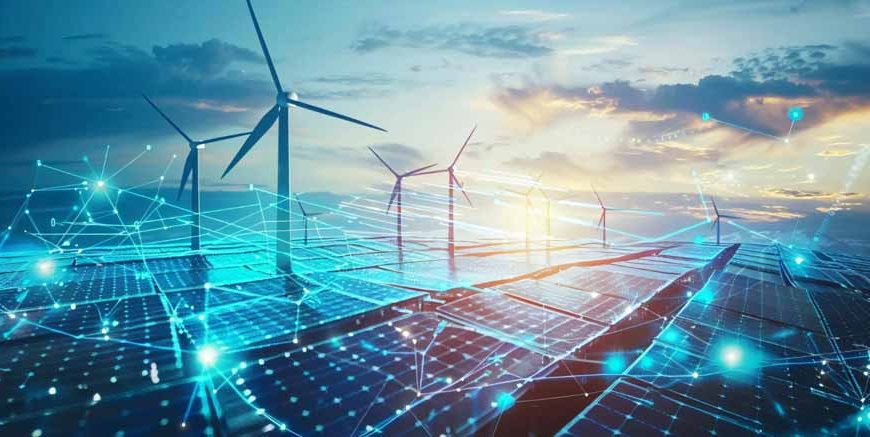
- A solar panel: It catches pure light power radiating from the sun and quietly changes it into electrical power to run the lights and fridge in a house.
- A noisy hairdryer: This handheld gadget takes electricity and turns it into kinetic power (the spinning fan inside), thermal power (the hot air blowing out), and sound power (the loud humming noise).
Read More – Sources of Energy for Kids
Nature’s ultimate domino effect
It is highly fascinating to look at isolated gadgets in our kitchens, but nature does this on a much grander, more beautiful scale. If a science teacher ever asks you to describe one natural chain of transformation of energy, you can easily track a single beam of power all the way from outer space right down to your own dinner plate.
It all starts with our sun. The sun produces massive amounts of light and thermal power. A green apple tree in a quiet orchard catches that bright sunlight in its leaves. Through a very clever biological process called photosynthesis, the tree converts that solar light into chemical power, using it to grow a sweet, crunchy green apple.
Later that afternoon, a child walks past the tree, picks the apple, and eats it. The child’s stomach breaks down that chemical power. The child then uses that newly absorbed chemical power to run around the garden and play a heavy game of football. That running creates kinetic power.
As the child runs faster, they get hot and sweaty, releasing thermal power into the cool afternoon air. That means the heat coming off a child’s forehead after a tiring game of football originally started as a beam of sunlight millions of miles away in deep space! It is a beautiful, never-ending chain reaction that keeps everything alive.
Read More – What Is Mechanical Energy for Kids?
Conclusion
When you finally grasp how this incredible system works, the whole world looks completely different. You realise that absolutely nothing is ever truly lost; it just takes on a brand new shape. The warmth of a crackling winter fire, the loud, echoing boom of thunder, the speed of a racing car, and even the simple act of blinking your own eyes all rely on this magnificent, invisible recycling program. Every single bit of power currently buzzing around our planet has been here since the very beginning of the universe, constantly shifting, changing, and passing the baton to the next object.
It is a thrilling thought that we are all just tiny, moving parts of a giant, cosmic machine. Nurturing this exact type of raw, investigative scientific curiosity is what makes early learning so deeply rewarding. To explore more brilliant ways to spark your child’s imagination and see our engaging methods in action, read the EuroKids Blog and start their journey through EuroKids Preschool Admission.
FAQs
Why do traditional light bulbs get so hot when they are turned on?
Older light bulbs are actually quite inefficient at their job. When they convert electricity into light, they accidentally lose a massive amount of that power as thermal heat, which is why they burn your fingers if you touch them.
Can we ever run out of power completely?
Because of the golden rule of conservation, the total amount in the universe never actually changes. However, useful forms (like coal or oil) can be turned into less useful forms (like scattered heat), which is why we need to focus on renewable sources like the wind and sun.
How does a roller coaster use these rules?
A roller coaster is a giant physics experiment! As the heavy cart is pulled up the very first massive hill, it builds up potential power. When it drops over the edge, gravity pulls it down, shifting all that stored potential right into terrifying, fast kinetic power.