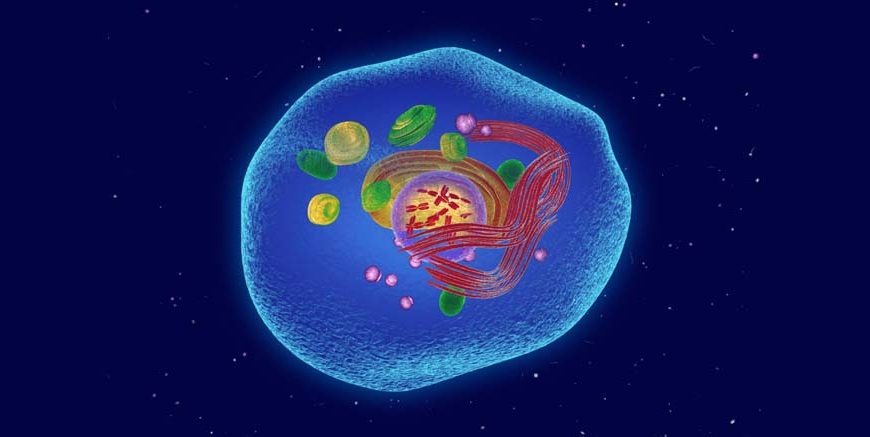
Look at a towering, historic brick building, a buzzing hive full of busy bees, or even a massive, complicated jigsaw puzzle scattered across a living room rug. What do they all share in common? They are all constructed from thousands of tiny, individual pieces that lock together to create something magnificent and whole. Your own body works in the exact same, brilliant way. Instead of red bricks or cardboard puzzle pieces, you are built from trillions of microscopic living units. Today, we are going to shrink down and go completely microscopic to explore this hidden, bustling universe inside you.
What is Meant by Cell?
If we truly want to understand how a living creature breathes, survives, and grows, we must start at the very bottom level of existence. So, exactly what is meant by cell?
To put it in the simplest terms for a curious young learner, a short definition of cell is that it is the fundamental, structural, and working unit of all living organisms. Whether you are looking at a giant, leafy oak tree in the park, a tiny ant crawling across the pavement, or your own reflection in the mirror, every living thing is made of these microscopic blocks. In the scientific world, a formal cell definition biology states that it is the smallest unit of life capable of replicating itself independently. It is quite literally the basic building block of life, creating the foundation for absolutely everything you do.
Read More – Exploring the Living World
A Closer Look at the Human Cell Structure
While green plants and tiny bacteria have their own unique biological blueprints, the human cell structure is particularly fascinating to study. Try not to imagine it as a static, boring, water-filled balloon. Instead, picture a highly organised, densely populated, walled city.
Inside this miniature city, there is never a quiet moment. There are massive power plants generating energy round the clock, busy factories building necessary goods, and a secure central command centre making all the important daily decisions. Everything operates in a state of perfect harmony and flawless communication to keep you healthy and active.
What are the Components of a Cell?
To truly appreciate how this miniature city survives the chaos of daily life, we need to ask: what are the components of a cell?
Scientists refer to every individual component inside this city as an ‘organelle’, a clever Latin term which simply translates to ‘little organ’. Just as your human body relies on a beating heart, expanding lungs, and a digesting stomach to keep you alive and kicking, the cell has its own tiny organs that carry out highly specific, life-saving jobs.
Let us take a guided walking tour through this microscopic city to identify the specific parts of the cell and its function.
- Cell Membrane (The City Wall): This is the incredibly flexible, protective outer layer that completely surrounds the area. It acts like a strict, highly trained security guard. It carefully decides exactly which healthy nutrients are allowed to enter the gates, while making absolutely sure that harmful waste products are quickly escorted out.
- Cytoplasm (The City Grounds): Once you pass through the security wall, you enter the cytoplasm. This is a thick, clear, jelly-like fluid where all the organelles securely float. It fills up all the empty space and provides a safe, watery environment for all the daily cellular activities and chemical reactions to take place smoothly.
- Nucleus (The Command Centre): Right in the middle sits the absolute boss of the entire operation. The nucleus holds all of your precious DNA, which is the master genetic instruction manual. This manual tells the city exactly how to grow, how to function, and when it is time to replicate.
- Mitochondria (The Power Plants): These fascinating, oval-shaped structures are the ultimate energy producers. They eagerly take the nutritious food you eat and the fresh oxygen you breathe, brilliantly converting them into usable fuel. Without them, the city would completely run out of power and shut down.
- Endoplasmic Reticulum (The Transport Highway): This is a heavily folded network of winding tunnels and pathways. It helps to expertly manufacture and transport essential fats and materials to different neighbourhoods within the cellular city.
- Ribosomes (The Protein Factories): These are tiny, dot-like structures floating freely in the cytoplasm or firmly attached to the transport highways. Their sole, crucial job is to diligently build the essential proteins that your body desperately needs to survive, grow taller, and repair scraped knees.
- Golgi Apparatus (The Post Office): Once those proteins are built by the factories, they are sent straight here. The Golgi apparatus carefully modifies, perfectly packages, and ships these proteins in tiny parcels to wherever they are most urgently needed, either inside or outside the city walls.
- Lysosomes (The Recycling Centres): Every busy city creates rubbish, and these tiny spherical sacs are filled with special, dissolving enzymes to handle it. They bravely break down cellular waste, destroy invading germs or viruses, and recycle old, worn-out organelles to keep the streets clean.
Read More – Living vs Non-Living Things
Summary
When you finally view the microscopic world for what it truly is, it completely changes how you view yourself. You are not just a single, simple person going about your day; you are a walking, breathing universe made up of trillions of highly intelligent, incredibly hard-working miniature cities. Every time you run across a playground, laugh at a joke, or learn a brand new math fact, it is only possible because these tiny, invisible parts are doing their complex jobs flawlessly in the background.
Understanding our own biology gently teaches us to respect the brilliant, fragile, and resilient nature of life itself. Nurture your child’s boundless curiosity about the magnificent natural world by exploring the EuroKids Blog, and discover a brilliant pathway for their future educational adventures with EuroKids Preschool Admission.
FAQs
What is the easiest way to describe a cell?
It is the smallest, most basic living building block that makes up all humans, animals, and plants.
Why is the nucleus so important?
The nucleus acts as the brain or command centre, holding the DNA instructions that tell the rest of the organelles exactly what to do and how to behave.
Do humans have the exact same cells as plants?
No, while they share many similar organelles, plant cells have unique extra features like rigid cell walls and chloroplasts for making food from sunlight, which humans do not possess.