Look closely at a cheetah sprinting furiously across the dry savannah, a monkey gracefully swinging through the dense rainforest canopy, or even a tiny frog leaping from one wet lily pad to another. The animal kingdom is a bustling, chaotic place that is constantly on the move. But what exactly makes all this spectacular, high-speed movement possible?
The answer lies in the marvellous structural tools attached to their bodies. Today, we are going to explore the fascinating world of animal anatomy to understand the clever bodily features that allow creatures, including ourselves, to travel, hunt, and play.
What Are Limbs?
If a curious child points to a passing dog and asks about its legs, you are already looking at the perfect example. So, what are limbs exactly? In simple biological terms, they are the jointed appendages attached to the main body or trunk of an animal.
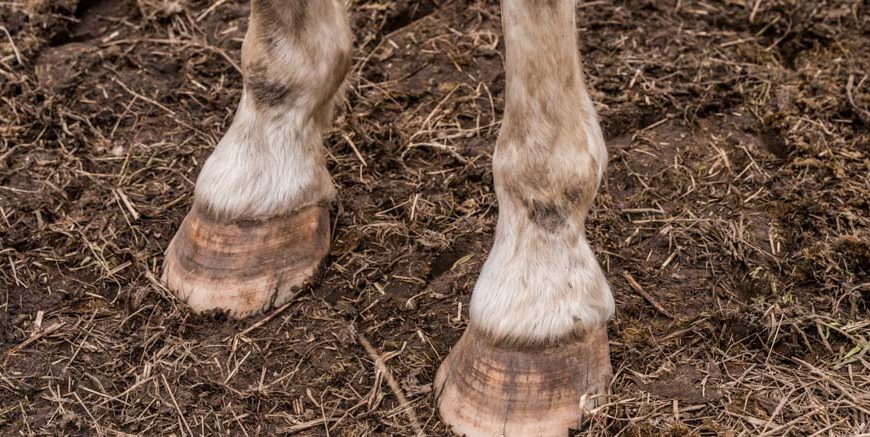
Nature is incredibly clever, and it designs these body parts to perfectly match the specific environment an animal lives in. For a horse galloping across a field, the limbs are its four sturdy legs. For a bald eagle soaring high in the sky, its front limbs have brilliantly evolved into wide, feathered wings. Even the flippers of a playful sea turtle or the strong fins of a dolphin are essentially highly modified versions of these appendages, specially designed for pushing through thick ocean water instead of walking on hard dirt.
Read More – GK Questions On Animals
The Limbs Meaning in Human Body
While it is brilliant to look at the wild animals in the jungle, it is just as important to look at ourselves in the mirror. When we talk about limbs in human body, we are talking about our own personal tools for navigating the physical world.
To break down the limbs meaning in human body, doctors and scientists refer to the arms and the legs. Unlike a heavy elephant that uses all four of its legs purely to walk and support its massive weight, our body structure is uniquely specialised. Because humans walk completely upright, our body has split the workload. Our lower half handles all the heavy lifting, balancing, and travelling, which completely frees up our upper half to do incredibly complex tasks.
Read More – Domestic Animal Names in English for Kids
The Big Question: How Many Limbs in Human Body?
This brings us to a very common question that pops up in early science lessons: exactly how many limbs in human body do we have? The answer is exactly four.
We are neatly divided into two distinct pairs. We have two upper limbs, which consist of your shoulders, arms, wrists, and hands. Then, we have two lower limbs, which are made up of your hips, legs, ankles, and feet. Because we possess this specific four-limb structure, human beings belong to a massive biological group called ‘tetrapods’. This is a fancy scientific word that literally translates to ‘four-footed’. It means we share the exact same basic skeletal layout as amphibians, reptiles, birds, and other mammals!
The Crucial Function of Limbs in Nature
The absolute primary function of limbs is movement, but the way an animal moves depends entirely on where it lives and what it eats. These appendages are the ultimate survival tools.
Let us look at some brilliant examples of how different animals use them:
- Digging: The humble mole spends its entire life underground. Its front limbs are short, thick, and shaped exactly like sturdy shovels, perfect for pushing heavy soil out of the way.
- Jumping: A kangaroo or a grasshopper possesses massively oversized, muscular hind limbs. These act like tightly coiled springs, allowing them to launch their bodies incredible distances through the air to escape danger.
- Grasping: Monkeys and apes have long, flexible limbs with gripping hands and feet. This specific function allows them to tightly hold onto thin branches and effortlessly swing through the trees to find sweet fruit.
- Human Activity: For us, the function of limbs is beautifully diverse. Our strong legs allow us to run marathons or climb steep mountains. Meanwhile, our incredibly delicate upper limbs, complete with flexible fingers and opposable thumbs, allow us to paint beautiful pictures, play the piano, hold a spoon, and tightly hug our family members.
Read More – Fascinating Farm Animal Facts for Kids
Summary
When we look at the incredible structural diversity of the animal kingdom, we quickly realise that nature is the ultimate engineer. From the delicate, sweeping wing of a tiny hummingbird to the heavy, stomping leg of a giant rhinoceros, every single creature has been perfectly equipped to conquer its own unique corner of the globe. The next time you watch a bird fly past your window or simply use your own hand to write your name on a piece of paper, take a quiet moment to appreciate millions of years of brilliant biological design.
It makes you wonder: how differently would human society have developed if we had evolved with wings instead of arms, or flippers instead of legs? Our physical form truly dictates how we experience the universe. To discover more joyful learning adventures and effectively support your child’s boundless curiosity about the natural world, explore the EuroKids Blog and find out all the vital details regarding EuroKids Preschool Admission today.
FAQs
What are limbs?
They are the jointed body parts: such as legs, arms, wings, or flippers, that extend from the main trunk of an animal’s body and help it move.
How many limbs in the human body are there?
Humans have exactly four of them in total: two upper ones (our arms) and two lower ones (our legs).
What is the main function of these body parts?
Their primary purpose is to allow creatures to interact with their environment, which includes walking, swimming, flying, climbing, digging, and grasping objects safely.