Animals are an important part of our everyday life, and children naturally love learning about them. Some animals live with humans and help us in many ways. These animals are called domestic animals. Learning domestic animal names in English helps kids build vocabulary, understand nature, and do better in school. From cows that give us milk to dogs that guard our homes, domestic animals play a special role in our lives. In this blog, children will learn domestic animals name and understand the difference between domestic animals and wild animals in a simple and fun way.
What Are Domestic Animals?
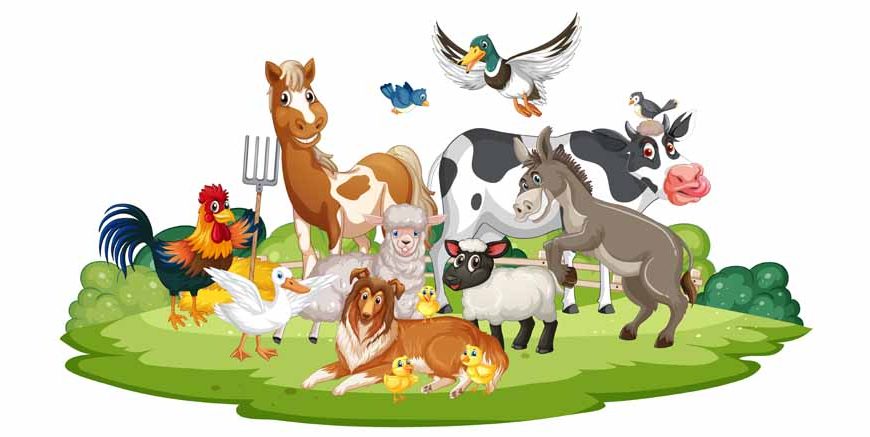
Domestic animals are animals that are tamed by humans and live with or near people. These animals depend on humans for food, shelter, and care. Some domestic animals live inside homes as pets, while others live on farms and help humans in many ways.
Domestic animals are usually gentle, friendly, and useful. Children often see these animals around them, making them easy to recognise and remember.
Why Is It Important for Kids to Learn Domestic Animal Names?
When children learn animal names early, they also become better at communication and storytelling. Learning domestic animals name in English helps children in many ways:
- Builds early vocabulary and language skills
- Improves observation and memory
- Helps children understand nature and responsibility
- Encourages kindness and empathy toward animals
Read More – List of Animals That Live On Land And Water
List of Common Domestic Animal Names in English
Here are some commonly known domestic animal names that children should learn:
1. Dog
A dog is one of the most popular pet animals. Dogs are loyal, friendly, and protective. Many families keep dogs as companions.
Uses of Dog:
- Guards the house
- Plays with children
- Helps police and rescue teams
2. Cat
Cats are gentle and playful animals often kept at home. They are clean, quiet, and loved by children.
Uses of Cat:
- Keeps mice away
- Makes a good companion
- Easy to keep at home
3. Cow
A cow is a very important domestic animal. It gives us milk and is commonly seen in villages and farms.
Uses of Cow:
- Gives us milk
- Milk is used to make curd, butter, and cheese
- Helps farmers earn money
4. Buffalo
Buffaloes are strong domestic animals. They also give milk and help farmers in farming activities.
Uses of Buffalo:
- Gives milk
- Milk is thick and nutritious
5. Goat
Goats are small domestic animals found on farms. They give milk and are easy to care for.
Uses of Goat:
- Gives milk
- Meat is used as food
- Easy to rear
6. Sheep
Sheep are domestic animals that give us wool. Wool is used to make clothes and blankets.
Uses of Sheep
- Sheep give us wool, which is used to make sweaters, blankets, and clothes.
- Sheep also give meat, which is eaten as food.
- Sheep skin is used to make leather products.
- Sheep help farmers earn money.
7. Horse
Horses are strong and fast domestic animals. They are used for riding, transport, and work in some places.
Uses of Horse:
- Used for riding
- Pulls carts
- Used in sports and police work
8. Pig
Pigs are farm animals that live near humans. They are intelligent and easy to recognise.
Uses of Pig
- Pigs provide meat, which is used as food.
- Pig skin is used to make leather items.
- Pigs help in waste management by eating leftover food.
- Pig farming helps farmers earn income.
9. Hen
Hens are domestic birds. They give us eggs and are commonly found in backyards and farms.
Uses of Hen:
- Gives eggs
- Meat is used as food
10. Duck
Ducks are domestic birds that live near water. They give eggs and are fun to watch.
Uses of Duck
- Ducks give us eggs, which are eaten as food.
- Ducks also provide meat.
- Ducks help farmers by eating insects and pests.
- Ducks are also kept for farming and breeding.
Read More – Wild Animals for Kids: Facts and Safety Tips
Difference Between Domestic Animals and Wild Animals
Understanding wild animals domestic animals differences helps children learn safety and environmental awareness. Children often get confused between domestic animal and wild animal. Let’s make it simple.
Domestic Animals:
- Live with humans
- Are friendly and useful
- Depend on humans
- Examples: dog, cow, goat
Wild Animals:
- Live in forests or jungles
- Are not tamed
- Find their own food
- Examples: lion, tiger, elephant
Read More – Animal: Habitats, Movements and their Behaviour
Importance of Domestic Animals in Our Life
Domestic animals play an important role in our daily life. They help us in many ways. Some of them are as follows:
- Provide milk, eggs, and meat
- Help in farming
- Give companionship
- Protect homes
How Teachers Teach Domestic Animals to Kids
This makes learning interesting and easy. Teachers use different methods to teach domestic animals:
- Storytelling
- Songs and rhymes
- Domestic animals chart
- Domestic animals images
- Classroom activities
Fun Activities to Learn Domestic Animal Names
1. Picture Matching
Match animal pictures with names.
2. Coloring
Color domestic animals images and say their names.
3. Oral Practice
Answer questions like I animal name.
4. Chart Reading
Read from a domestic animals chart daily.
Read More – Animal Baby Names:Learn Names & Fun Facts for Children
Common Mistakes Kids Make While Learning Animal Names
Regular practice and revision help children avoid these mistakes. Some common mistakes include:
- Mixing wild animals with domestic animals
- Wrong spelling of animal names
- Forgetting animal uses
Tips for Parents to Teach Domestic Animals at Home
Learning should always be fun and stress-free. Parents can help children learn better by:
- Showing animal pictures
- Visiting farms or zoos
- Reading animal storybooks
- Practicing animal names daily
How EuroKids Helps Children Learn About Animals Naturally
At EuroKids, learning about animals is part of everyday classroom experiences. Children explore domestic animals, pet animals name, and animal sounds through play, stories, songs, and hands-on activities. Instead of just learning, children observe, ask questions, and interact, making learning meaningful and enjoyable. Animal concepts are introduced through:
- Role play and storytelling
- Art and craft activities
- Picture discussions
- Outdoor exploration
This approach helps children remember animal names easily and confidently. When children learn domestic animals name in English, they also build language skills. They learn new words, form sentences, and express thoughts clearly. Understanding animals also helps children become more aware of their environment and respect living beings.
Conclusion
Learning domestic animal names in English for kids is an important part of early education. Domestic animals are friendly, useful, and closely connected to our daily life. By learning domestic animals name and understanding the difference between domestic animal and wild animal, children gain knowledge and confidence.
Using domestic animals images, domestic animals charts, and fun activities makes learning enjoyable and effective. With proper guidance from parents and teachers, children can easily remember animal names and understand their importance in our lives.
At EuroKids, children are encouraged to explore the world around them with curiosity, kindness, and confidence. They ensures that learning about animals is joyful, interactive, and meaningful. By nurturing curiosity and compassion early, EuroKids helps children grow into confident learners who care for the world around them.
For more child-friendly learning blogs, activities, and parenting tips, visit EuroKids Blogs.
FAQs:
1. Why are sheep important for humans?
Sheep are important because they provide wool, meat, and leather. Wool from sheep is used to make sweaters, blankets, and shawls.
2. Why do farmers keep pigs?
Farmers keep pigs because pig farming helps them earn money. Pigs grow quickly and are easy to raise on farms.
3. What are pet animals?
Pet animals are domestic animals kept at home for companionship and care. Examples include dog, cat, rabbit, fish, and parrot.
4. What is the difference between domestic animals and wild animals?
Domestic animals live with humans and are tamed, while wild animals live in forests or jungles and are not tamed.
For example, a cow is a domestic animal, and a lion is a wild animal.
5. What is a domestic animals chart?
A domestic animals chart is a visual learning tool that shows pictures and names of domestic animals, helping children recognise and remember them easily.
6. How can parents teach domestic animal names at home?
Parents can teach animal names using picture books, flashcards, toys, animal sounds, stories, and by talking about animals children see around them.