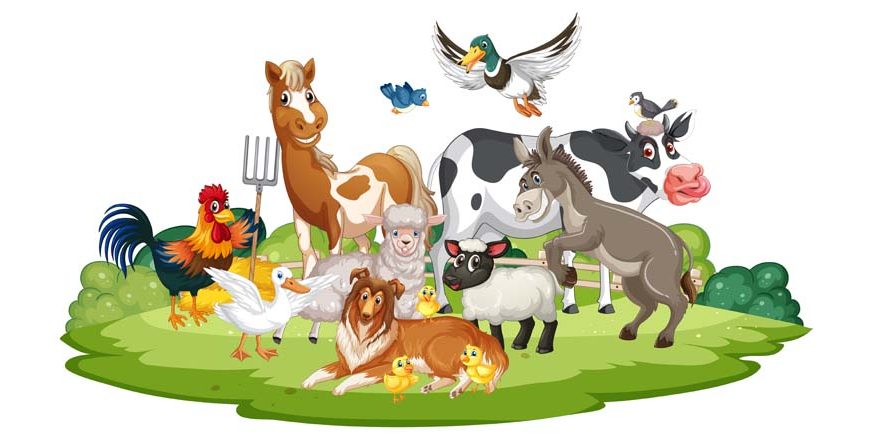
Imagine a world where your child thinks milk comes from a carton and wool is just a synthetic fabric made in a factory. It sounds dystopian, yet in our rapidly urbanising society, this disconnection from nature is becoming a genuine reality for many young families. You might find yourself struggling to find meaningful ways to introduce the natural world to your little ones amidst the noise of screens and city life.
This is not just about memorising a farm animals name list for a school test. It is about grounding your child in the fundamental biological systems that sustain us. When you teach your child about farm animals for kids, you are opening a door to empathy, vocabulary expansion, and a deeper understanding of where their food and clothing come from. This guide is designed to help you navigate this topic with depth and precision, turning a simple lesson into an engaging journey of discovery for you and your child.
Why Learning Farm Animals Matters for Cognitive Development
You might wonder why we place such a heavy emphasis on teaching farm animals for kids at an early age. The reason goes far beyond simple recognition. Psychologists and early childhood educators agree that learning animal names and sounds is a foundational step in language acquisition. When you teach a child to distinguish between a “cow” and a “horse,” you are actually teaching them categorisation skills. They learn to identify patterns in size, shape, sound, and texture. This is critical cognitive exercise. Furthermore, farm animals provide a tangible context for introducing complex concepts like life cycles, responsibility, and care.
When you explain that a hen protects her chicks or a sheep needs shearing, you are subtly introducing lessons on parenting, empathy, and interdependence. For a business professional or a parent looking to upskill their parenting techniques, viewing these lessons through a developmental lens transforms a simple picture book session into a high-value educational interaction. It builds a framework of knowledge that your child will use to understand more complex biological and ecological systems as they grow older.
Read More – Tidbits About Farm Animals
The Bovine Family: Cows, Bulls, and Calves
The cow is often the first animal a child learns to identify, but there is so much more to this gentle giant than just the “moo” sound. When discussing this farm animals name, it is important to be specific to enrich your child’s vocabulary. A “cow” technically refers to a female who has had a calf, while a “heifer” is a female who has not yet given birth. The male is called a “bull,” and the baby is a “calf.” These distinctions might seem minor, but they teach children attention to detail.
Cows are ruminants, which means they have a specialised stomach with four compartments to help them digest tough grass. You can explain to your child that cows spend a large part of their day chewing “cud,” which is regurgitated food they chew again to break it down further. This is a fascinating fact that usually captivates curious minds. Additionally, cows are highly social animals. They form close friendships with other members of their herd and can become stressed when isolated. By sharing these facts, you move beyond the caricature of a cow and present a living, breathing creature with complex behaviours and a vital role in providing us with milk and cheese.
The Woolly Wanderers: Sheep, Rams, and Lambs
Sheep are another staple of the barnyard that offer a wealth of learning opportunities. When teaching this farm animals name, you can introduce the terms “ewe” for the mother, “ram” for the father, and “lamb” for the baby. Sheep are famous for their wool, which provides a perfect segue into discussing textures and materials. You can ask your child to touch a woollen jumper and explain that it came from a sheep’s “haircut,” known as shearing. This does not hurt the sheep; in fact, it helps them stay cool in the summer.
Sheep are also flock animals, meaning they have a very strong instinct to stay together for safety. This behaviour is a great way to explain concepts of community and safety in numbers to children. Their horizontal pupils are another unique feature worth mentioning. This shape allows them to see almost 360 degrees around themselves without moving their heads, which is an excellent adaptation for spotting predators while grazing. Learning about farm animals for kids becomes much more engaging when you include these biological superpowers that distinguish each species.
The Chatty Coop: Chickens, Roosters, and Chicks
The chicken coop is perhaps the busiest and most interesting part of any farm. When exploring this category of farm animals name, distinct gender roles are very clear. The female is a “hen,” the male is a “rooster” or “cockerel,” and the young ones are “chicks.” Roosters are known for their loud “cock-a-doodle-doo” call, which they use to mark their territory and assert dominance, not just to wake up the farmer. Hens, on the other hand, are the busy workers who lay eggs.
You can explain to your child that chickens are omnivores, which means they eat both plants and bugs. They spend their day scratching the ground to find seeds and insects. A fun fact to share is that chickens have distinct personalities and can recognise up to 100 different faces of other chickens and humans. They also talk to their chicks while they are still inside the egg, and the chicks peep back. This level of communication helps the mother and baby bond before birth. Understanding these social complexities makes the humble chicken a fascinating subject for study and helps children respect these birds as intelligent creatures.
The Muddy Pals: Pigs, Sows, and Piglets
Pigs are often misunderstood as dirty animals, but they are actually among the cleanest and most intelligent barnyard residents. When discussing farm animals for kids, it is vital to correct the misconception about mud. Pigs do not have sweat glands like humans do, so they cannot sweat to cool down. Rolling in mud is their clever way of regulating their body temperature and protecting their skin from the sun and insect bites. It is essentially nature’s sunscreen and air conditioning combined.
The terminology here includes “sow” for the mother, “boar” for the father, and “piglet” for the baby. Pigs are incredibly smart, often ranking higher in intelligence tests than dogs. They have excellent long-term memories and can solve puzzles. Their snout is a powerful tool used for digging and sensing the world, much like a human hand. By teaching your child about the pig’s intelligence and the functional reason for their muddy habits, you encourage critical thinking and challenge stereotypes. This deepens their understanding of animal behaviour and adaptation.
Read More – Types of Animal for Kids
Equine Friends: Horses, Stallions, and Foals
Horses capture the imagination of children like few other animals. They symbolise strength, speed, and freedom. The farm animals name vocabulary here includes “mare” for the female, “stallion” for the male, and “foal” for the baby. You can also introduce the term “pony,” which is not a baby horse but a specific small breed of horse. Horses have played a crucial role in human history, helping with farming, transport, and work.
A key physical feature to discuss is the hoof. Unlike the soft paws of a cat or dog, a horse runs on a hard nail-like structure that protects its foot. You can also talk about how horses sleep. They have a special locking mechanism in their legs that allows them to doze off while standing up, so they are ready to run instantly if danger approaches. This is a brilliant example of evolutionary adaptation. Describing the horse’s mane and tail can also be educational; the tail acts as a fly swatter, keeping pests away. These details add layers of interest to the standard lessons about farm animals for kids.
Read More – Domestic Animal Names in English for Kids
The Gentle Giants and Guardians: Goats and Donkeys
Often found grazing alongside other animals, goats and donkeys have unique roles and personalities. A baby goat is called a “kid,” which usually giggles children since that is also a word for them. Female goats are “nannies” or “does,” and males are “billies” or “bucks.” Goats are incredible climbers and are known for their curiosity. They will investigate almost anything with their mouths, which is why people think they eat tin cans, they are actually just testing the object.
Donkeys, on the other hand, are the stoic guardians of the farm. A male donkey is a “jack,” a female is a “jenny,” and a baby is a “foal.” Farmers often keep donkeys with sheep or cattle because donkeys are brave and will protect the herd from predators like coyotes or dogs. They have a loud bray that acts as an alarm system. Learning about the protective role of the donkey teaches children about the different jobs animals can have. This section rounds out the list of farm animals name by highlighting the diversity of temperaments and functions within a farm ecosystem.
Connecting Nature Literacy to the Heureka Curriculum
All these fascinating facts and biological details align perfectly with the philosophy of learning through discovery. At EuroKids, we follow the Heureka Curriculum, which emphasises mindful, active learning rather than passive memorisation. We believe that when a child understands the “why” and “how”, like why a pig rolls in mud or how a horse sleeps standing up, they retain the information better and develop a genuine love for learning. This curriculum encourages children to ask questions, observe closely, and connect their classroom lessons with the real world. By discussing these farm animals for kids in depth, you are practicing the very core of our educational approach at home.
Conclusion
Introducing your child to the world of the farm is a rewarding experience that builds their vocabulary, empathy, and understanding of the world. By moving beyond simple identification and diving into the fascinating details of each farm animals name and behaviour, you provide a rich educational foundation. We hope this guide helps you have meaningful conversations with your little one. If you are looking for an environment that nurtures this kind of curiosity and holistic development, we invite you to explore EuroKids Preschool Admission for your child. For more parenting tips and educational resources, be sure to visit the EuroKids Blog. Let us work together to raise a generation that is connected, knowledgeable, and compassionate.
Frequently Asked Questions
1. What is the best way to teach farm animals to toddlers?
The most effective method is to use a combination of visual aids and sounds. Start with picture books that feature realistic images of farm animals for kids. Mimic the sounds the animals make, as this auditory connection helps memory retention. If possible, visit a petting zoo so the child can see the real size and texture of the animals, reinforcing what they have learned in books.
2. Why are female and male animal names different?
Different names for genders, like “cow” and “bull,” help farmers and scientists identify the specific role the animal plays in the herd. For example, females usually provide milk or babies, while males might be used for breeding or protection. Teaching these distinctions enriches a child’s vocabulary and understanding of biological roles.
3. Are all farm animals mammals?
No, not all farm animals are mammals. While cows, pigs, sheep, and horses are mammals because they give birth to live young and nurse them with milk, chickens, ducks, and geese are birds. They lay eggs and have feathers instead of fur or hair. This is a great way to introduce the concept of different animal classifications.
4. Do farm animals really have feelings?
Yes, scientific studies have shown that many farm animals experience a wide range of emotions. Cows can feel stress, pigs can get bored, and sheep can form deep friendships. Teaching children that animals have feelings is crucial for developing empathy and compassion towards living creatures.
5. How does learning about farm animals help with school readiness?
Learning about farm animals name and facts helps develop categorisation skills, memory, and vocabulary. It also introduces basic science concepts like life cycles and habitats. These are foundational skills that prepare a child for more structured learning in subjects like biology and geography when they start school.