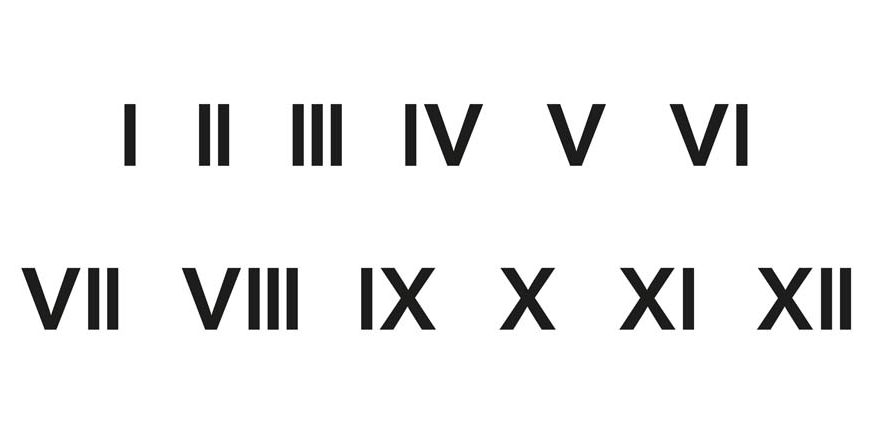
You have seen Roman numerals more times than you realise. They appear on clock faces, in book chapters, at the end of film titles, and even on monuments. Yet when your child points to XXV and asks what it means, you may pause for a second. That hesitation does not come from difficulty. It comes from distance. Modern maths uses digits, while Roman numerals belong to an older system that many people rarely practise.
Understanding xxv roman numerals is not about memorising letters. It is about recognising patterns, logic, and structure. When your child learns how to convert xxv into a number, they strengthen their analytical thinking. When you understand the reasoning clearly, you guide them with confidence. In this blog, you will learn what xxv number represents, how to calculate it correctly, and why Roman numerals still matter in today’s world.
What Is XXV Roman Numeral? Understanding the Basics
The xxv roman numeral represents the number 25.
Roman numerals follow a simple system built on seven key symbols:
I equals 1
V equals 5
X equals 10
L equals 50
C equals 100
D equals 500
M equals 1000
To understand xxv, you break it into parts. The first X equals 10. The second X equals 10. The V equals 5. When you add them together, you get 10 + 10 + 5, which equals 25.
Roman numerals follow an addition rule when symbols appear in descending or equal order from left to right. In XXV, each symbol either matches or decreases in value as you move forward. That structure tells you to add, not subtract. Once you understand this rule, the conversion feels logical rather than confusing.
How to Write XXV in Numbers
When someone asks how to write xxv in numbers, the answer is straightforward. The xxv number in modern numerical form is 25.
Today, you use the Hindu-Arabic numeral system, which includes digits from 0 to 9. This system allows you to write numbers efficiently and perform calculations easily. Roman numerals, however, do not use zero and do not rely on place value in the same way.
That difference explains why Roman numerals look longer and sometimes feel harder to interpret. When you convert xxv roman numeral into digits, you move from a symbolic representation to a positional one. Understanding both systems improves number literacy and strengthens mathematical awareness.
Read More – Real Numbers: Chart, List, Properties
The Logic Behind XXV: Why It Equals 25
Roman numerals follow two primary principles: addition and subtraction.
You add values when a symbol appears after one of equal or greater value. You subtract when a smaller symbol appears before a larger one. For example, IV equals 4 because I appears before V, which signals subtraction.
In xxv, subtraction does not occur. The symbols move from equal value to smaller value. X equals 10, another X equals 10, and V equals 5. This arrangement tells you to add all values.
Understanding this rule prevents common mistakes. Children sometimes try to apply subtraction randomly. When they learn the logic behind the structure, they stop guessing and start reasoning.
This analytical process strengthens more than arithmetic. It develops pattern recognition and logical sequencing, which support problem-solving in many areas.
Where You See XXV in Everyday Life
You may think Roman numerals belong only in history books, but they continue to appear in modern contexts.
Clock faces often use Roman numerals. Many traditional watches display I to XII instead of numbers. When you see XXV, you might encounter it in anniversary events, book volumes, or formal titles.
Major sporting events also use Roman numerals. The Super Bowl uses them to number each edition, such as Super Bowl XXV. Film franchises sometimes follow the same pattern to signal continuity and tradition.
Designers prefer Roman numerals because they create a classic and authoritative appearance. Businesses use them in branding to convey heritage and stability. When your child learns to interpret xxv roman numeral, they gain cultural awareness alongside mathematical skill.
Read More – Fun Number Activities for Preschool & Kindergarten
Common Mistakes Children Make With Roman Numerals
Children often make predictable errors while learning Roman numerals. You may notice your child writing VV instead of X to represent 10. Roman numerals do not allow repetition of V, L, or D. Only I, X, C, and M can repeat up to three times.
Some children misunderstand subtraction rules. They may think any smaller number before a larger one signals subtraction. In reality, Roman numeral subtraction follows strict combinations, such as IV for 4 or IX for 9.
Others reverse symbol order, writing VX instead of XV. Since Roman numerals rely heavily on correct placement, even a small change alters the value.
When you guide your child patiently and explain the logic clearly, they correct these mistakes quickly. Practice through small examples builds lasting confidence.
Why Learning Roman Numerals Strengthens Thinking Skills
Roman numerals challenge your child to think differently. Unlike modern numbers, they cannot rely on place value or zero. They must analyse symbol order and apply rules carefully.
This process improves cognitive flexibility. Your child learns to interpret symbols, compare values, and identify patterns. Research in early numeracy education consistently shows that exposure to varied number systems strengthens mathematical reasoning and mental agility.
When children understand both modern and Roman systems, they expand their conceptual framework. They see numbers not just as digits but as representations shaped by history and culture.
Strong number skills begin early. When your child develops clarity about symbols and values at a young age, they approach future mathematical concepts with confidence.
At EuroKids, educators focus on understanding before memorisation. Children explore numbers through interaction, repetition, and meaningful activities that make abstract ideas tangible. EuroKids follows the Heureka Curriculum, which encourages conceptual clarity and curiosity-driven learning from the foundational years.
This approach ensures that when your child encounters xxv, they do not guess. They reason.
Conclusion
When you understand that XXV in Roman numerals equals 25, you move beyond simple conversion. You recognise the structure, logic, and history behind the symbols. That awareness transforms a confusing sequence of letters into a meaningful number.
Your child deserves that clarity. Early exposure to structured learning builds confidence that lasts through school and beyond. If you want your child to grow with strong foundational skills in numeracy and reasoning, explore EuroKids Admission and discover how early education shapes lifelong confidence.
You can also visit the EuroKids Blog section for more practical learning guides designed to support you as a parent. When you stay informed, you empower your child to learn without hesitation.
Frequently Asked Questions
What does XXV mean in Roman numerals?
XXV represents the number 25.
What is the xxv number in digits?
The xxv number in modern numerical form is 25.
How do you calculate xxv roman numerals?
You add X plus X plus V. That equals 10 + 10 + 5, which gives 25.
Why is XXV not equal to 15?
Because two X symbols each represent 10. When you add them with V, the total becomes 25.
Where are Roman numerals used today?
You see them on clocks, book chapters, monuments, film sequels, sporting events, and formal branding.
You May Also Read: