You often notice that children can name objects easily, but they struggle when you ask where something is. They say “book table” instead of “book on the table” or “toy box” instead of “toy in the box”. This small gap creates confusion in communication. It makes sentences sound incomplete, and ideas feel unclear. This is where prepositions step in and quietly do their magic. When you teach prepositions for kids, you give them the power to explain position, place, and movement with confidence. You help them turn broken phrases into meaningful sentences.
Understanding preposition meaning early builds a strong base for grammar, reading, and speaking. Children start expressing their thoughts clearly. They describe their surroundings better. They gain confidence when they speak in class. That is why learning prepositions is not just about grammar. It is about helping children think and communicate with clarity.
What Is a Preposition?
To explain grammar to young learners, you need simple language. The preposition definition for kids can be shared like this. A preposition is a word that shows where something is, where it is going, or when something happens.
If you look closely, children already use prepositions every day. They say “sit on the chair”, “go to school”, or “sleep in bed”. These small words connect objects to places and actions to directions. That is the real preposition meaning. It connects words so that a sentence makes sense.
For Class 1 learners, the preposition definition for class 1 must stay short and friendly. You can say that a preposition is a word that tells us the place or position of something. When children understand this, grammar stops feeling scary.
Read More – Mastering Position Words
Why Prepositions Are Important for Children
When children use prepositions correctly, their sentences sound complete and clear. Without prepositions, communication becomes confusing. Prepositions help children describe their world better. They explain where toys are kept, where pets sleep, and where books belong.
Learning prepositions for kids improves vocabulary, strengthens sentence structure, and builds confidence in storytelling. It also prepares children for advanced grammar concepts in higher classes. A strong grammar base begins with simple and consistent learning.
Prepositions for Kids with Real-Life Understanding
Children learn best when they connect words to what they see. You do not need complicated teaching methods. You only need everyday objects.
When you say “The ball is under the chair”, children immediately understand because they can see it.
When you say “The bag is on the table”, they connect the words to the picture in front of them.
These are easy examples of prepositions that make grammar practical and memorable. When children touch and move objects, they remember the words naturally.
Read More – Illustrated Idioms for Kids
Common Prepositions Every Child Should Learn
Some prepositions appear in daily conversations more than others. These form the foundation of grammar.
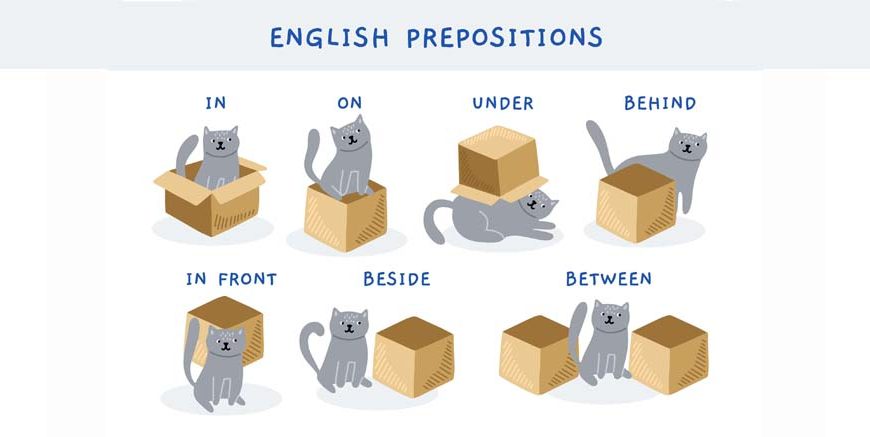
Words like on, in, under, above, below, behind, in front of, near, far, between, inside, and outside are the first building blocks. They help children describe their surroundings clearly.
When you focus on these basic prepositions for kids, you make grammar simpler and less confusing.
Simple Preposition Examples with Sentences
Children understand faster when you use short and familiar sentences. These simple preposition examples sentences show how words work in real life.
The cat is on the chair.
The pencil is in the box.
The dog sleeps under the table.
The bird flies above the tree.
The shoes are near the door.
These are perfect simple preposition sentences that children can repeat and remember. Each sentence shows how a small word changes the meaning completely.
Preposition Examples for Kids in Daily Life
Using preposition examples for kids from daily activities makes learning natural.
When you say, “Put your lunchbox in your bag,” you use a preposition.
When you say, “Stand behind the line,” you use a preposition.
When you say, “Keep your bottle on the shelf,” you use a preposition.
Children learn grammar without realising it when you speak this way. That is how language grows naturally.
How to Teach Prepositions to Class 1 Children
For young learners, grammar should feel playful. The preposition definition for class 1 should stay simple and visual. Instead of long explanations, you show and tell.
Place a toy under a chair and ask where it is.
Move a book on a table and ask its position.
Keep a pencil inside a box and ask children to describe it.
These actions help children understand faster than worksheets alone.
Simple Preposition Sentences for Regular Practice
Daily repetition strengthens memory. You can practise simple preposition sentences like:
The ball is in the basket.
The cat is under the table.
The kite is above the house.
The shoes are near the door.
The child stands between two friends.
Such practice improves grammar fluency and boosts confidence.
Using Stories and Pictures to Teach Prepositions
Stories make grammar exciting. When you use picture books, you show characters sitting on chairs, hiding behind doors, or walking under trees.
This method strengthens prepositions for kids because children connect language with imagination. Stories turn grammar into an enjoyable experience.
Preposition Easy Examples through Play
Play-based learning builds stronger understanding. Children remember what they experience.
When you ask them to jump over a pillow or crawl under a table, they learn through action. These easy examples stay in memory longer because children feel them physically.
Common Mistakes Children Make with Prepositions
Children often confuse in and on, or under and below. They may skip prepositions completely while speaking.
You should correct gently. Instead of saying “wrong”, you repeat the correct sentence. This builds confidence and improves learning.
How Prepositions Improve Grammar and Writing
Strong grammar begins with small concepts. Prepositions help children form complete sentences. They improve storytelling and reading comprehension. They make writing clearer and more structured.
Once children master prepositions for kids, they develop better communication skills and stronger academic performance.
How EuroKids Builds Strong Grammar Foundations
At EuroKids, grammar learning begins with real-world experiences. Children explore language through play, conversation, storytelling, and observation. This approach makes learning meaningful and enjoyable. EuroKids focuses on building confidence, communication skills, and clarity in expression from an early age. EuroKids follows the Heureka Curriculum, which connects grammar concepts like prepositions with real-world exploration and hands-on learning.
Conclusion
When children understand prepositions, they speak clearly and confidently. They describe their surroundings better. They express ideas with accuracy. Grammar stops feeling difficult and starts feeling natural.
If you want your child to grow with strong language skills, choosing the right learning environment matters. EuroKids Admission opens the door to structured, joyful, and meaningful learning.
The EuroKids Blog also offers valuable resources that support parents and educators in strengthening early grammar skills.
FAQs
1. What is the simple preposition definition for kids?
A preposition is a word that shows where something is or where it is going.
2. Why is preposition meaning important?
It helps children form clear sentences and describe positions correctly.
3. What are simple preposition sentences?
Short sentences like “The ball is on the table” or “The cat is under the chair.”
4. Why should children learn prepositions early?
Early learning builds stronger grammar, better speaking skills, and confidence.
5. How does EuroKids help children learn grammar?
EuroKids uses play-based and experiential methods to make grammar enjoyable and effective.