Kids constantly badger us for pets. A puppy requires far too many muddy walks on a rainy Tuesday, a kitten might completely wreck the new living room sofa, so we often compromise and agree to a small bird. If you walk into any local pet shop, you will immediately hear a piercing, cheerful trill cutting straight through the background noise. It belongs to a tiny yellow bird hopping frantically between wooden perches.
But if your child points a sticky finger at the cage and asks exactly what is a canary, you might actually struggle to give a proper scientific answer beyond saying it is just a noisy finch. While that is technically true, these little creatures are packing some seriously weird history and brilliant biology. Let us skip the boring textbook definitions and unpack the real science behind these popular pets for your child’s next EVS project.
The Truth Behind the canary meaning
When kids try to guess where the bird got its name, they usually assume it has something to do with the bright yellow colour. It is a very logical guess, but it is completely wrong. The true canary meaning actually involves a pack of wild dogs.
Hundreds of years ago, Roman explorers sailed off the coast of Africa and discovered a cluster of rugged islands. When they arrived, they were shocked to find the islands overrun with massive, fierce dogs. Because the Latin word for dog is canis, the explorers officially named the place Canariae Insulae, which directly translates to the ‘Island of Dogs’.
When sailors later discovered a species of beautiful singing finches living in the local trees on those exact same islands, they simply named the birds after the location. So, this delicate, tiny yellow bird is actually named after an island that was named after a pack of giant dogs. It is one of the funniest historical mix-ups in the animal kingdom, and kids absolutely love the irony of it.
Read More – List of Animals That Live On Land And Water
The True Colours of the domestic canary
If you asked a primary school student to draw one of these birds, they would immediately grab a bright yellow crayon. However, a wild canary flying around its natural island habitat isn’t yellow at all. They are actually a dull, greenish-brown colour. This drab shading acts as brilliant natural camouflage, helping them blend perfectly into the forest leaves so hungry predators cannot easily spot them.
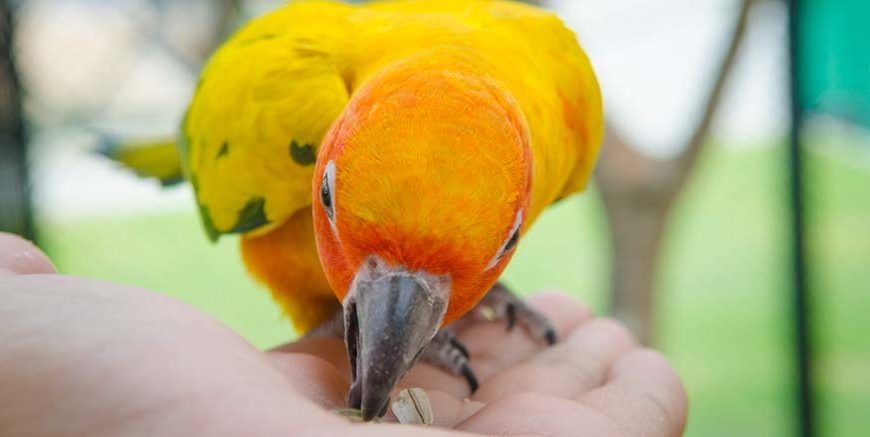
So, why are the ones in our living rooms so incredibly bright? It all comes down to selective breeding. The domestic canary has been kept by humans for hundreds of years. Over centuries, breeders deliberately picked out the birds with the brightest yellow feathers and bred them together. Without the constant threat of wild predators, these birds didn’t need their green camouflage anymore.
Today, a domestic pet bird lives a very different life from its wild cousins. They are actually quite solitary creatures who are perfectly happy living in their own space, feeding on seeds and singing to themselves all day long without needing a massive flock to feel safe.
Brilliant Biological Facts
These birds are tiny biological engines. If your child is putting together a school EVS project, here is a list of scientifically fascinating facts that explain exactly how these birds function:
- The Vocal Engine: Only the male birds actually sing those complicated, rolling songs, and they do it to claim their territory or impress a mate. But they aren’t born knowing the tunes! A young male has to physically learn his song by listening to older adult birds. They produce this incredible noise using a special vocal organ called a syrinx, which sits deep down at the bottom of their windpipe, allowing them to sing two different notes at the exact same time.
- Colour-Changing Diets: A canary’s feathers can literally change colour depending on what they eat. Their bodies absorb special pigments called carotenoids from their food. If a breeder feeds their bird a strict diet of red bell peppers or paprika, the bird will actually grow bright orange or red feathers instead of yellow ones!
- Supercharged Lungs: Birds need massive amounts of oxygen to power their flight muscles. To handle this, their respiratory system is totally different from ours. When a human breathes out, our lungs empty. When a canary breathes out, fresh air from special internal air sacs is pushed straight into their lungs. This means they are absorbing fresh oxygen both when they breathe in and when they breathe out.
Read More – Domestic Animal Names in English for Kids
Why Their Super Lungs Saved Lives
Because their lungs are so incredibly efficient, they process the air around them much faster than a human ever could. This unique bit of biology is exactly why British coal miners used to carry these tiny birds down into the deep, dark mining tunnels in small cages.
If there was a leak of toxic, invisible gas down in the mine, the bird’s super-fast breathing system would absorb the poison instantly. The bird would tragically collapse long before the human miners even smelled the gas, acting as a vital, early-warning alarm system. It gave the miners just enough time to evacuate the tunnels and survive.
Observation Over Memorisation
Learning about animal biology shouldn’t just be about staring at a whiteboard and memorising facts for a Friday quiz. Children need to understand how an animal’s physical traits directly help it survive in its specific environment. This focus on practical, active discovery is a core element of the Heureka curriculum. Instead of just reading about a bird’s diet, this approach encourages kids to look at a bird’s beak and figure out why it is shaped that way. When education shifts from passive listening to active problem-solving, kids start viewing the natural world as a massive, interactive puzzle waiting to be solved.
Conclusion
The next time you walk past a pet shop window and hear that familiar, high-pitched trill, you will know there is a lot more going on than just a pretty noise. It is genuinely thought-provoking to realise that such a tiny, fragile creature holds the secret history of ancient ocean explorers, a completely unique breathing system, and the ability to change its own physical colour just by eating a pepper. The natural world is endlessly weird and wonderful if we take the time to look a little closer. If you want to stop your child from passively scrolling on a tablet and get them actively engaged with the brilliant science hiding in their own backyard, check out our latest parenting advice on the EuroKids Blog and set their educational journey in motion by registering for EuroKids Preschool Admission today.
FAQs
How long does a domestic canary usually live?
With a proper diet, a clean cage, and plenty of space to fly around, a healthy domestic bird can easily live for anywhere between 10 to 15 years in a family home.
Do they need lots of toys in their cage?
Unlike parrots, they don’t really play with puzzles or chew toys. They prefer a very wide cage with a few different wooden perches so they have plenty of room to fly rapidly back and forth.
Why has my bird suddenly stopped singing?
Males will naturally stop singing during their annual ‘moult’ (when they drop their old feathers and grow new ones) because it takes up so much of their physical energy, but they will start up again once the new feathers are fully grown.