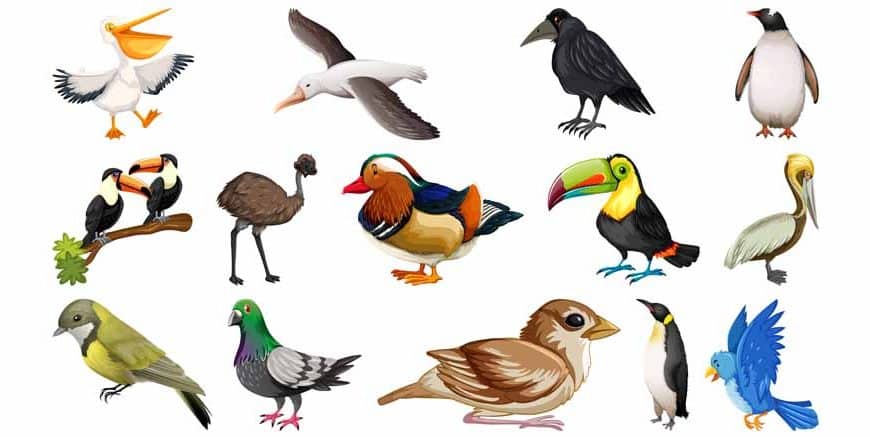
Aren’t our feathered friends just amazing creatures with different sizes, colours, forms, and habits? Every time I spot a new variety, I am amazed! Do you know what is more amazing? The fact that our country’s varied landscape and climatic conditions are conducive to hosting a vast assortment of bird species. Each variety adds to the rich mosaic of Indian nature, whether it’s our national bird, the peacock, or tiny hummingbirds like sunbirds.
This blog post will present 40 different types of birds with their names and descriptions so that you can easily identify them wherever you are in this vast country! Whether an enthusiastic birder or just an interested learner, these bird categories should give insights into different types of birds and their names found across India.
- Peacock
- Indian Eagle
- Parakeet
- Kingfisher
- Sparrow
- Mynah
- Pigeon
- Hornbill
- Cuckoo
- Eagle Owl
- Crow
- Quail
- Duck
- Swallow
- Pelican
- Crane
- Vulture
- Heron
- Swamphen
- Great Indian Bustard
- Nightjar
- Pheasant
- Osprey
- Lapwing
- Wagtail
- Treepie
- Egret
- Weaver Bird
- Stork
- Junglefowl
- Babbler
Peacocks can often be spotted in forests andgardens nationwide. They are known for their stunning and vibrant tail feathers. No wonder it is our national bird!
Indian eagles are large, powerful birds soaring high in Indian skies. They are also known as tawny eagles.
Read More – Birds Habitats: Their Features & Types
Parakeets are small ormedium-sized parrot species that come in various bright colours. They can be kept as pets or found living in the wild, too!
Kingfishers are bright coloured birds often seen near rivers or lakes. They catch fish by diving into water from perches on trees or rocks.
Small brown-grey birds are commonly found in cities and towns. They have cheerful chirping calls.
These chatty birds, mynahs, are quite the mimics, known for their impressive ability to imitate human speech.
While you might spot them in various parts of India, they seem to have a fondness for human company and often settle near our towns and cities.
Those everyday birds we see roosting on buildings or perched on wires in big flocks have really made themselves at home in our cities and towns.
Read More – Fun Bird Activities for Kids
Hornbills are large birds with long curved bills andaremainly found in the forests of North-East India.
Cuckoos are famous for their melodic singing, which is often heard during springtime; they lay eggs in other birds’ nests, too!
Read More – Water Birds Chart With Names for Nursery Kids
This nocturnal bird raptor has bright orange eyes & a haunting voice. It can be seenperched on rocky ledges or huge trees and woods at nightmostly.
Crows, those clever birds you often see in cities, are known for being super smart and great at figuring things out.
Quails are small, round birds that makea distinctive sound and often live in grasslands and fields.
Ducks are those water-loving birds you often see in ponds and lakes, but they’re pretty adaptable, and you’ll sometimes spot them waddling around in city parks, too!
Didyou know that swallows are quick-moving birds that fly long distances during their migration seasons for breeding purposes? They have been known to travel up to 14,000 miles! Phew! They also like to perform different flying moves, such as diving, climbing, and rapidly changing directions.
Pelicans are large seabirds with a big throat. The pouch helps catch fish!
Cranes are big, wading birds with long legs and necks. They mainly inhabit marshy areas. Did you know that they perform beautiful courtship dances?
Read More – The Fascinating World of Bird Nests
Vultures are large scavenger raptors that play important ecological roles byfeeding on dead animals and cleaning up carrion from the environment.
Herons have very long legs, which allow them to wade through shallow water or stand still near it, waiting for prey such as fish, frogs, etc.; these birds also hunt snakes.
The Swamphen, called Purple Moorhen too, is a bird with bright blue feathers and red legs.
The Great Indian Bustard is an endangered species of bird found only in dry regions where there’s hardly any vegetation leftdue to agriculture, industrialisation, etc., so now special efforts need to be made to protect them before they go extinct forever!
Nightjars are small birds that go out to feed at night; they have different kinds of calls, and their feathers help them blend into the environment during daytime.
Pheasants are colourful game birds seen mostly in forests, fields, or grasslands
Ospreys eat fish and live near lakes, rivers, or swamps where they cancatch them easily.
Lapwings are wading birds which have striking plumage on their wings; these birds make loud noises when alarmedto scare away predators from their nests!
Wagtails are insectivorous perching birds withlong tails that constantly move up and down.
Treepies have long tails and brightly coloured feathers; these birds often live in forests or other wooded areas where there’s plenty of trees for them to hop around on while lookingforfood.
Egrets resemble herons, but they’re usually smaller in size than herons and stand out more due to their white plumage against darker habitats like wetlands or rice fields.
Weaver Birds build intricate nests out of twigs which hang from branches over waterways such as riversides because this offers security and safety from predators like snakes, cats, etc.
These tall wading birds with long necks/legs spend mostof theirtime standing –sometimes one leg!- waiting patientlyforfish, frogs, etc., show up nearby.
Also known as Gallus, they are wild chickens found mainly in forests and scrublands.
Babblers are social birds often seen in noisy flocks. They are found in a variety of habitats, fromforests to urban gardens.
Bird Categories
- Birds of Prey
- Indian Eagle
Eagle Owl
Kite
Osprey
Vulture - Songbirds
- Sparrow
Mynah
Bulbul
Drongo
Sunbird
Wagtail
Babbler - Waterfowl and Wading Birds
- Flamingo
Duck
Pelican
Crane
Heron
Egret
Stork
Swamphen - Parrots and Allies
- Parakeet
- Kingfishers and Allies
- Kingfisher
- Pigeons and Doves
- Pigeon
- Hornbills and Allies
- Hornbill
- Cuckoos and Allies
- Cuckoo
- Owls
- Barn Owl
- Hoopoes and Allies
- Hoopoe
- Crows and Jays
- Crow
Treepie - Quails and Allies
- Quail
- Nightjars and Allies
- Nightjar
- Game Birds
- Pheasant
Junglefowl - Rollers
- Indian Roller
- Woodpeckers and Allies
- Woodpecker
- Swallows and Martins
- Swallow
- Lapwings and Allies
- Lapwing
- Weavers and Allies
- Weaver Bird
- Bustards
- Great Indian Bustard
The bird diversity in India is breathtaking – from peacocks, which are known for their vibrant colours and dancing displays, to nightjars that hide during daylight hours but sing at night. Even though each has a different appearance or behaviour, they all play key roles within ecosystems. Knowing these many kinds of birds’ names should serve as an inspiration for every person who appreciates nature around them, not only to take care of it but also to help preserve such places as parks, where the most beautiful creatures can be found outside our homes.
If you want your child to grow up with a love of nature and animals, EuroKidsoffers programs that teach kids about wildlife through hands-on activities, trips, etc., so don’t hesitateto send them there! Curiosity & learning will come naturally once children start exploring the world around themselves while being curious atthesame time –which is what ‘Eurokids’ does best!
You May Also Read: