Watch a child’s face light up when they first spot a swan gliding across a pond. That moment of wonder is pure magic. Children’s developing brains absorb information through visual experiences, making water birds perfect teaching tools as they’re colourful, fascinating and educational all at once.
Water birds offer multiple learning benefits like vocabulary expansion, observation skills, ecological concepts and environmental awareness.
Understanding Water Birds
Water birds have specialised features, such aswebbed feet for swimming, waterproof feathers and specialised bills for catching food. They live in diverse habitats like lakes, rivers, wetlands, coastal areas and oceans. For nursery-aged children, they captivate through their graceful movements, vibrant colours and observable behaviours.
Names And Facts About Water Birds
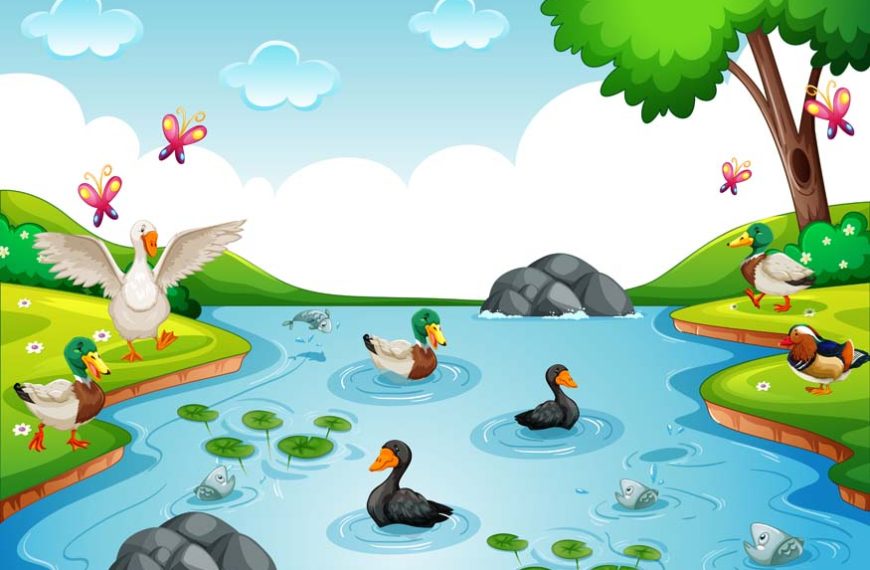
Mallard Duck: Green-headed ducks with pretty colours and a famous quack! Males are brighter than females.
Fun fact: They tip upside-down to eat, leaving their tail in the air like a funny signal.
Swan: White swans with long, graceful necks float beautifully. They’re the most elegant water birds.
Fun fact: Swans stay together forever as they’re best friends for life and return to the same lake every year!
Mandarin Duck: Rainbow ducks with orange, blue, green, and purple feathers are like living paintings!
Fun fact: In China, they represent true love and forever friendships.
Puffin: Cute birds with bright orange beaks, white faces and black backs. They look funny and adorable!
Fun fact: They dive underwater like tiny swimmers and spend most of their lives at sea.
Penguin: Waddling birds in black-and-white “tuxedos” that slide on their bellies, and kids love them!
Fun fact: They can’t fly in the air, but they’re amazing underwater swimmers, diving really, really deep.
Pelican: Giant birds with huge throat pouches under their beaks for catching fish.
Fun fact: Their pouches aren’t just for storage, but they use them to cool down on hot days!
Heron: Tall, skinny birds with super-long legs that stand very still, waiting for fish.
Fun fact: Their wings spread 6 feet wide, and they can strike faster than lightning!
Flamingo: Pink birds with impossibly long legs that stand in big groups.
Fun fact: They’re born grey or white and turn pink from the special food they eat!
Albatross: Huge seabirds with giant 11-foot wings that fly across entire oceans.
Fun fact: They can fly around the whole world without ever stopping to land!
Cormorant: Sleek diving birds with long necks and hooked beaks for catching fish.
Fun fact: Their feathers get a little wet on purpose, helping them dive deeper than other water birds!
Read More – List of Animals That Live On Land And Water
Why Nursery Kids Love Water Birds
Water birds fascinate children through their beauty, diversity, and observable behaviours. Kids develop vocabulary (bill, plumage, webbed feet), learn ecological concepts (habitat, adaptation), and discover animal behaviour (mating, nesting). Observing water birds teaches patience and observation skills. Children learn that even “simple” birds have complex, worthy behaviours worth studying.
Emotionally, water birds evoke wonder and joy. That spark of curiosity when a child first sees a real bird is invaluable. Nurturing this natural fascination builds environmental awareness and respect for wildlife that lasts lifelong.
Read More – Different Types of Birds
Creating Effective Water Birds Charts
Visual Design: Use high-quality illustrations showing distinguishing characteristics. Include multiple views of each bird. Vibrant colours and clear details draw and hold attention.
Typography: Large, clear fonts help children read from distances. Simple, age-appropriate language accompanies each bird. Short, interesting facts appeal better than lengthy descriptions.
Interactive Elements: Include tactile components like lift-the-flap cards, texture patches showing feather types, or matching games. Interactive elements transform charts into engaging tools rather than passive displays.
Music and Movement: Create simple songs or rhymes with bird names. Movement activities mimicking bird movements engage kinaesthetic learners and aid memory retention.
Contextual Learning: Show birds in natural habitats. Include information about where each bird lives, what they eat, and how they behave. This contextual information helps children form meaningful connections.
Read More – Birds Habitats: Their Features & Types
Teaching Water Birds Effectively
Start with observation: Visit locations where children can observe real water birds. Nothing replaces the wonder of seeing living creatures.
Use multiple resources: Combine charts with books, videos, and real observations. Different learning modalities reinforce information effectively.
Encourage questions: Answer honestly and enthusiastically. Children’s questions guide their learning naturally.
Make connections: Point out birds in parks, mention them in stories, relate behaviours to human actions. These connections build understanding.
Celebrate discoveries: When children identify birds or remember facts, celebrate their learning. Positive reinforcement encourages continued engagement.
Read More – Flying Animals for Kids
Playful Activities for Learning About Water Birds
- Bird Movement Dance Party:Play music and have kids mimic water bird movements. Waddle like penguins, glide like swans, dive like puffins, or balance on one leg like flamingos. Narrate: “Now we’re swimming like ducks, now flying like albatrosses!”
- Water Bird Sorting Game:Provide cards with birds and categories like “Swimmers,” “Divers,” “Waders,” or “By Colour.” Children sort birds into correct categories, developing critical thinking and observation skills. Make it competitive or celebratory.
- Feather Painting and Collage:Provide feather templates, paints, and craft materials in water bird colours like blues, oranges, greens, and pinks. Create bird silhouettes to decorate with painted feathers. Art-based learning improves retention.
- Water Bird Sound Exploration:Play recordings of water bird calls such as quacking ducks, trumpeting swans, puffin calls. Children guess which bird makes which sound. Imitate sounds together. Auditory learning engages all learners.
- Bird Nest Building Challenge:Gather natural materials like twigs, leaves, grass, and feathers. Challenge children to build nests. Discuss why birds need nests and how different species build differently. Hands-on activity teaches engineering concepts.
- Water Bird Matching Memory Game:Create pairs of matching cards with bird images. Children play memory, flipping cards to find matches. Add bird names or facts for difficulty. Develops memory and bird recognition skills.
- Tell-a-Story with Bird Cards:Arrange bird picture cards randomly. Children create stories: “Once a penguin met a flamingo by the lake…” Develops creativity, vocabulary, and narrative skills. Encourage silly stories.
- Water Bird Bingo:Create bingo cards with bird images instead of numbers. Call out bird names or describe characteristics. First to complete a line wins! Reinforces recognition and listening skills.
- Bird Observation Journal:Give children notebooks to sketch water birds and write one interesting fact per bird. Over time, they create their own waterbird encyclopaedia. Builds writing and observation skills.
- Dramatic Play: Water Bird Pretend:Set up a play area with blue fabric “water,” bird props, and accessories. Children role-play: “I’m a diving cormorant!” or “I’m a graceful swan!” Imaginative play deepens understanding entertainingly.
- Bird Silhouette Craft:Project bird silhouettes on walls. Children trace and cut them from black paper. Hang as mobiles or decorations. Combines art with learning and creates visual reminders.
- Fact Card Collection Game:Create colourful cards with interesting waterbird facts. Children collect and trade cards like collectables. They read facts aloud, earning points for remembering details.
FAQs
Q1: What are water birds?
Water birds are birds adapted to aquatic life with webbed feet, waterproof feathers, and specialised bills. They live in lakes, rivers, wetlands, coastal areas, and oceans. Examples include swans, ducks, penguins, herons, flamingos, pelicans, puffins, albatrosses, and cormorants.
Q2: What are the names of water birds in India?
Indian water birds include Indian Peafowl, Painted Stork, Asian Openbill Stork, Common Teal, Brahminy Duck, Shoveler, Spot-billed Duck, Bar-headed Goose, Common Crane, Sarus Crane, Cormorant, Pelican, and kingfisher species. India’s diverse wetlands attract both resident and seasonal migratory birds.
Q3: Why should children learn about water birds?
Learning about water birds teaches observation skills, expands vocabulary, and introduces ecological concepts. Children discover how birds maintain ecological balance. This builds environmental awareness and respect for wildlife from an early age.
Q4: How do water birds adapt to aquatic life?
Water birds have specialised adaptations likewebbed feet for swimming, waterproof feathers, specialised bills for different feeding styles, long necks for reaching underwater food, and diving abilities. Each species suits its specific habitat perfectly.
Q5: How can I teach children about water birds?
Use vibrant charts, picture books, and documentaries. Visit parks with ponds for observations. Incorporate drawing, crafts, songs, and rhymes. Interactive elements like matching games enhance engagement and retention effectively.
Q6: Are water birds safe to observe?
Yes! Observe from a distance, stay quiet, and avoid sudden movements. Visit natural habitats like parks or wetlands. Never feed wild birds. This teaches children respect for wildlife while ensuring bird safety.
Here at EuroKids, our curriculum is designed to suit the individual needs and preferences of kids. Our team of experts work tirelessly day and night tirelessly to ensure that the curriculum is up to date to meet modern requirements, which will prove beneficial to the students. We teach our kids using various visual aids to appeal to all kinds of learners. We have charts on different animals and birds, like water birds, to give our little ones an understanding of the animal kingdom from a young age. If you would like to learn more about children and innovative ways to boost cognitive development, be sure to have a look at Eurokids blogs.