You may have seen a crab walking sideways at the beach or hiding between rocks in picture books. At a glance, it looks funny, almost mysterious. But when you slow down and observe closely, the crab quietly teaches you how living beings adapt, survive, and grow in their surroundings. This is exactly why learning about animals like crabs holds an important place in EVS.
As a student, you do not just memorise facts. You learn how nature works, how animals protect themselves, and how every living creature plays a role in maintaining balance. Understanding crab facts for kids helps you connect classroom lessons with real life. It sharpens observation, builds curiosity, and encourages respect for the environment. For parents, such topics build strong foundational thinking skills that support learning far beyond textbooks. This blog helps you explore crabs step by step, from body structure to behaviour, using clear explanations that make EVS meaningful and enjoyable.
What Is a Crab and Where Do You Find It
A crab is a small to medium-sized aquatic animal that mostly lives in salty water such as seas and oceans. Some types of crabs also live in freshwater rivers or muddy coastal areas. You often find them near beaches, coral reefs, mangroves, and rocky shores. Crabs belong to a group of animals that have hard outer shells and jointed legs. Their bodies stay well protected even in rough environments. When you learn about crabs, you understand how animals adjust to water, sand, and changing tides. This makes crabs an excellent example for EVS lessons on habitats and living conditions.
Crab Classification Explained Simply for Students
Scientists group animals based on shared features so they can study them easily. This process is called classification. Understanding crab classification helps you see how crabs fit into the animal world. Crabs belong to the animal kingdom and fall under a group called arthropods. Arthropods have jointed legs and a hard covering on their body. Within arthropods, crabs come under crustaceans. Crustaceans usually live in water and have strong shells. This classification tells you that crabs share similarities with prawns and lobsters. Learning classification does not mean memorising names. It helps you understand patterns in nature and how animals relate to one another.
Read More – List of Animals that Live Both on Land and Water
How Many Legs Crab Have and Why This Question Matters
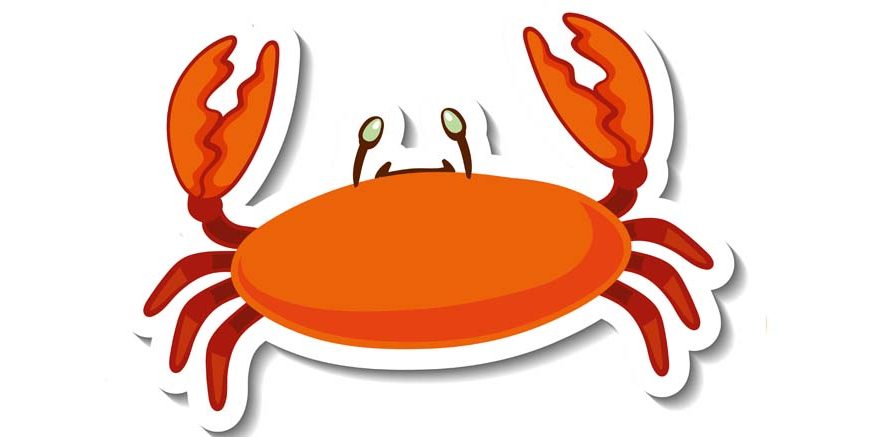
One of the most common questions students ask is how many legs crab have. The correct answer is ten. However, this number often causes confusion because not all legs look the same. A crab has ten legs in total. The front two legs form strong claws, also called pincers. These claws help the crab hold food, defend itself, and sometimes communicate. The remaining eight legs support walking and swimming. This question matters because it teaches careful observation. EVS encourages you to look closely rather than assume. Counting legs correctly helps build attention to detail and logical thinking.
Crab Features That Make Them Easy to Recognise
Crabs have distinct body parts that make them different from other animals. Learning crab features helps you identify them easily. A crab has a hard shell called an exoskeleton that protects its soft inner body. This shell also prevents injury from predators. Crabs have two eyes that often sit on short stalks, allowing them to see in different directions. Their claws remain one of their most noticeable features. Crabs also have a flat body shape, which allows them to hide under rocks or sand. Each feature serves a purpose. EVS lessons become more meaningful when you understand how form supports function.
Crab Characteristics That Help Them Survive
Every animal develops certain habits and behaviours to survive. Crab characteristics show how well nature equips living beings for challenges. Crabs often walk sideways instead of forward. This movement suits their body shape and helps them escape danger quickly. Many crabs can change colour slightly to blend into their surroundings. This ability protects them from predators. Another important characteristic includes regeneration. If a crab loses a leg, it can grow a new one over time. This teaches resilience, an important life lesson for young learners.
Read More – Overcoming Seafood Avoidance: Tips for Kids’ Health
Habitat and Daily Life of Crabs
Crabs live in places where water, food, and shelter remain available. You commonly find them near shorelines, in mangroves, or beneath rocks. Some crabs dig holes in the sand to stay cool and safe. Crabs spend most of their day searching for food, hiding from predators, or resting in shaded spots. Their daily routine teaches you how animals adapt their lifestyle based on their environment. EVS uses such examples to explain survival strategies in nature.
What Do Crabs Eat and Why It Matters
Crabs eat both plants and small animals. They consume algae, tiny fish, dead plants, and small insects. This makes them omnivores. By feeding on waste and decaying matter, crabs help clean their environment. They play an important role in maintaining ecological balance. Learning this helps students understand food chains and the importance of every living organism.
Fun and Surprising Crab Facts for Kids
Crabs can live for several years, depending on the species. Some crabs communicate by waving their claws. Certain crabs can swim, while others remain land-based for most of their life. These crab facts for kids make learning enjoyable and memorable. Fun facts help students stay curious and engaged, which improves long-term understanding.
Why Learning About Animals Like Crabs Matters in Early Education
Studying animals like crabs improves observation, reasoning, and environmental awareness. EVS lessons go beyond facts. They help children develop empathy towards nature.
When you understand animal behaviour, you also learn patience and respect. These skills support emotional development and responsible thinking. Parents benefit because such learning strengthens both academic and life skills.
Read More – Teaching Preschoolers About Ocean Animals
How EuroKids Makes EVS Learning Meaningful
At EuroKids, EVS learning focuses on curiosity, observation, and understanding rather than rote learning. Children explore real-life examples that help them connect classroom knowledge with everyday experiences.
EuroKids follows the Heureka Curriculum, which encourages inquiry-based learning and helps children ask questions, observe patterns, and understand concepts deeply through age-appropriate exploration.
Conclusion
Learning about crabs may seem simple, but it builds strong thinking skills that support lifelong learning. Topics like animal classification, habitats, and adaptation prepare children for advanced learning stages.
For parents looking to nurture curiosity and confidence in their child, EuroKids Admission offers a structured and engaging learning environment. The EuroKids Blog continues to support parents with reliable, research-backed educational content that makes early learning joyful and effective.
Frequently Asked Questions
How many legs do crabs have?
A crab has ten legs. Two legs form claws, while the remaining eight help in movement.
What type of animal is a crab?
A crab is a crustacean and belongs to the arthropod group.
Where do crabs usually live?
Crabs live near seas, oceans, mangroves, rivers, and sandy shores.
Why do crabs walk sideways?
Their body structure supports sideways movement, which helps them escape predators.
Why are crabs important to the environment?
Crabs help clean their surroundings and maintain balance in the ecosystem.