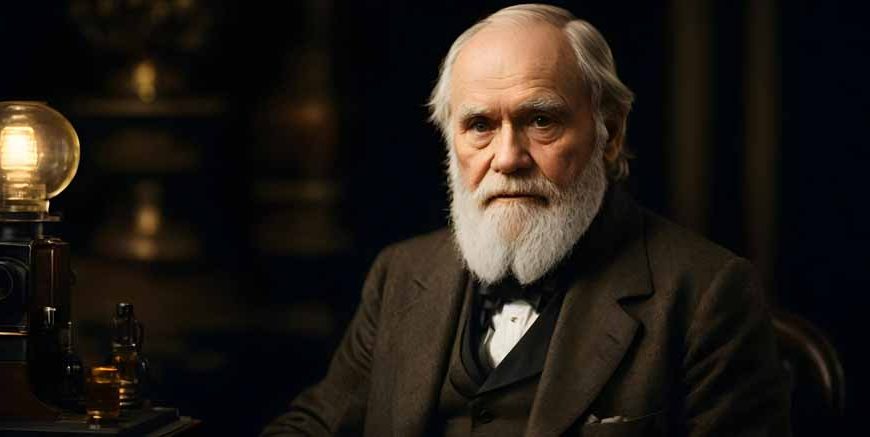
Imagine pouring a cold glass of milk, taking a massive gulp, and instantly feeling terribly ill. A couple of hundred years ago, this was a perfectly normal, terrifying everyday risk. People living in the nineteenth century had absolutely no idea why fresh food suddenly went rotten, why milk turned dangerously sour, or why healthy villages would suddenly fall completely sick. They blamed bad smells, mysterious night air, and strange clouds of dust. That was until a brilliant, highly determined French chemist stepped into his dusty laboratory and completely changed the course of human history forever.
So, exactly who is Louis Pasteur? He was a nineteenth-century scientific detective who completely revolutionised how we understand human health, modern medicine, and the daily food sitting safely on our kitchen tables. Let us travel back in time to explore his incredibly fascinating life, look closely at his brilliant experiments, and learn exactly why doctors, nurses, and scientists all over the globe still celebrate his legendary name today.
Solving the invisible mystery: what did Louis Pasteur discover?
Before this clever chemist started looking through his heavy brass microscope, the greatest scientific minds in the world actually believed that tiny living creatures just magically appeared out of thin air. If a piece of meat rotted on the counter, they thought the maggots just popped into existence from nothing. This old, highly inaccurate idea was known as spontaneous generation.
When a curious student asks what did Louis Pasteur discover, the absolute most important answer to give them is the brilliant ‘Germ Theory’. Through a series of highly clever experiments using special glass flasks with long, curved necks, he proved once and for all that the air all around us is completely packed full of microscopic, invisible creatures called microbes or germs.
He showed the world that these tiny, floating invaders are the true villains that cause perfectly good food to spoil and make human beings terribly sick. By proving that these invisible bugs were the real culprits of illness, he gave the entire medical world the crucial information they desperately needed to finally fight back against deadly diseases.
Read More – Famous Scientists and Their Inventions Explained for Kids
Saving the Kitchen: what is Louis Pasteur known for and his daily impact
Once he finally knew that invisible germs were causing food and drink to rot rapidly, he wanted to find a clever, practical way to stop them in their tracks. If you go to the kitchen right now and look at a plastic carton of milk in your fridge, you will almost certainly see the word ‘pasteurised’ printed boldly on the side. This leads us directly into answering exactly what is Louis Pasteur known for. He essentially rescued the modern food industry from complete disaster.
Looking closely at the brilliant Louis Pasteur inventions, his most famous and widely used creation is undoubtedly the physical process of pasteurisation. During his time, the French economy was losing massive amounts of money because their barrels of wine and milk were constantly turning sour during long transport journeys. He cleverly figured out that if you heat a liquid up to a very specific, high temperature for a short amount of time, and then cool it down incredibly quickly, you safely kill off all the harmful, dangerous germs hiding inside without ruining the taste. This simple but brilliant invention meant that farm milk could finally be transported safely across the country to busy towns without making young children dreadfully ill.
A Brilliant List of Louis Pasteur discoveries
His tireless, passionate work did not just stop at the kitchen table. He took his brand new knowledge of floating germs and applied it directly to the wild animal kingdom and busy human hospitals. Here is a clear, descriptive list of some of his most vital, world-changing Louis Pasteur discoveries:
- Saving the Silk Industry: When French silkworms started mysteriously dying in their thousands, he discovered that two entirely separate parasitic diseases were destroying them. He taught the local farmers how to use microscopes to easily spot the sick eggs and safely remove them, entirely saving the local clothing industry from total financial ruin.
- Cleaning Up Hospital Wards: Because he proved beyond a doubt that invisible germs carry nasty diseases, he loudly urged doctors to scrub their dirty hands thoroughly with strong soap and boil their metal surgical tools before operating on injured patients. This simple, strict hygiene rule completely stopped the rapid spread of terrible infections in hospital wards.
- Creating the Idea of Immunity: While studying sick farm chickens, he accidentally realised that if you gave an animal a very weak, old version of a sickness, their clever body would naturally learn exactly how to fight it off. When the real, strong sickness arrived later, the animal was perfectly safe and naturally protected.
Read More – GK Questions On Famous Inventions
The ultimate cure: Louis Pasteur discovered which vaccine?
While his early work with farm chickens and grazing cows was highly successful, his absolute greatest, most terrifying challenge involved a much darker, deadlier threat. If anyone ever asks you, Louis Pasteur discovered which vaccine, you can confidently tell them the thrilling, incredibly brave story of the rabies vaccine.
During the nineteenth century, rabies was a completely fatal, terrifying disease usually spread by the sudden, painful bite of a wild, infected dog. There was absolutely no known cure, and catching it meant certain tragedy. In the summer of 1885, a deeply worried mother brought her young son, Joseph Meister, to the scientist’s laboratory. The boy had been badly bitten by a rabid dog, and his terrified mother begged the chemist for any help he could offer.
Because he was a chemist and not a licensed medical doctor, treating the boy was a massive legal and personal risk. However, he bravely gave the young boy a careful series of tiny injections containing a highly weakened version of the dangerous virus. Miraculously, the young boy completely survived the ordeal, and the terrifying disease was finally beaten.
Read More – Fascinating Science Facts for Kids
Conclusion
Looking closely at the fascinating life of this quiet, determined French chemist completely changes how we view the brilliant modern world around us. It is genuinely thought-provoking to realise that before his careful, patient work with a simple glass microscope, humanity was entirely at the mercy of invisible, floating enemies. He did not fight his massive battles with a heavy sword or a loud army; he fought them with brilliant observation, strict cleanliness, and relentless scientific curiosity. His life-saving legacy is completely alive in every single clean hospital ward, every safe carton of breakfast milk, and every protective childhood injection given by doctors today.
Understanding the brilliant heroes of our medical history naturally encourages young children to look closely at the natural world and realise that their own curiosity could one day save millions of lives. To discover more fantastic scientific facts and explore how the brilliant Heureka Curriculum actively supports your child’s educational journey, read the latest articles on the EuroKids Blog and secure their vibrant academic future today via EuroKids Preschool Admission.
FAQs
Did Louis Pasteur invent the very first vaccine in history?
No, he did not invent the first one. An English doctor named Edward Jenner actually created the first successful vaccine for smallpox many years earlier, but Pasteur was the first to explain exactly how and why vaccines worked using his germ theory.
Did he ever win a Nobel Prize for his amazing medical work?
Unfortunately, he never received one. The famous Nobel Prize was officially established in 1895, the exact same year that he sadly passed away, meaning he just missed the opportunity to be awarded this massive honour.
Why did he use special swan-neck flasks for his experiments?
He designed these clever glass flasks with long, curved, S-shaped necks so that fresh air could easily reach the liquid inside, but heavy dust and floating germs would get permanently trapped in the curves, proving that germs come from dust, not thin air.