Cherry-picking!
Green fingers!
You reap what you sow!
No, this isn’t a class on famous idioms (although wouldn’t that be a great idea, right?)
This is about unlocking the potential of a very cool activity for your kids! If you look closely, you’d see that all of these terms have something in common.
They’re all about gardening!
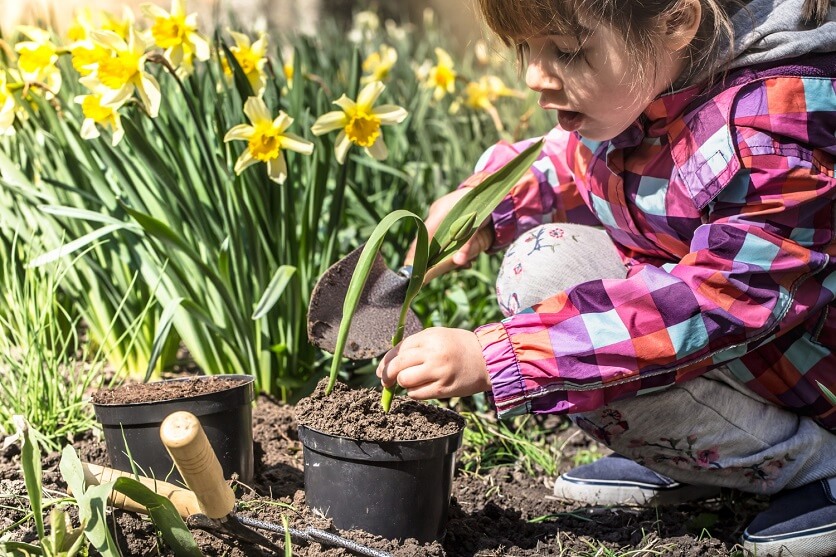
Gardening might have become a really popular hobby among adults post-pandemic, but the benefits of it extend to children too.
In fact, if studies are any indication, the benefits of gardening for children are numerous, encompassing a holistic approach to their growth so they develop into wonderful beings!
Eager to know more already? Well, we won’t keep you waiting! Here are the top six benefits of gardening for children
1. Promotes a healthy diet
In the gardening world, “eat what you grow” is a mantra people swear by. Now you might think this only applies to adults, as kids have a natural aversion to green veggies and you have enough experience to attest to that, but hold on to that for a minute.
If you get your kid in your garden and make them grow their own veggies, you’ll definitely see their interest in eating them increase. Even if it’s one of those nasty greens they used to make a disgusted face at!
The thing is that gardening instills a sense of responsibility in kids while fuelling their curiosity and fascination. These three, combined, create a potent mix that makes them more inclined toward healthy eating when they grow their own greens.
Read More – Healthy Eating Guidelines for Kids
2. Enhances their motor skills
Let’s not forget that gardening requires a lot of skill. Sure, on a small-scale, it might not look very physically intensive, but it’s got its fair share of work.
Garden activities for children require them to engage in low-intensity exercise that’s geared toward increasing their range of motion and improving their hand-eye coordination.
Every part of gardening, be it weeding or digging, planting or watering, requires both skill and movement, exercising both the mind and the upper and lower parts of the body. What’s more, knowing when your produce is ripe or how to pluck it requires pressure-sensitive movements, which are great skills for kids to acquire.
3. Keeps the brain sharp
As mentioned before, garden activities for kids are also great for their mental development. Not only do they fuel their scientific curiosity and acumen for learning, but it also gives them the scope to analyze the situation at hand so they can make the best decisions concerning the care of their garden.
This further encourages them to think for themselves so they can develop problem-solving skills should their gardening efforts encounter issues. It also gives them the chance to be creative while enhancing their ability to work both in teams and individually.
Another advantage is that plants for a children’s garden or otherwise take time to grow. Which means gardening is an activity that instills patience. And that can be a good quality for your kid to have, helping them grow into mature adults.
Read More – Engage Kids in Sustainability
4. Helps them connect with nature
Living as we do in the middle of a concrete jungle, it can be really difficult to get your kids to develop a close bond with nature. However, organising garden activities for kids is an excellent way for them to connect with nature while teaching them about the crucial role it plays in our very existence. You can be sure they’ll have fun discovering the many miracles of nature this way.
5. Relieves stress in kids
Did you know that 63.5% of students in India experience academic stress regularly? That’s a hell of a lot of kids if you think about it! Stress might feel like an adult thing, but as you can clearly see, it affects your kids just as much.
According to research, stress among kids can be mitigated with a little bit of gardening therapy! Getting their gardening game on can help kids combat stress, relieve anxiety, and achieve a meditative state that is nothing short of therapeutic. It can also improve mental focus while giving your kids that much-needed break from their screens. So overall, it’s a complete win-win!
6. Instills confidence
Although, like everything else, gardening has its own set of rules, it gives kids the opportunity to make their own decisions as they learn how to sow, plant, prune, and water.
This free reign to decide for themselves can also help make kids more responsible as they get a better idea of the consequences of the decisions they make while gardening, irrespective of the outcome being positive or negative.
This in itself can be a learning experience that, in turn, helps boost their confidence and propel them to develop innovative solutions to any problems that may arise. Especially if you let them figure out the rules of gardening on their own.
In fact, gardening has also proven to be a great activity for kids with learning disabilities. This simple exercise can help them improve their non-verbal communication, develop essential skills, and become more aware and cooperative.
Read More – Creative Activities for Preschoolers Learning and Development
Conclusion
Gardening for children is much more than planting seeds and watering flowers. It can encourage healthy eating habits, develop motor skills, support problem-solving, build confidence and a sense of responsibility, and help children develop a stronger connection with nature.
Whether you have a backyard garden, a balcony full of pots, or just one small plant on a windowsill, there are plenty of ways to introduce your child to the joys of gardening. Give them the opportunity to dig, plant, observe, and learn, and you may be surprised by how much they discover along the way.
At EuroKids, we understand the importance of plants for kids and the many benefits that gardening brings. Our curriculum devotes extensive time to outdoor learning activities for kids, such as gardening, so they can grow into well-rounded adults. If you want to learn more about our curriculum or how we balance classroom and outdoor learning, be sure to visit your nearest EuroKids center.
Frequently Asked Questions (FAQs)
1. What are the benefits of gardening for children?
Gardening can help children develop motor skills, curiosity, problem-solving abilities, responsibility, and confidence. It can also encourage healthy eating habits and help children connect with nature.
2. How does gardening help a child’s development?
Gardening involves physical movement, observation, decision-making, and hands-on exploration. These experiences can support children’s physical, cognitive, social, and emotional development.
3. What are some easy gardening activities for kids?
Children can plant seeds, water plants, grow herbs, decorate pots, make plant growth diaries, and go on garden observation hunts. Choose activities according to the child’s age and abilities.
4. How can gardening encourage children to eat vegetables?
Growing vegetables can make children curious about food. When they participate in planting and caring for vegetables, they may become more interested in tasting the food they have helped grow.