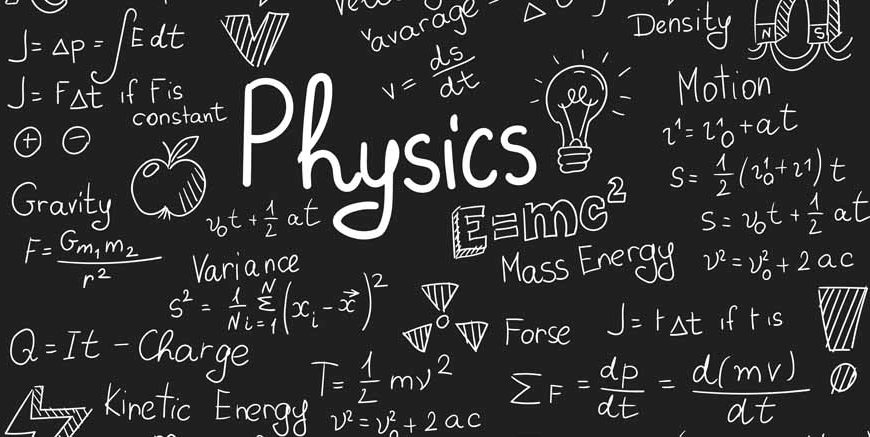
Movement happens everywhere around us. A dog runs across the park, a ball drops from a table, and a bicycle rolls down a steep hill. In science, we do not just watch things move; we measure exactly how fast they travel, how much time it takes, and how far they go. To figure out these exact details without guessing, scientists use a specific set of mathematical rules. These rules are known as the equation of motion formula. By learning these simple math rules, anyone can predict exactly where a moving object will be in the future.
What is the Equation of Motion?
Before jumping into math, we need to understand the basic “what is equation of motion” definition. Think of an equation as a secret recipe. If you want to bake a cake, you need ingredients like flour, eggs, and sugar. If you want to understand how a toy car moves across the floor, your ingredients are speed, time, distance, and acceleration (which means how quickly something speeds up).
An equation perfectly connects all these moving ingredients together. The physics equations of motion are simply mathematical sentences that describe how an object behaves when it moves in a straight line.
Read More – What is Algebra?
Understanding the Alphabet of Physics
Before a teacher can write the equation of motion on the classroom chalkboard, students must learn a special scientific alphabet. In physics, we do not write out long words because it takes too much time. Instead, we use small, single letters to represent big concepts. Here is the secret code you need to know:
- u stands for initial velocity. This is just a fancy way of saying your starting speed. If you are standing completely still before running, your starting speed is zero.
- v stands for final velocity. This is how fast you are moving at the very end of your trip.
- t stands for time. This measures how many seconds or minutes your trip takes.
- a stands for acceleration. This word describes how quickly you speed up. When a driver pushes the gas pedal and the car goes from slow to fast, it is accelerating.
- s stands for distance. This measures how much ground you covered from the start to the finish line.
The Magic of the Three Equations of Motion
Now that we know the secret code, we can look at the three equations of motion. These are the most important tools a scientist uses to solve movement puzzles.
First, if you want to find out how fast something is going at the end of its trip, you use the first motion formula:
v = u + at
Second, if you want to measure exactly how far an object traveled, you use this rule to find the distance:
s = ut + \frac{1}{2}at^2
Third, sometimes you know the distance and the speed, but you forgot to use a stopwatch to check the time. When you do not know the time, you use this special rule:
v^2 = u^2 + 2as
Let’s Look at a Motion Formula in Action
Learning the equations of motion is much easier when we use a real-world example.
Let us say a child is riding a skateboard. They start from a completely still position, which means their starting speed (u) is zero. They push the skateboard, speeding up at a steady rate of 2 meters per second squared (a = 2). They roll down the sidewalk for exactly 3 seconds (t = 3).
How fast are they going at the end of those 3 seconds? We can use the first mathematical rule to find out:
v = u + at
v = 0 + (2 \times 3)
v = 6
The skateboarder reaches a final speed of 6 meters per second!
Why Do We Need These Physics Rules?
You might wonder why we need to use letters and math to describe running or playing. These formulas are incredibly important because they keep us safe and help us build amazing things. Engineers use these exact same math rules to design fun roller coasters, launch heavy rockets into space, and program modern self-driving cars. Without these rules, a roller coaster cart might not have enough speed to make it completely around a loop, or a car might not know exactly when to hit the brakes to stop safely.
Read More – Science Quiz Questions and Answers for Kids
Conclusion
To summarize our physics lesson, math is the hidden language that controls how everything moves around us. Whether it is a tiny marble rolling on the kitchen floor or a giant rocket traveling to the moon, they all follow the exact same rules of movement.
Looking at these formulas leaves us with a truly fascinating idea. We often think of math as just numbers trapped inside a dusty textbook, but it is actually a powerful tool that helps us predict the future. By simply knowing a few starting details like speed and time, we can look ahead and know exactly where a moving object will end up!
To read more fun and educational articles, check out the EuroKids Blog, and visit our website for details on EuroKids Preschool Admission.
FAQs
Who created these motion rules?
A famous scientist named Sir Isaac Newton first wrote down these specific laws of movement hundreds of years ago after studying how objects fall and move on Earth.
Do these formulas work for things moving in circles?
No, these three basic rules only work perfectly when an object is moving in a straight, flat line. Moving in circles requires a different set of mathematical rules.
What does acceleration actually mean?
Acceleration simply means a change in speed. If you pedal your bicycle faster to win a race, you are accelerating!
Why do we use letters instead of whole words in the formulas?
Using letters like “v” and “t” makes the math much faster and cleaner to write down on paper, allowing scientists to solve big problems without writing long sentences.