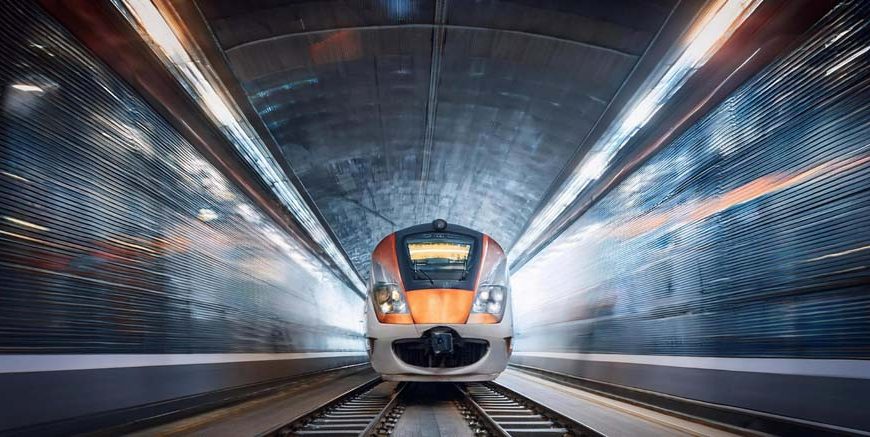
Standing on a bustling railway platform, tightly holding your parents’ hands, and feeling the sudden, powerful gust of wind as a massive metal locomotive thunders past is a genuinely thrilling experience. The sheer power and velocity of these magnificent machines can leave anyone absolutely breathless. But right behind the loud, piercing whistles and the rhythmic, comforting clack-clack of the heavy steel wheels on the tracks lies a beautiful, hidden world of physics and mathematics.
Whether you are observing a sleek, modern bullet train slicing silently through the countryside or a classic, puffing steam engine chugging along a heritage railway line, understanding the actual mechanics of their movement is incredibly fascinating.
Today, we are going to dive deep into the numbers and concepts that carefully govern these mechanical beasts. We will explore exactly how fast they travel, the mathematical rules they must follow, and how you can become an expert at calculating their pace on your very next grand railway holiday.
Understanding Train Speed
Before we start crunching numbers or looking at complicated equations, we need to completely understand the fundamental concept of train speed. In very simple terms, speed is just a measurement of how fast a physical object moves from one specific place to another over a set period of time. When we talk about railways, we are dealing with thousands of tonnes of solid metal moving at incredibly high velocities.
Usually, in our daily lives, we measure this pace in kilometres per hour (km/h) or sometimes metres per second (m/s) for shorter, quicker calculations. If the digital display inside your passenger carriage shows that you are travelling at 120 km/h, it means a very specific thing.
It means that if the driver maintains that exact, steady pace without slowing down for bends or stopping at any local stations, you will successfully cover a distance of exactly 120 kilometres in exactly one hour. Grasping this basic, everyday idea is the very first step to unlocking the much more complex, exciting maths hiding behind railway journeys.
Read More – Unlocking the World of Fast and Slow
Exploring the Train Speed Formula
To solve any mathematical puzzle involving a moving locomotive, you need to rely on the golden rule of motion. The primary train speed formula is wonderfully simple, yet incredibly powerful:
Speed = Distance/Time
Think about a lovely summer holiday to the coast to see exactly how this works in the real world. Imagine your railway journey covers a total distance of 300 kilometres. If the trip takes exactly 3 hours from the moment the guard blows the whistle at your starting station to the moment you happily arrive at your destination, what is your average pace?
By grabbing the total distance (300) and dividing it by the total time (3), you easily find that your average pace for the holiday trip was 100 km/h. It is just like sharing a bag of sweets equally amongst friends; you are simply sharing the distance out over the hours!
The Length of Train Formula
However, railway maths has a brilliant, slightly tricky twist! Unlike a tiny family car, trains are incredibly long vehicles. Sometimes, you might already know exactly how fast you are going, but you want to figure out the actual physical size of the massive machine you are riding in. This is exactly where the length of train formula comes into play.
If a train passes a completely stationary object that has no significant length of its own—like a wooden telegraph pole, a tall signal light, or even a person standing still on the platform—the distance the train covers to pass that pole is exactly equal to its own length.
We can easily rearrange our golden rule to solve this specific puzzle:
Distance = Speed x Time
Imagine a train is travelling at a steady pace of 20 metres per second. You stand safely on the platform with a stopwatch and notice it takes exactly 15 seconds for the entire locomotive, from the front driving engine to the very rear passenger carriage, to completely pass the spot where you are standing. By multiplying the speed (20) by the time (15), you discover that the train is exactly 300 metres long!
But what happens if the train crosses a long bridge? You must add the length of the train to the length of the bridge to find the total distance travelled. To completely clear a bridge, the very front of the engine must reach the far end, and then continue moving forward until the very last carriage also leaves the bridge structure.
Read More – Exploring Different Modes Of Transportation With Kids
Making It Easy with a Train Speed Calculator
While doing mental maths is a fantastic, healthy way to keep your brain incredibly sharp, sometimes we want to find the answers very quickly, especially when dealing with tricky conversions between kilometres per hour and metres per second. This is the perfect time to use a handy train speed calculator.
A digital calculator takes all the heavy lifting out of the equations. You simply punch in the variables you already know, like the exact time it took to cross a bridge and the known length of that bridge, to instantly find the missing pieces of the puzzle. It allows curious kids and helpful parents to play with different travel scenarios, easily seeing how changing the travel time or the track distance completely affects the overall pace. It turns a standard maths lesson into an interactive, highly enjoyable game without the frustration of getting stuck on a hard sum.
How to Know Train Speed
If you are sitting comfortably in a window seat with a packed lunch and wondering how to know train speed right in that exact moment, there are several clever, traditional tricks you can use without ever needing to knock on the driver’s door!
All you need is a clear view out the window and a simple watch with a second hand. Look out the window for the small, numbered distance markers (often called milestones) securely planted beside the tracks. Start your stopwatch the exact moment you pass one marker, and stop it the moment you pass the next one exactly a kilometre away. If it takes you exactly 30 seconds to travel one single kilometre, you can quickly multiply that out to find you are travelling at an impressive 120 km/h! This is a fantastic, highly educational game to play with children to make long, tedious journeys feel much shorter and far more engaging.
How to Check the Speed of Train
While the milestone trick is a brilliant nod to history, we also live in a highly digital age. If a child asks how to check the speed of train using modern technology, the easiest way is to use the GPS capabilities built directly into a standard smartphone.
By downloading a simple, free speedometer application, your phone silently tracks your exact geographical location as it changes over time. It communicates with satellites high up in space to give you a highly accurate, real-time reading of your pace. Comparing the traditional milestone maths with the modern smartphone reading is a wonderful way to blend old-school physics with modern technology during your trip.
Read More – What Are Equations of Motion?
Summary
Mathematics is definitely not just a rigid, boring subject permanently confined to the black-and-white pages of a dusty school workbook; it is the invisible, highly logical track that quietly guides every single journey we take. By deeply understanding the core formulas behind velocity and distance, a simple weekend train ride beautifully transforms into a dynamic, real-world science laboratory. We learn that every moving object on our planet, no matter how heavy or massive, follows strict universal rules.
Encouraging children to look out the window, confidently count the passing seconds, and calculate their pace nurtures a profound, lifelong curiosity about how the physical world truly operates. Keep calculating, keep asking brilliant questions, and always enjoy the wonderful ride. To discover more joyful learning strategies and to actively support your child’s brilliant academic adventure, explore the EuroKids Blog and find out all the vital details regarding EuroKids Preschool Admission today.
FAQs
What is the basic formula to find how fast a train is going?
You calculate it by dividing the total distance travelled by the total time it took to complete the journey, written mathematically as Speed = Distance/Time.
Why do we need to add the train’s length when calculating time to cross a bridge?
To completely clear a bridge, the very front of the engine must reach the end, and then continue moving forward until the very last carriage also physically leaves the bridge, meaning the total distance covered is the bridge’s length plus the train’s entire length.
How can I easily convert km/h to m/s?
To convert kilometres per hour to metres per second, you simply multiply your speed by 5/18.