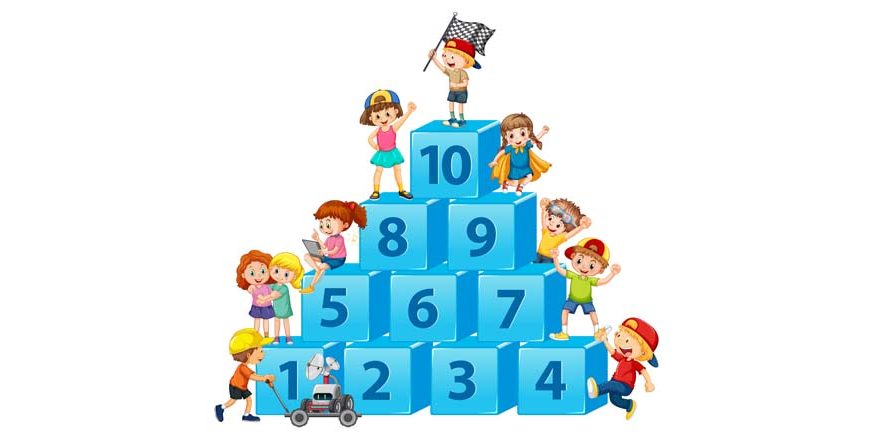
Observe a young child eating a small bowl of sweet grapes. They pick one up, eat it, and immediately notice there are fewer left on the plate. Without even realising it, they are already grasping the earliest stages of subtraction. While reciting numbers forwards is usually the very first mathematical milestone parents celebrate, the ability to count downwards is equally essential.
Moving through numbers in reverse requires a child to hold a familiar sequence in their working memory and actively manipulate it. It is a fantastic cognitive workout that builds a sturdy foundation for all future math skills. Let us look at how to introduce this vital concept using play, physical movement, and a lot of joyful noise.
Making Sense of Reverse Counting
Before we expect a preschooler to perfectly recite a string of numbers in reverse, they need to understand what reverse counting actually means in the physical world. It simply means starting with a total amount and taking exactly one away each time.
If you just chant the numbers out loud, it sounds like a nonsense song to a toddler. Instead, use physical objects. Line up toy cars on the rug. Count them normally. Then, dramatically drive one away and count what is left. By doing this, you make the highly abstract concept of backward counting completely visible and logical to a young mind.
Read More – Why Counting Builds Early Math Confidence in Kids
Starting Small: The 5 to 1 Method
When introducing a brand-new concept, do not rush straight to the big numbers. Start with five. The absolute best teaching tool for this is attached right to your child’s arm: a single hand.
Have your little one hold up all five fingers. Gently fold their thumb down and say, “Four.” Fold their pointer finger down and say, “Three.” Continue until their hand is formed into a closed fist. This physical action gives them a tactile sensation of the numbers physically shrinking. Once they can confidently chant from five down to one, they are ready for the next big challenge.
Backward Counting 10 to 1
Once they have mastered their first five digits, it is time to bring in the second hand. Introducing backward counting 10 to 1 is often best achieved through the universal language of a space mission. Children absolutely love dramatic actions and exciting conclusions.
To make back counting 10 to 1 unforgettable, crouch down low on the living room floor together. As you recite each number, slowly rise up a little bit higher. When you finally reach “One,” shout “Blast off!” and jump as high as you can into the air. By attaching the mathematical sequence to a whole-body movement, the numbers lock into their memory far quicker than just staring at a flat worksheet.
To help your child visually understand how a countdown works before they blast off into the living room, try practicing with this fun interactive rocket tool!
Everyday Games to Practise the Skill
You do not need to set aside formal study time to practise this skill; you can seamlessly weave it into your daily routine.
- Staircase Steps: If you have stairs in your home, count backwards every time you walk down them.
- Tidying Up: When there are ten building blocks left on the floor, count backwards as you throw each one into the toy box.
- Musical Rhymes: Sing classic nursery rhymes together, like “Ten Green Bottles” or “Five Little Ducks.” Music is an incredible tool for memorising tricky sequences.
Read More – Engaging Number Activities for Preschool
Conclusion
Teaching a young child to navigate numbers in reverse is about much more than just preparing them for primary school maths. It is about building a highly flexible thinker. When a child learns to look at a sequence and safely walk backwards through it, they are learning how to deconstruct their world. They realise that what goes up must eventually come down, and that massive piles can be reduced to nothing, one single piece at a time. Every time you crouch down to launch an imaginary rocket from your living room rug, you are actively wiring their brain for logical problem-solving and deep analytical thought.
To uncover parenting strategies for young children and spark a lifelong joy of learning in your little one, explore the EuroKids Blog and find out the next steps for joining our vibrant community through EuroKids Preschool Admission.
FAQs
At what age should my child learn to count backwards?
Most children begin to grasp this concept around the age of four or five, usually after they have confidently mastered counting forwards up to twenty.
Why is my child skipping numbers when counting down?
Counting in reverse is surprisingly hard work for a little brain! Skipping numbers simply means their working memory is tired. Gently supply the missing number and keep the game light and fun.
Is this directly linked to learning subtraction?
Absolutely. Counting backwards is the exact mental process we use to subtract. Mastering it now makes early school maths significantly easier later on.