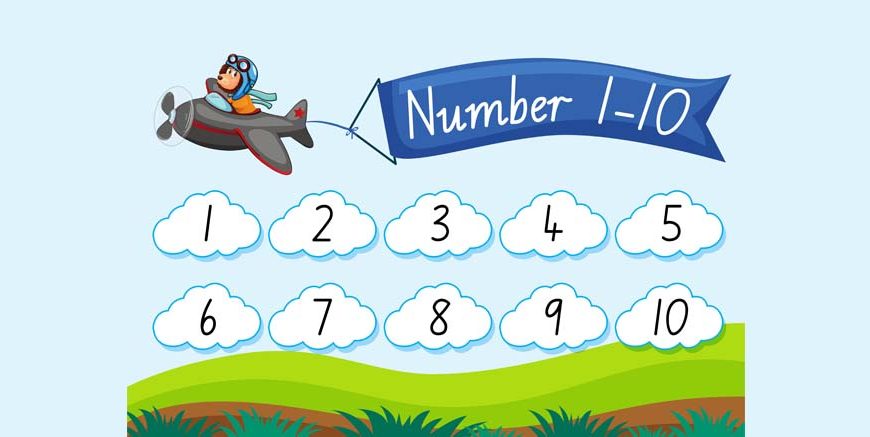
There is something magical about the moment a preschooler proudly recites numbers from one to ten. Their eyes light up. Their smiles widened. Their voice becomes more confident with every number they speak. What may look like a small achievement to adults is actually one of the biggest milestones in early learning. It marks the beginning of a child’s journey into understanding the world around them through patterns, quantities and logic.
Many parents assume that early maths is about worksheets, number writing or remembering formulas. In reality, it begins with something far more joyful and natural. It begins with 1 to 10 counting in English for kids. These first ten numbers hold immense power. They spark curiosity, build confidence and unlock the foundation of all future mathematical concepts. They create experiences that children carry with them for years.
At EuroKids, every child is guided through this beautiful journey with care, patience and meaningful experiences. Through songs, stories, and structured play, children discover that numbers are not scary or complicated. They are friendly companions they interact with every day. Before they even realise it, children begin to associate numbers with real objects, daily routines and problem solving moments in their world.
This blog explores why counting 1-10 for kids plays such an important role in early childhood education and how the right approach helps children build lifelong confidence in mathematics. It also takes you inside the EuroKids classroom to show how the HEUREKA Curriculum makes number learning fun, experiential and emotionally supportive.
Why Counting Comes Before Mathematics
Before children learn addition, subtraction or any formal maths, they must understand what numbers truly mean. Counting is not simply memorising the words from one to ten. It is a mental process that helps children make sense of their surroundings. When a child recites 1 to 10 number counting, they are building the very roots of number sense.
Counting helps children understand:
- Numbers appear in a specific order
- Each number represents a quantity
- Objects can be matched one to one
- Quantities increase and decrease
- Patterns exist everywhere
- Sequences help us organise information
For example, imagine a preschooler stacking blocks. Each time they add a block, they say the next number. This small act is more than play. It is number sequencing, visual tracking, counting and comparison happening at the same time. Or imagine a child handing out biscuits to friends. They count to ensure everyone gets one. This is practical maths unfolding in the simplest form.
Young children learn best when concepts are rooted in real life. Counting appears naturally in their world. They count toys while cleaning up, count steps while climbing stairs or count crayons while drawing. These moments help them build familiarity and comfort with numbers.
Read More – Counting Rhymes for Kids
The Journey of 1 to 10 Counting in Early Childhood
What Happens in a Child’s Mind While Counting 1-10
Children between two to five years are in a crucial developmental stage. Their brains absorb information rapidly and are eager to understand the environment. When they learn 1 to 10 counting numbers, they develop:
Number Recognition
Children identify what each number looks like and begin associating symbols with words.
One to One Correspondence
They understand that each object is counted once. If they point to two toys and say two numbers, they build this connection.
Understanding Quantity
Children learn that three toys mean more than one toy, and ten toys are more than five.
Memory and Recall
Reciting numbers strengthens verbal memory and helps with ordering concepts.
Imagine a little girl named Anaya at a EuroKids classroom. She is arranging colourful pom poms into a muffin tray. Her teacher encourages her to place one pom pom in each slot. Anaya counts aloud. One. Two. Three. She reaches nine and pauses, wondering what comes next. With a gentle prompt, she remembers ten. That moment of discovery makes her beam with pride. This is how confidence grows.
Read More – Counting Fun For Kids
Why 1 to 10 Is the Perfect Starting Point
Children feel comfortable with the first ten numbers because they appear everywhere in daily life. They can see ten fingers, collect ten stones, count ten crayons or hear numbers up to ten in songs and stories. These numbers are simple, short and easy to pronounce. The range is manageable and supports easy repetition.
The first ten numbers become anchors. Once children master them, they feel ready to explore numbers beyond ten. Early success motivates deeper learning. The comfort they develop now influences how they will approach mathematics in the years to come.
How 1 to 10 Counting Builds Early Math Confidence
Builds Familiarity With Numbers
Repetition helps children memorise number words and gradually understand their meaning. As children use numbers in multiple settings, they stop fearing them. This familiarity becomes the foundation for more complex maths.
Improves Sequencing and Order Skills
When children recite 1 to 10 counting in English for kids, they learn that numbers always follow a fixed pattern. Order is a crucial life skill. It helps children organise thoughts, recall information and understand sequences in stories, routines and daily actions.
Encourages Logical Thinking
Numbers help children make decisions. If they need to set up three plates for the family or choose the bigger pile of blocks, they begin using logic. Counting helps them compare quantities and draw simple conclusions.
Strengthens Memory
Memorising the order of numbers strengthens short term and long term memory. The rhythm and repetition support cognitive development.
Improves Vocabulary With Number Words
Number words like one, two, three and so on become part of the child’s daily vocabulary. This improves communication and sentence formation.
Supports Social Learning
Counting often happens in groups. Children recite numbers during circle time, participate in counting games or help friends count toys. This builds teamwork, patience and listening skills.
Read More – Fun Backward Counting Activities for Preschoolers
Fun and Meaningful Ways Children Learn Counting at EuroKids
Learning numbers is not limited to classroom instruction. At EuroKids, number learning flows naturally through all aspects of the day. The aim is not only to teach children the numbers but also to help them enjoy them.
Music, Rhythm and Counting Songs
Children love rhythm. They clap, sing and repeat numbers joyfully through rhymes. When children sing number songs, they develop memory, listening skills and sequencing abilities. Rhymes make the learning process seamless because children internalise numbers without pressure.
Hands On Play Based Counting
EuroKids teachers use blocks, beads, counters, flashcards, natural materials, toy animals and everyday objects. Children touch, hold and move the items. This sensory connection strengthens the relationship between numbers and quantities.
Real Life Integration
Children count steps while walking to playgrounds, count plates during snack time and count pencils while organising the table. These real world experiences show children that numbers are helpful and meaningful.
Sensory Learning
Children explore numbers using sight, touch, colour, texture and sound. These sensory experiences allow children to internalise counting more deeply. It also helps them become more observant and aware of patterns.
Story Based Number Adventures
Stories bring imagination into maths. Children listen to tales of characters collecting shells, sharing sweets or climbing ladders. Through stories, children see numbers come alive in friendly, relatable scenarios.
Read More – Fun Number Activities for Preschool
Inside the EuroKids Classroom: The HEUREKA Curriculum
The HEUREKA Curriculum is designed to support holistic, concept based and skill oriented learning. It focuses on strengthening foundational abilities through experiential activities.
What Is the HEUREKA Curriculum
HEUREKA is EuroKids’ scientifically designed curriculum that blends structured learning with child led exploration. It supports physical, emotional, cognitive and linguistic development. The curriculum follows a multi domain approach and is backed by early childhood research.
How HEUREKA Supports Early Numeracy
The curriculum encourages children to learn by doing. They experience numbers through everyday interactions, guided play, sensory activities and exploration. The aim is not rote memorisation but deep understanding.
Teachers introduce numbers gradually and link them with objects, actions and stories. Activities are crafted to ensure that children develop comfort with 1 to 10 number counting and beyond. Children experience joy while learning and internalise mathematical concepts subconsciously.
How Teachers Scaffold Learning
Teachers understand each child’s learning pace. They observe, guide and support without overwhelming the child. They break the concept into smaller steps, provide repeated exposure and use positive reinforcement so children feel accomplished.
Emotional Safety and Confidence Building
Children learn best when they feel safe, valued and understood. EuroKids creates a supportive environment where children feel free to ask questions, make mistakes and explore without judgement. This emotional support plays a significant role in developing math confidence.
Read More – How to Teach Kindergarten Kids To Count Backward
How Parents Can Support Counting at Home
Parents play an important role in reinforcing what children learn at preschool. With simple, warm conversations, parents can integrate counting effortlessly into daily routines.
Make Counting a Natural Part of Conversations
Ask children to count fruits in a bowl, stairs at home or toys while cleaning up. These small interactions form strong learning associations.
Reduce Screen Based Number Learning
Children learn numbers better when they physically touch objects. Sensory experiences strengthen memory and understanding.
Read Storybooks With Numbers
Number themed storybooks help children visually connect numbers with characters and events.
Avoid Pressure
Each child progresses at their own pace. Encouragement, not comparison, helps children develop a positive relationship with numbers.
Read More – Table of 3 Worksheets for Kids
Long Term Benefits of Strong 1 to 10 Counting Skills
A strong foundation in counting 1 10 for kids leads to far reaching benefits.
Children who confidently understand numbers early often show:
- Better academic readiness
- Stronger problem solving skills
- Higher self confidence
- Improved logical reasoning
- Better attention span
- Stronger pattern recognition
- A positive attitude towards maths
These benefits shape not just maths learning but overall cognitive development.
Why EuroKids Is a Trusted Partner for Early Numeracy
EuroKids has been shaping young minds for over two decades. Parents trust EuroKids because its focus is always on child centric learning, emotional wellbeing and holistic development. Their teachers are trained to make learning joyful, safe and meaningful. Classrooms are designed to encourage exploration, curiosity and creativity.
EuroKids strengthens early numeracy through structured activities, guided exploration and seamless integration of numbers in daily routines. Their curriculum ensures that children understand, enjoy and connect with numbers, rather than memorise them mechanically. By the time children master 1 to 10 counting numbers, they already have the confidence to explore more complex mathematical ideas.
EuroKids Admission: Give Your Child the Best Start
The early years lay the foundation for everything a child learns later in life. This is why choosing the right preschool matters. At EuroKids, your child enters an environment designed with love, safety and learning excellence. With the HEUREKA Curriculum, EuroKids ensures that essential skills like 1 to 10 counting in English for kids evolve naturally through exploration and play.
When you enrol your child in EuroKids, you give them:
- A nurturing learning space
- Experienced teachers
- Structured play based learning
- Holistic development
- Emotional confidence
- Strong early numeracy skills
EuroKids encourages parents to visit the nearest centre, meet teachers, explore the classrooms and understand how the preschool creates a positive learning journey for every child. Preschool admission ensures your child enjoys a smooth transition and receives dedicated attention during their foundational years.
Frequently Asked Questions (FAQs)
1. Why is counting from 1 to 10 so important in preschool?
Because it builds number sense, ordering skills, memory, logical thinking and early math confidence.
2. What is the right age to teach 1 to 10 counting?
Children between two to four years can begin with simple counting activities.
3. How can I teach my child without confusing them?
Use real objects, daily routines and simple repetition.
4. How does the HEUREKA Curriculum support number learning?
It uses sensory experiences, guided play, visual learning and child led exploration.
5. Are worksheets necessary?
Not at the preschool stage. Experiential learning is far more effective.
6. What if my child does not show interest?
Introduce counting through stories, songs and play instead of instruction.
7. How will I know if my child is struggling?
Teachers observe patterns and guide parents with feedback and support.
8. Why is hands on counting better?
It helps children physically connect numbers with quantities.
Related Blogs
Natural Numbers – Concepts, Properties and Number Line
Help your child understand the foundation of mathematics by exploring what natural numbers are, their key properties, and how to represent them on a number line, explained in a simple, engaging way for young learners.
Engaging Number Activities for Preschool & Kindergarten
Discover creative and playful number activities that make learning fun. From counting games and craft ideas to interactive group tasks, these activities will keep little minds curious and active.
Exciting Ways to Help Kindergarten Kids Learn Number Formation
Learn how to make number formation enjoyable for your kindergartener with hands-on methods like tracing, sand writing, and colourful visual cues.