Grab a blank drawing pad and a sharp pencil. Draw a neat box on the paper. Now, walk over to the toy box and pick up a chunky wooden building block. If you look closely at both, you will quickly notice a massive difference. You can wrap your fingers around the wooden block, toss it in the air, and stack it. The box you drew on the paper, however, is stuck there. You cannot pick it up because it is completely flat.
This simple hands-on experiment perfectly demonstrates one of the most fascinating concepts in early geometry. Understanding the difference between flat drawings and the chunky objects we can actually hold is a massive milestone for young learners. Today, we are going to explore this wonderful mathematical world. We will break down the terminology, look at brilliant everyday examples, and discover exactly how these different forms build the world around us.
Plane Figure Definition
Before we can build towering structures, we must start with the absolute basics. A simple plane figure definition is a geometric shape that is completely flat. It is drawn on a flat surface, like a piece of paper, a whiteboard, or a pavement.
These flat outlines are officially known as two-dimensional (2D) shapes. They only possess two measurements: length and width. Because they completely lack any depth or thickness, they do not take up physical space in the way a toy or a book does. When we study plane shapes in maths, we use numbers to count their straight sides and their sharp corners (vertices) to figure out exactly what they are.
Read More – Basic Geometric Concepts and Formulas for Students
Exploring Everyday Plane Shapes Examples
To bring these flat outlines to life, it helps to connect them to the real world. Let us look at some classic plane shapes examples that your child will learn about in the classroom:
- The Square: This figure has four straight sides of the exact same length and four sharp corners. A flat sticky note on your fridge or a single floor tile are perfect representations.
- The Rectangle: Similar to a square, this shape has four sides and four corners. However, two of its sides are long, and the other two are short. A flat piece of A4 drawing paper or the surface of a mobile phone screen are great examples.
- The Triangle: A shape with exactly three sides and three corners. Think of the flat outline of a pizza slice or a yield sign on the road.
- The Circle: This shape is perfectly round with zero straight sides and zero corners. The flat face of a clock or the outline of a coin are classic circles.
What Are Solid Shapes?
While flat drawings are brilliant, we do not live in a flat world! This brings us to the exciting transition between plane shapes and solid shapes.
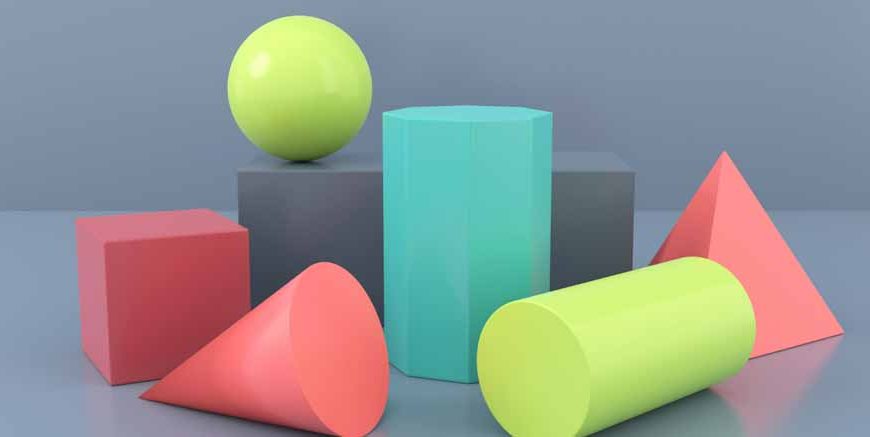
Solid shapes are three-dimensional (3D). This means they have length, width, and depth (or height). Because they have that crucial third dimension, they take up actual space. These are the objects you can physically hold, throw, and stack. While a plane shape is flat as a pancake, a solid shape is chunky and full.
To help your child clearly see how a flat outline transforms into a chunky object you can hold, try experimenting with our interactive shape explorer below!
Plane Figures and Solid Figures
The most fascinating part of geometry is seeing how plane figures and solid figures work together as a team. They are deeply connected. In fact, solid shapes are actually built out of flat plane shapes!
When you look at the different sides of a solid object, you will see familiar flat outlines. The flat sides of a solid object are called ‘faces’.
When we compare plane and solid shapes, we can easily match them up:
- A flat square is the face of a solid cube (like a rolling dice).
- A flat circle transforms into a completely solid sphere (like a bouncy football or a globe).
- A flat triangle can build the sloping sides of a solid pyramid (just like the ancient ones in Egypt!).
- A flat rectangle is the face of a solid cuboid (like a cereal box or a brick).
Read More – Fun Ways to Teach Shapes to Kids
Summary
Geometry is much more than just a list of vocabulary words in a maths textbook; it is the fundamental language of the universe. Teaching a child to recognise the difference between a flat drawing and a chunky, real-world object gives them the crucial tools they need to navigate their environment. It shows them that every massive, towering skyscraper or complex bridge started out as a very simple, flat sketch on a piece of paper.
By understanding how basic, flat outlines build up to create the sturdy, complex objects we use every day, children learn to see the hidden patterns holding our world together. Encourage them to keep looking closely at the outlines of their toys and books, because incredible things always begin with a simple shape.
For more brilliant educational insights and joyful parenting strategies, visit the EuroKids Blog, and discover everything you need to begin your child’s learning adventure through EuroKids Preschool Admission.
FAQs
Can a solid shape have curved faces?
Yes, absolutely! A cylinder (like a baked bean tin) has a curved face wrapping around the middle, and a sphere (like a tennis ball) is made entirely of one continuous, curving face.
How can I teach my child these shapes at home?
Go on a shape hunt! Ask your child to find three flat plane shapes (like a picture frame) and three chunky solid shapes (like a tin of soup) hidden around the living room.
Is a piece of paper 2D or 3D?
This is a brilliant trick question! While we use paper to represent flat 2D drawings, the paper itself is actually a very thin 3D cuboid because it technically has a tiny bit of measurable thickness.