An eight-year-old sitting on the living room floor with a dog-eared paperback is not just passing time until dinner. They are aggressively decoding a completely different universe. At this exact age, a monumental shift happens inside a child’s brain. They completely stop putting all their mental energy into simply sounding out the difficult letters on the page and suddenly start absorbing the actual plot.
They move rapidly from ‘learning to read’ to ‘reading to learn’. This magical crossover phase is what makes the third year of primary school so incredibly pivotal. It is the exact moment when basic language mechanics finally click firmly together, allowing them to express wild, imaginative thoughts with proper, adult-like structure. Let us break down exactly what happens during this crucial developmental window and how you can actively support their growing vocabulary at home.
Mastering basic English for class 3
When children tackle basic English for class 3, the training wheels completely come off the bicycle. They are no longer just memorising simple three-letter phonics or matching pictures to flashcards. The rules of grammar suddenly become much more detailed, rigid, and demanding.
We expect them to understand that words have distinct, separate jobs. For example, instead of just writing “the dog ran,” they learn to use brilliant adjectives and powerful adverbs to paint a picture. They write “the massive, muddy dog sprinted incredibly quickly.” They learn exactly how to use commas to separate a long list of items, and they finally stop putting capital letters randomly in the absolute middle of a sentence.
At this stage, grammar is taught not as a boring list of strict rules, but as a clever, highly useful toolkit. By experimenting with these tools, they realise they can make their own stories significantly more exciting for someone else to read. Within the Heureka curriculum, we heavily champion this investigative approach. We encourage children to play actively with sentence structures and pull paragraphs apart, rather than just filling in blank spaces on a dry, boring worksheet.
Read More – Improve English Reading for Kids
The massive creative leap in grade 3 English
Moving properly into grade 3 English means a massive upgrade in a child’s creative output. The classroom focus firmly shifts towards deep comprehension and highly original storytelling.
If you hand a seven-year-old a colourful picture of a spooky house, they might write one simple, declarative sentence describing the dark colour of the roof. Give that exact same picture to an eight-year-old, and they will likely invent a terrified ghost living in the dusty attic, complete with a tragic backstory and a favourite midnight snack. They learn to structure a proper, flowing narrative with a clear beginning setting the scene, a messy middle full of conflict, and a solid, satisfying resolution.
They also begin to tackle difficult non-fiction texts. They learn how to read a short, factual paragraph about a wild animal and extract the vital information to answer tricky questions. This requires massive concentration. They have to hold multiple pieces of information in their working memory and figure out exactly what the author is trying to tell them, reading carefully between the hidden lines to make smart predictions about what might happen next.
Conquering the challenge of reading for class 3
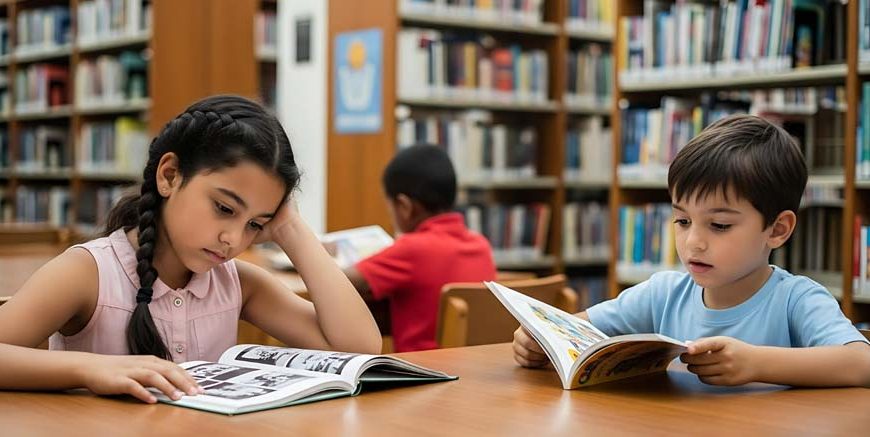
The physical books they bring home in their backpacks undergo a radical, terrifying transformation. Mastering reading for class 3 marks the thrilling leap from thin, glossy picture books to heavy, text-heavy chapter books.
This visual transition can severely intimidate a young reader. The text is suddenly much smaller, the pages lack colourful distractions, and the long chapters take days to finish instead of minutes. They have to build serious reading stamina. To do this successfully, they learn a vital, lifelong skill called ‘using context clues’. If they stumble blindly into a massive, complicated word they have never seen before, they are actively taught to look at the surrounding words to guess the meaning.
For instance, if they read, “The giant was incredibly gargantuan, blocking out the entire sun,” they can easily guess what the italicised word means without running to grab a heavy dictionary. Figuring out a puzzle like this builds immense, independent academic confidence.
Read More – Ways to Improve Your Public Speaking Skills
Fueling their language journey at home
You absolutely do not need to turn your kitchen table into a strict, quiet classroom to help them master these new skills. Language acquisition happens beautifully when it is completely hidden inside daily, messy play.
Here is a highly practical list of straightforward ways to boost their literary confidence:
- Start a secret family journal: Buy a cheap notebook and pass it back and forth. You write a silly question, and they have to write a proper, punctuated answer back to you the next morning.
- Read the recipe aloud: When baking a weekend cake, make them read the instructions. It forces them to understand strict sequencing and follow chronological commands carefully.
- Ditch traditional bedtime reading: Instead of you reading to them, make them read one entire page to you every single night. If they stumble, wait ten full seconds before stepping in to help them out.
- Listen to audiobooks: Playing a brilliant, highly descriptive story during the noisy morning school run exposes their developing brain to complex vocabulary and proper, dramatic pronunciation without feeling like homework.
Read More – How Do Children Learn Language ?
Conclusion
It is a genuinely thought-provoking reality that the vocabulary a child builds during these early years will directly construct the boundaries of their adult world. Language is the ultimate, undeniable currency of human connection. When we teach a child how to properly wield a descriptive adjective, confidently structure a heavy paragraph, and extract hidden meaning from a thick chapter book, we are not just helping them pass a Friday spelling test. We are actively handing them the exact, sharp tools they desperately need to defend their own opinions, articulate their deepest feelings, and proudly navigate a highly complex society. The heavy books they struggle to decode today will slowly become the solid foundation of their future independence. To discover more highly effective learning strategies and explore our unique approach to early education, browse the latest insights on the EuroKids Blog and secure their vibrant academic future today through EuroKids Preschool Admission.
FAQs
Why is my child suddenly struggling with spelling this year?
The vocabulary instantly becomes much harder in this specific year group. They are moving rapidly away from words spelled exactly how they sound and tackling tricky exceptions, silent letters, and complex vowel teams, which naturally takes time and massive repetition to master.
How long should an eight-year-old read every evening?
Aim for a solid twenty minutes of uninterrupted reading. Anything longer can easily cause heavy mental fatigue, making them fiercely resent the activity entirely.
Should I force them to read chapter books if they still prefer comics?
Absolutely not. Graphic novels and comics are brilliant for building reading stamina. They still heavily require the brain to decode text, understand a plot line, and infer character emotions from visual cues.