Mathematics is an essential skill that children begin developing at an early age. One of the most important building blocks in early maths learning is understanding multiplication. Multiplication helps children solve problems faster, improves mental calculation skills, and forms the foundation for many advanced mathematical concepts. A great way to start learning multiplication is by practising tables 1 to 10, which are simple and easy for children to remember. In this blog, we will explore the importance of learning tables 1 to 10, and understand how the maths table 1 to 10 help children improve their calculation skills.
Why Children Should Learn Tables 1 to 10
Learning multiplication tables is one of the first major steps in developing strong math skills. When children memorise tables 1 to 10, they are able to perform calculations quickly and confidently. Multiplication tables help children in many ways. They make solving maths problems easier and improve overall number understanding. Some key benefits of learning tables 1 to 10 include:
- Improves mental math skills.
- Helps children solve multiplication problems faster.
- Builds a strong foundation for division and advanced math topics.
- Increases confidence in maths learning.
- Makes everyday calculations easier.
Read More – Fun Ways to Learn Times Tables
Understanding Multiplication for Kids
Multiplication is repeated addition. For example, when we multiply 2 × 3, it means adding the number 2 three times. Example: 2 × 3 = 2 + 2 + 2 = 6
Understanding multiplication through repeated addition helps children grasp the concept of tables 1 to 10 more easily. Once children understand the idea of repeated addition, they can start practising each table step by step.
Maths Table 1 to 10
Table of 1
1 × 1 = 1
1 × 2 = 2
1 × 3 = 3
1 × 4 = 4
1 × 5 = 5
1 × 6 = 6
1 × 7 = 7
1 × 8 = 8
1 × 9 = 9
1 × 10 = 10
Table of 2
2 × 1 = 2
2 × 2 = 4
2 × 3 = 6
2 × 4 = 8
2 × 5 = 10
2 × 6 = 12
2 × 7 = 14
2 × 8 = 16
2 × 9 = 18
2 × 10 = 20
Table of 3
3 × 1 = 3
3 × 2 = 6
3 × 3 = 9
3 × 4 = 12
3 × 5 = 15
3 × 6 = 18
3 × 7 = 21
3 × 8 = 24
3 × 9 = 27
3 × 10 = 30
Table of 4
4 × 1 = 4
4 × 2 = 8
4 × 3 = 12
4 × 4 = 16
4 × 5 = 20
4 × 6 = 24
4 × 7 = 28
4 × 8 = 32
4 × 9 = 36
4 × 10 = 40
Table of 5
5 × 1 = 5
5 × 2 = 10
5 × 3 = 15
5 × 4 = 20
5 × 5 = 25
5 × 6 = 30
5 × 7 = 35
5 × 8 = 40
5 × 9 = 45
5 × 10 = 50
Table of 6
6 × 1 = 6
6 × 2 = 12
6 × 3 = 18
6 × 4 = 24
6 × 5 = 30
6 × 6 = 36
6 × 7 = 42
6 × 8 = 48
6 × 9 = 54
6 × 10 = 60
Table of 7
7 × 1 = 7
7 × 2 = 14
7 × 3 = 21
7 × 4 = 28
7 × 5 = 35
7 × 6 = 42
7 × 7 = 49
7 × 8 = 56
7 × 9 = 63
7 × 10 = 70
Table of 8
8 × 1 = 8
8 × 2 = 16
8 × 3 = 24
8 × 4 = 32
8 × 5 = 40
8 × 6 = 48
8 × 7 = 56
8 × 8 = 64
8 × 9 = 72
8 × 10 = 80
Table of 9
9 × 1 = 9
9 × 2 = 18
9 × 3 = 27
9 × 4 = 36
9 × 5 = 45
9 × 6 = 54
9 × 7 = 63
9 × 8 = 72
9 × 9 = 81
9 × 10 = 90
Table of 10
10 × 1 = 10
10 × 2 = 20
10 × 3 = 30
10 × 4 = 40
10 × 5 = 50
10 × 6 = 60
10 × 7 = 70
10 × 8 = 80
10 × 9 = 90
10 × 10 = 100
Read More – Multiplication Tables 1 to 20
How EuroKids Makes Learning Maths Tables Simple
At EuroKids, early mathematics is introduced in ways that make learning enjoyable and meaningful for young children. One of the most important foundations in mathematics is learning maths tables 1 to 10, which help children understand multiplication and build strong number skills. When children practise multiplication tables regularly, they develop confidence in solving basic calculations and recognising number patterns.
Learning multiplication tables for children helps them perform mental calculations faster and improves their overall understanding of numbers. Tables are not taught through rote memorisation alone; instead, children learn them through songs, games, storytelling, and visual activities. This approach helps children remember the patterns easily and understand how multiplication works in everyday situations. By making maths interactive and engaging, EuroKids encourages children to view numbers as something fun and exciting to explore.
Conclusion
Learning tables 1 to 10 is a crucial step in building strong mathematical skills. Multiplication tables help children perform calculations quickly, understand number relationships, and prepare for more advanced math topics. By practising a maths table 1 to 10 regularly, children develop better problem-solving abilities and gain confidence in mathematics.
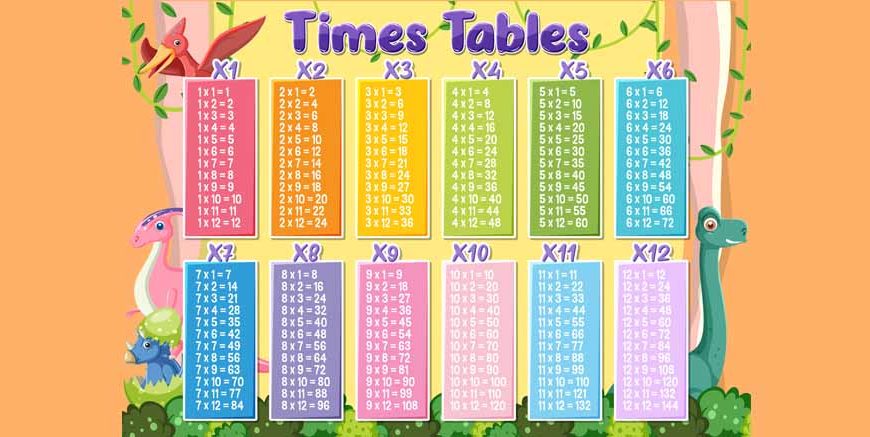
Using tools such as a 1 to 10 table chart, along with fun activities and consistent practice, makes learning multiplication tables easier and more enjoyable. When children understand and memorise these tables early, they create a strong foundation that supports their academic growth in the future.
Parents looking to give their child a strong foundation in early learning can explore EuroKids Preschool Admission to begin this enriching journey.
For more insightful articles that support early learning, awareness, and child development, parents and educators can explore the wide range of resources available on EuroKids Blogs.
For those interested in being part of this impactful learning ecosystem and contributing to quality early education across communities, EuroKids Franchise opportunities offer a meaningful path forward.
FAQs
What are tables 1 to 10?
Tables 1 to 10 are multiplication tables that show the results of multiplying numbers from 1 to 10.
Why should children learn the maths table 1 to 10?
Learning the maths table 1 to 10 helps children perform calculations faster and improves their overall math skills.
What is a 1 to 10 table chart?
A 1 to 10 table chart is a visual chart that displays multiplication tables from 1 to 10 in an organised format.
At what age should children learn tables 1 to 10?
Most children begin learning tables 1 to 10 between the ages of six and eight.
How can children memorise multiplication tables easily?
Children can memorise tables by practising daily, using songs, playing multiplication games, and studying a 1 to 10 table chart.
Which table should kids learn first?
Children usually start with the tables of 1, 2, 5, and 10 before moving on to other tables.