You have probably seen this moment at home. Your child stares at a maths notebook, lips moving softly, trying to remember what comes next in a multiplication table. You step in to help, but the tension rises quickly. Numbers feel heavy. Confidence slips. Learning turns into pressure.
This struggle does not happen because your child dislikes maths. It happens because multiplication tables often get introduced as memory tests instead of meaningful patterns. When you help your child learn tables 1 to 20 the right way, you are not just teaching numbers. You are shaping how your child thinks, solves problems, and trusts their own ability to learn.
This guide walks you through why multiplication tables matter, how children understand them best, and how you can support learning at home without stress. You will also find all the multiplication tables clearly written so your child can practise with confidence.
Why Multiplication Tables Matter More Than You Think
Multiplication tables form the backbone of early mathematics. When your child understands tables, simple calculations become quicker and problem-solving becomes smoother. More importantly, tables help your child recognise patterns and relationships between numbers.
When children learn tables 1 to 20, they stop counting on fingers. They start thinking in groups. This shift supports division, fractions, measurements, time calculations, and even money management later in life. Strong table knowledge builds speed, accuracy, and confidence, all of which matter inside and outside the classroom.
How Children Actually Learn Multiplication Tables
Children do not learn maths by memorising alone. They learn by connecting ideas. Multiplication begins with repeated addition. When your child sees that 4 × 3 means adding 4 three times, the table starts to make sense.
Learning tables works best when it feels familiar, rhythmic, and meaningful. Singing tables, spotting patterns, and using everyday objects help children remember naturally. Pressure-free repetition builds long-term memory far better than forced recitation.
Read More – Ways to Teach Multiplication to Kids
Why Learning Tables 1 to 20 Builds Strong Foundations
Tables from 1 to 10 introduce the idea of multiplication. Tables beyond that, especially table 10 to 20, strengthen number fluency. These higher tables teach children to break numbers down, use known patterns, and apply logic.
For example, when your child understands the table of 5 and the table of 10, the table of 15 becomes far less intimidating. Learning tables gradually helps children approach maths with curiosity instead of fear.
When Your Child Is Ready to Learn Multiplication Tables
Most children begin exploring multiplication once they feel comfortable with counting and addition. This readiness often appears in early primary years, but every child learns at their own pace.
You know your child is ready when they enjoy grouping objects, counting repeatedly, or solving simple addition sums quickly. Introducing tables gently during this stage builds confidence rather than confusion.
Read More – Ways to Learn Times Tables
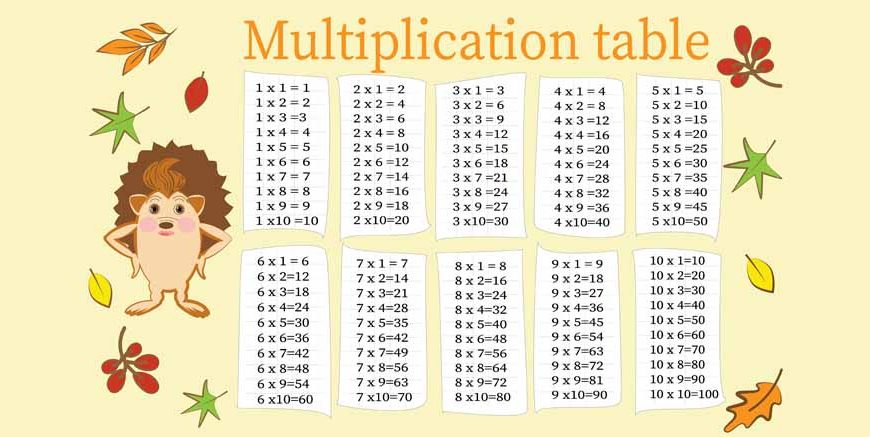
Multiplication Tables From 1 To 10
These tables help children understand repetition and patterns. Encourage slow reading and rhythmic practice.
Table of 1
1 × 1 = 1
1 × 2 = 2
1 × 3 = 3
1 × 4 = 4
1 × 5 = 5
1 × 6 = 6
1 × 7 = 7
1 × 8 = 8
1 × 9 = 9
1 × 10 = 10
Table of 2
2 × 1 = 2
2 × 2 = 4
2 × 3 = 6
2 × 4 = 8
2 × 5 = 10
2 × 6 = 12
2 × 7 = 14
2 × 8 = 16
2 × 9 = 18
2 × 10 = 20
Table of 3
3 × 1 = 3
3 × 2 = 6
3 × 3 = 9
3 × 4 = 12
3 × 5 = 15
3 × 6 = 18
3 × 7 = 21
3 × 8 = 24
3 × 9 = 27
3 × 10 = 30
Table of 4
4 × 1 = 4
4 × 2 = 8
4 × 3 = 12
4 × 4 = 16
4 × 5 = 20
4 × 6 = 24
4 × 7 = 28
4 × 8 = 32
4 × 9 = 36
4 × 10 = 40
Table of 5
5 × 1 = 5
5 × 2 = 10
5 × 3 = 15
5 × 4 = 20
5 × 5 = 25
5 × 6 = 30
5 × 7 = 35
5 × 8 = 40
5 × 9 = 45
5 × 10 = 50
Table of 6
6 × 1 = 6
6 × 2 = 12
6 × 3 = 18
6 × 4 = 24
6 × 5 = 30
6 × 6 = 36
6 × 7 = 42
6 × 8 = 48
6 × 9 = 54
6 × 10 = 60
Table of 7
7 × 1 = 7
7 × 2 = 14
7 × 3 = 21
7 × 4 = 28
7 × 5 = 35
7 × 6 = 42
7 × 7 = 49
7 × 8 = 56
7 × 9 = 63
7 × 10 = 70
Table of 8
8 × 1 = 8
8 × 2 = 16
8 × 3 = 24
8 × 4 = 32
8 × 5 = 40
8 × 6 = 48
8 × 7 = 56
8 × 8 = 64
8 × 9 = 72
8 × 10 = 80
Table of 9
9 × 1 = 9
9 × 2 = 18
9 × 3 = 27
9 × 4 = 36
9 × 5 = 45
9 × 6 = 54
9 × 7 = 63
9 × 8 = 72
9 × 9 = 81
9 × 10 = 90
Table of 10
10 × 1 = 10
10 × 2 = 20
10 × 3 = 30
10 × 4 = 40
10 × 5 = 50
10 × 6 = 60
10 × 7 = 70
10 × 8 = 80
10 × 9 = 90
10 × 10 = 100
Multiplication Tables From 11 To 20
Table of 11
11 × 1 = 11
11 × 2 = 22
11 × 3 = 33
11 × 4 = 44
11 × 5 = 55
11 × 6 = 66
11 × 7 = 77
11 × 8 = 88
11 × 9 = 99
11 × 10 = 110
Table of 12
12 × 1 = 12
12 × 2 = 24
12 × 3 = 36
12 × 4 = 48
12 × 5 = 60
12 × 6 = 72
12 × 7 = 84
12 × 8 = 96
12 × 9 = 108
12 × 10 = 120
Table of 13
13 × 1 = 13
13 × 2 = 26
13 × 3 = 39
13 × 4 = 52
13 × 5 = 65
13 × 6 = 78
13 × 7 = 91
13 × 8 = 104
13 × 9 = 117
13 × 10 = 130
Table of 14
14 × 1 = 14
14 × 2 = 28
14 × 3 = 42
14 × 4 = 56
14 × 5 = 70
14 × 6 = 84
14 × 7 = 98
14 × 8 = 112
14 × 9 = 126
14 × 10 = 140
Table of 15
15 × 1 = 15
15 × 2 = 30
15 × 3 = 45
15 × 4 = 60
15 × 5 = 75
15 × 6 = 90
15 × 7 = 105
15 × 8 = 120
15 × 9 = 135
15 × 10 = 150
Table of 16
16 × 1 = 16
16 × 2 = 32
16 × 3 = 48
16 × 4 = 64
16 × 5 = 80
16 × 6 = 96
16 × 7 = 112
16 × 8 = 128
16 × 9 = 144
16 × 10 = 160
Table of 17
17 × 1 = 17
17 × 2 = 34
17 × 3 = 51
17 × 4 = 68
17 × 5 = 85
17 × 6 = 102
17 × 7 = 119
17 × 8 = 136
17 × 9 = 153
17 × 10 = 170
Table of 18
18 × 1 = 18
18 × 2 = 36
18 × 3 = 54
18 × 4 = 72
18 × 5 = 90
18 × 6 = 108
18 × 7 = 126
18 × 8 = 144
18 × 9 = 162
18 × 10 = 180
Table of 19
19 × 1 = 19
19 × 2 = 38
19 × 3 = 57
19 × 4 = 76
19 × 5 = 95
19 × 6 = 114
19 × 7 = 133
19 × 8 = 152
19 × 9 = 171
19 × 10 = 190
Table of 20
20 × 1 = 20
20 × 2 = 40
20 × 3 = 60
20 × 4 = 80
20 × 5 = 100
20 × 6 = 120
20 × 7 = 140
20 × 8 = 160
20 × 9 = 180
20 × 10 = 200
At EuroKids, children learn mathematics through exploration, conversation, and real-world connections. The HEUREKA Curriculum supports concept clarity by helping children experience maths rather than memorise it.
Conclusion
When you support your child in learning tables 1 to 20 with patience and understanding, maths stops feeling scary. It becomes familiar and even enjoyable. Confidence grows with every small success.
If you are exploring early education options that focus on strong foundations, nurturing environments, and concept-based learning, EuroKids Preschool Admission offers programmes designed to support your child’s overall development. You can also explore the EuroKids Blog for more expert insights on early learning. Your involvement today shapes your child’s confidence for tomorrow.
FAQs
Why are multiplication tables important for children?
They build number fluency, confidence, and problem-solving skills.
How can children learn tables without stress?
Through repetition, patterns, and daily activities rather than pressure.
Why does my child struggle with table 10 to 20?
These tables look bigger, but they follow familiar patterns that need reinforcement.
What is the easiest way to learn the table of 15?
By combining knowledge of the table of 5 and the table of 10.
How can parents support maths learning at home?
By encouraging practice, praising effort, and keeping learning relaxed.